
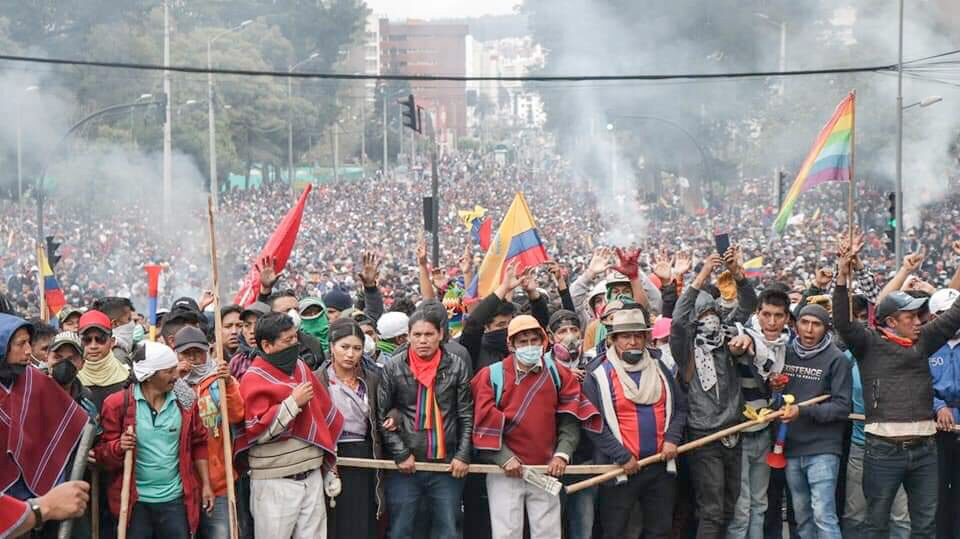
Tensions escalated in Ecuador’s capital, Quito, on Sunday as both supporters and opponents of President Daniel Noboa took to the streets following the government’s declaration of a state of emergency in 10 provinces. The move came amid growing unrest triggered by the removal of a key fuel subsidy.
The subsidy cut, which raised diesel prices from Ksh232 (US$1.80) to Ksh362 (US$2.80) per gallon, has sparked widespread anger—particularly among Indigenous groups and low-income citizens who rely heavily on fuel for transport and farming. Demonstrators led by the Confederation of Indigenous Nationalities of Ecuador (CONAIE) chanted slogans such as “Diesel goes up, everything goes up” and “Out with Noboa” during rallies at a park in Quito, where pro-government supporters also assembled in larger numbers.
While Sunday’s protests remained largely peaceful, police used tear gas to disperse a group that attempted to breach a security barrier. Authorities confirmed no injuries or arrests. The government’s state of emergency, effective from midnight Saturday, restricts freedom of assembly in the affected provinces—many of which have significant Indigenous populations—but still permits peaceful demonstrations.
CONAIE condemned the decree, accusing President Noboa of deepening “a war policy” against citizens’ legitimate demands and urging international human rights organisations to monitor the situation closely.
Last week, clashes between police and Indigenous demonstrators left one protester dead and several injured, while nearly 100 people were detained, including 13 accused of terrorism. Protesters on Sunday demanded the release of those arrested.
In contrast, pro-government groups held an art fair at El Arbolito Park, attended by ministers and guarded by security forces. Minister of Government Zaida Rovira told reporters that Ecuador “has grown tired of violence,” while Social Security Board President Edgar Lama dismissed the demonstrators as “a minority that seeks to impose its will through violence.”
President Noboa, firm on his economic policy, said he will not reinstate the fuel subsidy, stressing that lawbreakers will be dealt with decisively. “Those who choose violence will face the law. Those who act like criminals will be treated as criminals,” Noboa declared on X (formerly Twitter).
The protests mark a major test for Noboa’s administration as it balances fiscal reform with mounting public discontent and a revived Indigenous movement demanding economic justice and government accountability.

