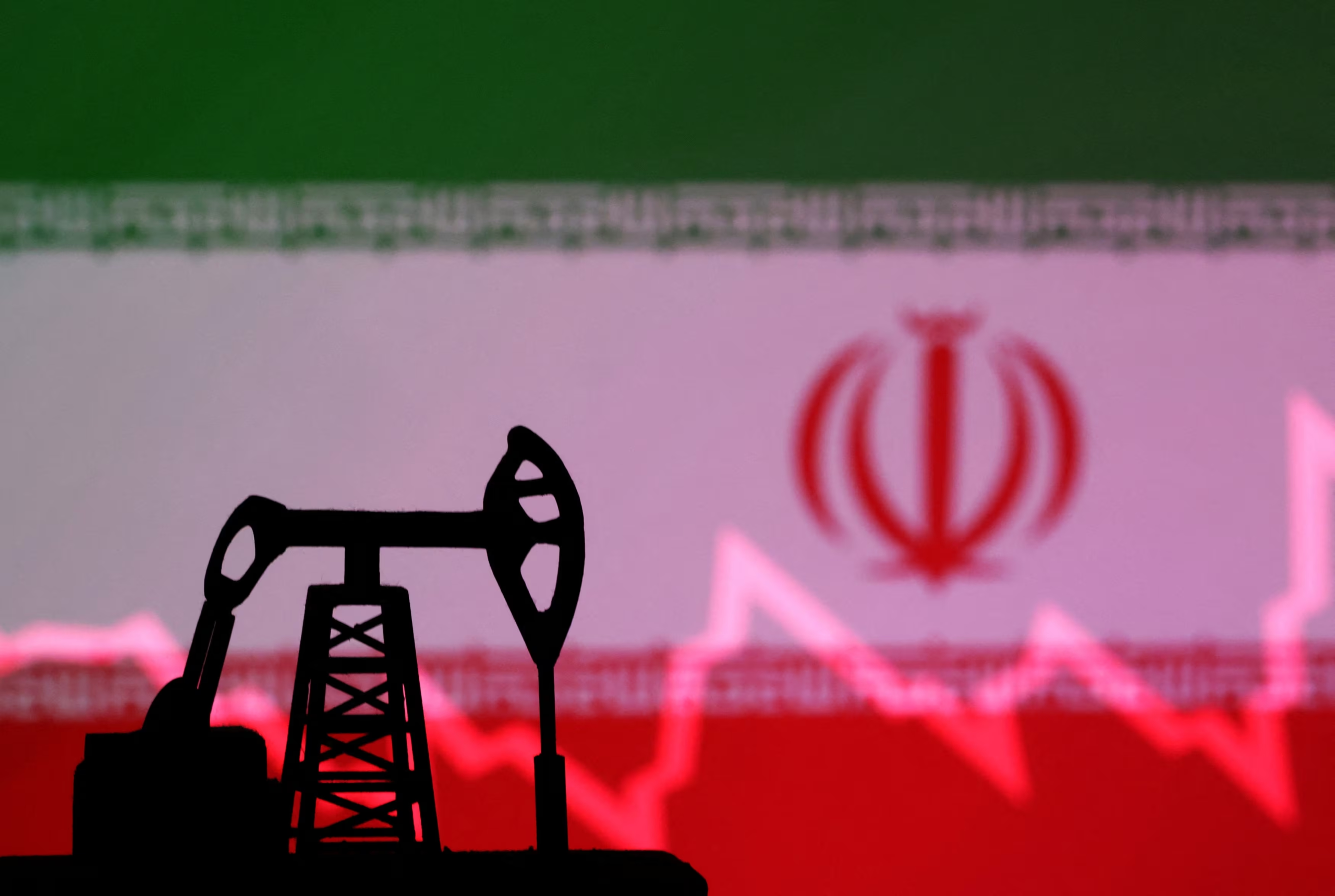
Tensions in the Middle East escalated sharply on Saturday as Iran warned it could reduce oil infrastructure linked to the United States to “a pile of ashes,” intensifying fears of a broader regional conflict and a deepening global energy crisis.
The warning followed remarks by Donald Trump, who said Washington might consider destroying Iran’s main oil export hub on Kharg Island if Tehran disrupts international shipping.
War Enters Third Week
The conflict, now entering its third week, began on February 28 when the United States and Israel launched coordinated military operations targeting Iranian military infrastructure. Since then, waves of drone, missile, and aerial attacks have spread across the region.
According to Iranian health ministry figures, more than 1,200 people have been killed in Iran since the hostilities began, although the numbers could not be independently verified. The United Nations High Commissioner for Refugees estimates that up to 3.2 million people have been displaced within Iran.
Despite facing superior military capabilities from the United States and Israel, Tehran has retaliated with missile and drone strikes affecting at least ten countries, raising fears of a wider regional war.
Strait of Hormuz Disruption
The conflict has also rattled global energy markets. Iran has threatened to target oil tankers in the Strait of Hormuz, a vital maritime corridor through which roughly one-fifth of global oil supplies normally pass.
The threat has brought tanker traffic close to a standstill and pushed global crude oil prices up by more than 40 percent since the fighting began.
Trump said Friday that U.S. forces had “totally obliterated” military targets on Kharg Island in what he described as one of the most powerful bombing raids in the region’s history. However, he added that Washington had not yet targeted the island’s oil infrastructure.
“Should Iran, or anyone else, do anything to interfere with the free and safe passage of ships through the Strait of Hormuz, I will immediately reconsider this decision,” Trump said.
He also announced that the U.S. Navy would soon begin escorting oil tankers through the strait to restore global energy shipments.
Tehran Responds With Threats
Iranian military officials responded by warning that any attack on the country’s oil facilities would trigger immediate retaliation against energy infrastructure tied to U.S. interests.
State media reported that Iranian forces said such installations would be “destroyed and turned into a pile of ashes” if strikes targeted Iranian oil exports.
Intensifying Air Campaign
Heavy explosions were reported in the capital Tehran late Friday as U.S. forces vowed to intensify air strikes. According to the Pentagon, the United States and Israel have struck more than 15,000 targets in Iran over the past two weeks.
The Israeli military said it has conducted about 7,600 strikes, many aimed at dismantling Iran’s missile program.
Iran’s leadership structure has also been shaken. Supreme leader Ali Khamenei was killed at the beginning of the campaign. His son, Mojtaba Khamenei, was subsequently named the new supreme leader but has not appeared publicly and is reportedly wounded.
Conflict Spreads Across Region
The war’s impact is spreading across the Middle East. A drone strike hit the U.S. embassy compound in Baghdad on Saturday, according to security sources, shortly after two Iran-backed fighters were killed in strikes in the city.
Elsewhere, Qatar said it intercepted two missiles over the capital Doha, while Saudi Arabia reported shooting down dozens of drones.
In Turkey, NATO-aligned forces intercepted a ballistic missile launched from Iran, marking the third such interception since the war began.
The conflict has also drawn in Lebanon, where an Israeli strike in the country’s south reportedly killed a dozen healthcare workers at a clinic. Lebanese authorities say at least 773 people have died in Israeli strikes targeting the Iran-backed militant group Hezbollah.
Military Reinforcements Deployed
Reports in the The Wall Street Journal and The New York Times indicate that Washington has dispatched the amphibious assault ship USS Tripoli to the region, carrying roughly 2,500 Marines.
The United States has lost 13 military personnel since the conflict began, including six who died in a refuelling aircraft crash in Iraq that officials said was not caused by enemy fire.
As the war enters its third week, analysts warn that the confrontation risks triggering a wider regional conflict and prolonged disruption to global oil supplies, with major economic implications worldwide.