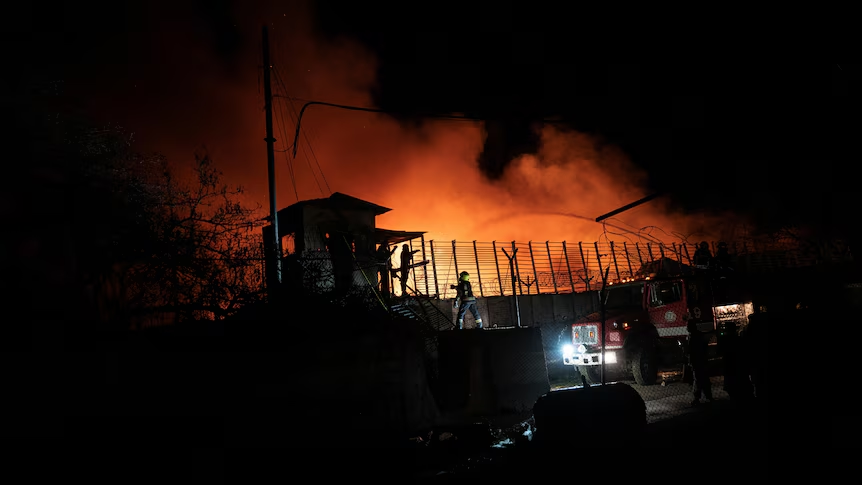
Dozens of people are feared dead or injured after an air strike struck a drug treatment centre in Kabul, Afghanistan’s capital, on Monday evening, the Taliban government reported. The incident has intensified tensions between Afghanistan and Pakistan, with each side issuing contradictory accounts.
The Kabul rehabilitation centre, previously a US military base, was converted by the Taliban into a facility housing approximately 2,000 patients struggling with drug addiction. Taliban officials claimed that at least 400 people were killed in the strike, though the figure has not been independently verified. BBC correspondents at the scene reported seeing more than 30 bodies carried out on stretchers, while parts of the centre remained ablaze.
“The centre has no military facilities nearby. These are civilians seeking treatment,” said Sharafat Zaman Amarkhail, a spokesman for Afghanistan’s health ministry.
Residents reported hearing loud explosions across the city around 20:50 local time (16:20 GMT), followed by the sounds of aircraft and air defence systems. Families of patients gathered outside the facility, desperately seeking information about their loved ones.
Pakistan denied involvement in striking the centre, asserting that its air operations in Kabul and Nangarhar Province targeted only military installations and terrorist support infrastructure. Islamabad dismissed Afghan claims as “misreporting of facts… covering illegitimate support to cross-border terrorism.”
The attack comes amid renewed Afghanistan-Pakistan cross-border tensions, which escalated in February after Islamabad accused Kabul of harbouring militant groups a claim denied by the Taliban government. Since 26 February, United Nations Assistance Mission in Afghanistan (UNAMA) reports that at least 75 people have been killed and 193 injured in ongoing cross-border fighting.
China has sought to mediate, with Foreign Minister Wang Yi speaking to both Afghan and Pakistani counterparts over the past week, urging calm and calling for a ceasefire “at the earliest opportunity.”
The Kabul strike highlights the human cost of the fragile ceasefire and underscores the risk to civilian populations amid the escalating military confrontations between the neighbouring countries.