
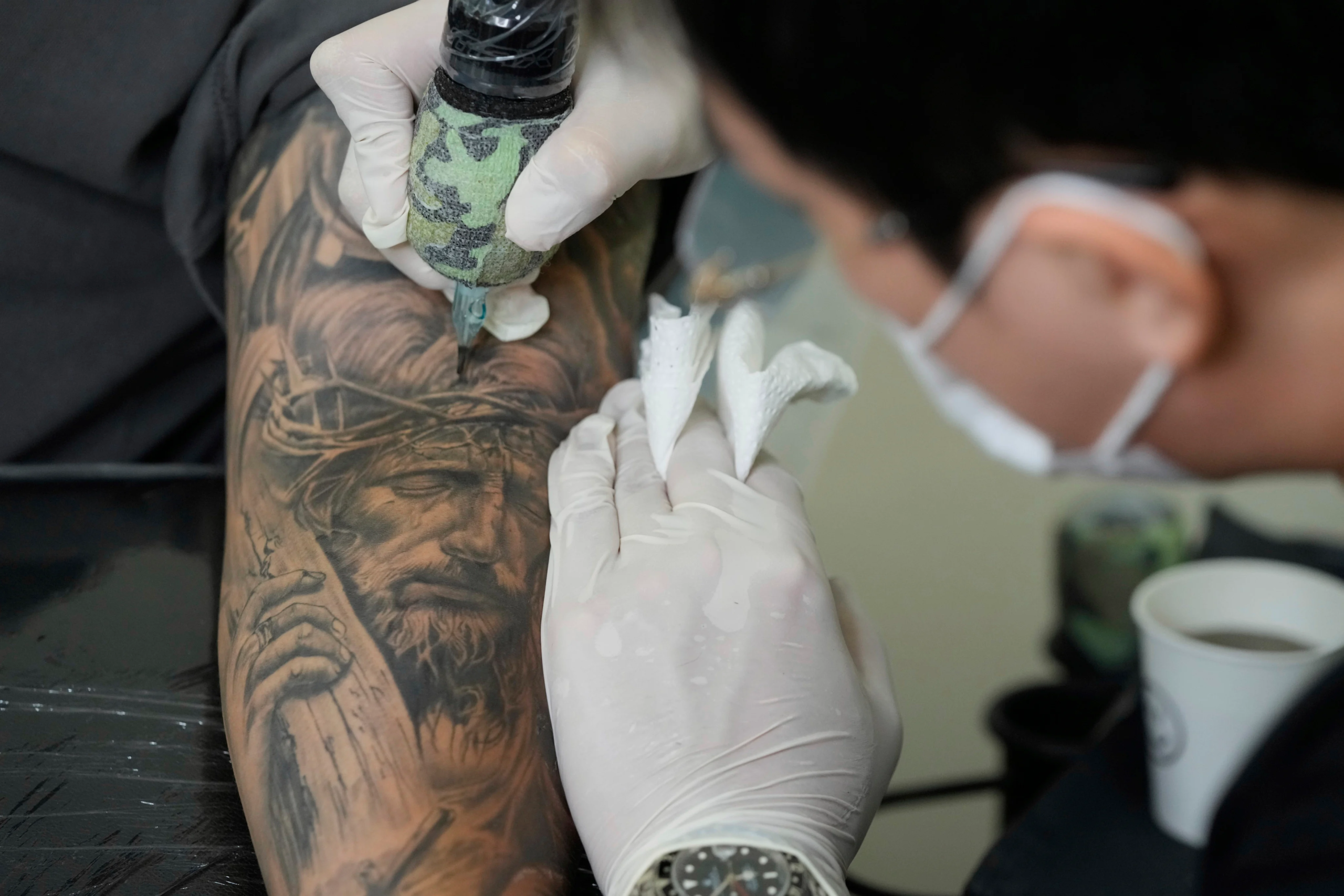
Tattoo artists in South Korea will soon be able to work openly without fear of punishment after the National Assembly passed a historic bill lifting the country’s long-standing ban.
In a unanimous 195–0 vote, lawmakers approved the Tattooist Act, which ends the requirement that tattooists hold a medical license — a restriction unique among industrialized nations. Instead, the new law will introduce an official licensing system under state supervision, setting hygiene and safety standards for the profession.
The act will take effect after a two-year grace period once it is formally proclaimed by President Lee Jae Myung, whose administration strongly supports the change.
The decision marks a dramatic shift in South Korea’s stance toward tattoos. Once stigmatized as symbols of crime, tattoos have become more mainstream in recent years, with K-pop stars and other celebrities normalizing body art. A 2021 Gallup Korea survey found that while only 5% of respondents reported having ordinary tattoos, 28% said they had semi-permanent cosmetic tattoos such as eyebrows or eyeliner.
For decades, tattooing operated in a legal gray area due to a 1992 Supreme Court ruling classifying the practice as a medical procedure. Though enforcement was lax, artists faced the risk of heavy fines and prison sentences, often working in secrecy or relocating abroad.
Lawmakers backing the bill said the reform both legitimizes tattooing as a profession and improves public safety. “Many of the lawmakers who are present here now have received eyebrow and lip tattoos,” said Park Jumin, chairman of the Assembly’s health committee. “Those procedures have been all illegal and conducted without proper management because they were in a blind spot of our legal system.”
For South Korea’s tens of thousands of tattooists, the act represents not only legal recognition but also a victory in a decades-long fight for legitimacy.

