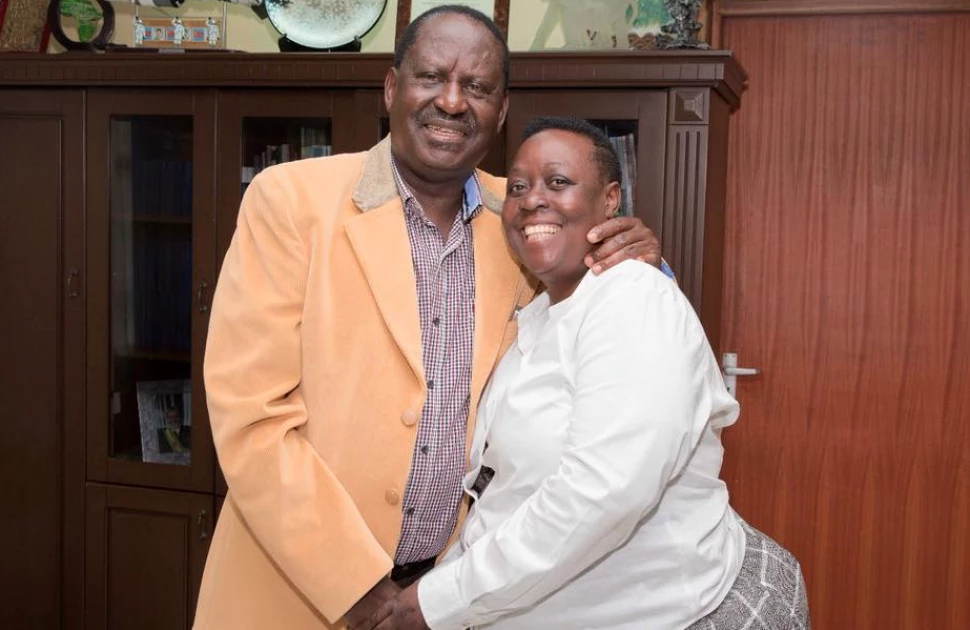
Raila Odinga’s younger sister, Ruth Odinga, has opened up about the uneasy relationship between the late former Prime Minister and Kenya’s Generation Z, acknowledging both the criticism and affection that defined their interactions in his final years.
Speaking to the press at the Opoda family home in Bondo, Ruth noted the irony of how some young Kenyans who once dismissed Raila are now among those mourning him most deeply.
“You’re the same people, especially you Gen Zs, showing so much love now that he’s gone. But how about when he was alive and you said akufe? He died knowing that some of you wanted him gone. He would have loved to feel that love while still alive,” she said.
Ruth expressed sorrow over the pain her brother endured and the void his passing leaves behind.
“When I laid him down and stopped the machines, I said Kenya has lost. Kenya is lost I don’t know where it’s going without Raila,” she added.
She also recalled moments that capture Raila’s vision and foresight, including his decision to turn their family home into a museum an idea she initially resisted but now appreciates.
“I remember protesting because I didn’t know where I’d go as the last born. But now schools visit, there’s heritage everywhere. With Raila buried there, the Odinga family legacy will live forever in people’s minds,” Ruth reflected.
Ruth further revealed her wish that Raila’s body had been transported by road instead of air, reminiscing about the symbolic journey the family took when their father, Jaramogi Oginga Odinga, was laid to rest walking alongside mourners from Nairobi to Kisumu.
Raila’s relationship with Gen Z became strained during the 2024 anti-Finance Bill protests, when many young Kenyans declared they had “taken over the opposition,” urging him to step aside. Some accused him of losing touch after his allies joined President William Ruto’s administration.
In response at the time, Raila dismissed the claims:
“I am not a beneficiary of the Gen Z protests. That is a useless allegation. Ruto said he wanted to involve a broader section of society and asked if we could nominate some people from our party,” he said in December 2024.
Now, in the wake of his passing, Ruth’s reflections paint a picture of a man whose impact transcended political fault lines a leader whose legacy continues to challenge, inspire, and unite even his harshest critics.