Activity is gradually returning to Khartoum’s central market, offering a fragile sense of normalcy in Sudan’s capital after months of intense fighting. With the Sudanese army now firmly back in control of the city, traders and residents are beginning to reoccupy spaces that were once at the heart of daily economic life.
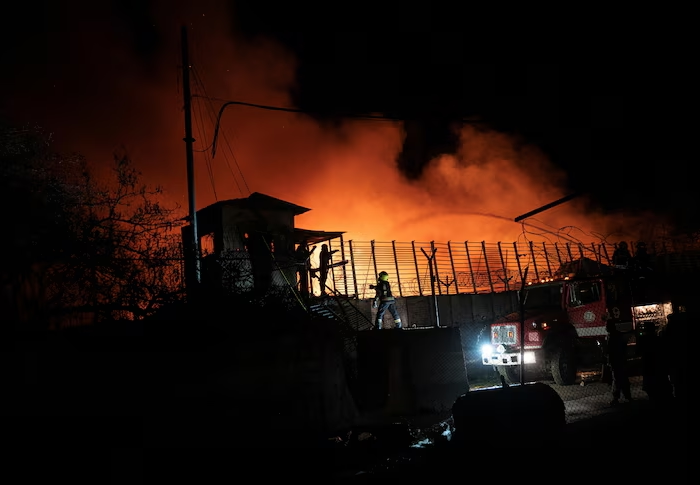
In April 2023, violent clashes erupted in central Khartoum between the Sudanese Armed Forces and the paramilitary Rapid Support Forces (RSF), turning key commercial districts into battlegrounds. The RSF were later pushed out following a major army-led offensive launched in March last year, allowing limited commercial activity to resume.
While stalls are reopening and foot traffic is slowly increasing, market vendors say business conditions remain far from stable. Supply chains have been badly disrupted, and the cost of transporting goods into the city continues to push prices beyond the reach of many consumers.
“Prices are somewhat high due to the difficulty of bringing produce to the market,” said Hashim Mohamed, a trader at the market. “There are challenges all along the route—from farms and warehouses to the market itself. If transportation fees were reduced and security on the roads improved, prices would come down.”
Unlike frontline cities and displacement camps elsewhere in Sudan, Khartoum is no longer facing the immediate threat of mass starvation. However, the broader economic situation remains dire. The prolonged conflict has severely weakened the national economy, with the Sudanese pound experiencing a dramatic collapse. Before the war, the currency traded at around 570 pounds to the US dollar; by 2026, it has fallen to approximately 3,500.
Market vendors say the economic strain is evident in day-to-day operations. “We are suffering from a lack of resources, a shortage of workers, and limited cash flow in the market,” said Adam Hammad, another trader. “The market is not what it used to be, but overall, conditions are better than when the Rapid Support Forces were in control.”
Sudan’s conflict has claimed tens of thousands of lives and forced millions from their homes. The United Nations has described the situation as the world’s worst humanitarian crisis, with widespread displacement, food insecurity, and the collapse of basic services across much of the country.
As Khartoum’s central market slowly reopens, it stands as a symbol of resilience amid devastation. Yet for traders and residents alike, a full recovery will depend on lasting security, restored infrastructure, and meaningful economic stabilization in a country still grappling with the deep scars of war.