Haiti’s fragile political transition took a dramatic turn on Friday after the country’s transitional presidential council announced it had voted to dismiss Prime Minister Alix Didier Fils-Aimé, just two weeks before the panel itself is scheduled to step down.
Council’s Announcement
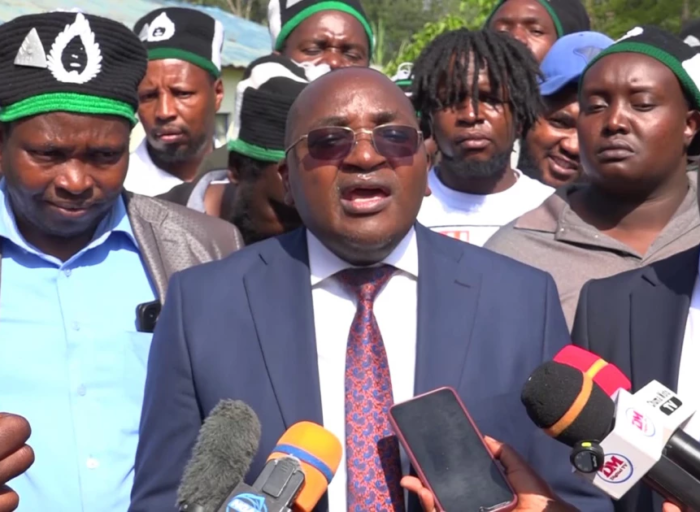
Council member Edgard Leblanc Fils, speaking at a news conference alongside fellow member Leslie Voltaire, said a majority of the panel voted Thursday to remove Fils-Aimé, defying calls from the U.S. government to maintain stability in Haiti’s leadership.
Leblanc did not provide detailed reasons for the decision but pledged that the council would secure a replacement within 30 days.
“We know that the decision we make is in the interest of the country and in this sense, our friends in the international community will have to take note of our decisions,” Leblanc said.
Voltaire emphasized that the council, not foreign actors, would choose Fils-Aimé’s successor.
“Everyone is looking for a Haitian solution to the crisis, but when we start to find a Haitian solution to the crisis, the international community comes in with all its claws,” he said.
U.S. Reaction
The U.S. State Department had warned late Thursday that keeping Fils-Aimé in office was “integral” to Haiti’s efforts to confront gangs that have terrorized the country. It cautioned that politicians supporting criminal networks would face consequences.
On Friday, U.S. Secretary of State Marco Rubio reaffirmed support for Fils-Aimé, stressing that Haiti’s stability depends on consistent leadership backed by the Haitian people. Rubio also insisted the council must dissolve by February 7 to pave the way for elected governance.
Rising Pressure for Elections
The council faces mounting pressure to organize Haiti’s first general elections in a decade, with tentative dates set for August and December 2026. The vote would mark the first presidential election since the assassination of President Jovenel Moïse in July 2021.
Security Crisis
Gang violence has surged in recent years, with armed groups controlling an estimated 90% of Port-au-Prince and large parts of Haiti’s central region. The United Nations reported more than 8,100 killings between January and November last year, warning that the true toll is likely higher.
Uncertainty Ahead
Analysts warn that the council’s decision could further destabilize Haiti’s political landscape. Author Michael Deibert noted that if the council fails to step down by February 7, it could add “another element of volatility and uncertainty in a country already struggling with the rupture of constitutional order and incredibly severe crises of violence and insecurity.”
With alliances shifting rapidly, observers caution that more upheaval could unfold in the coming weeks.
Conclusion
The dismissal of Prime Minister Fils-Aimé underscores the deep divisions within Haiti’s transitional leadership and the challenges of balancing domestic political maneuvering with international pressure. As the February 7 deadline approaches, Haiti’s path toward stability and democratic governance remains fraught with uncertainty.