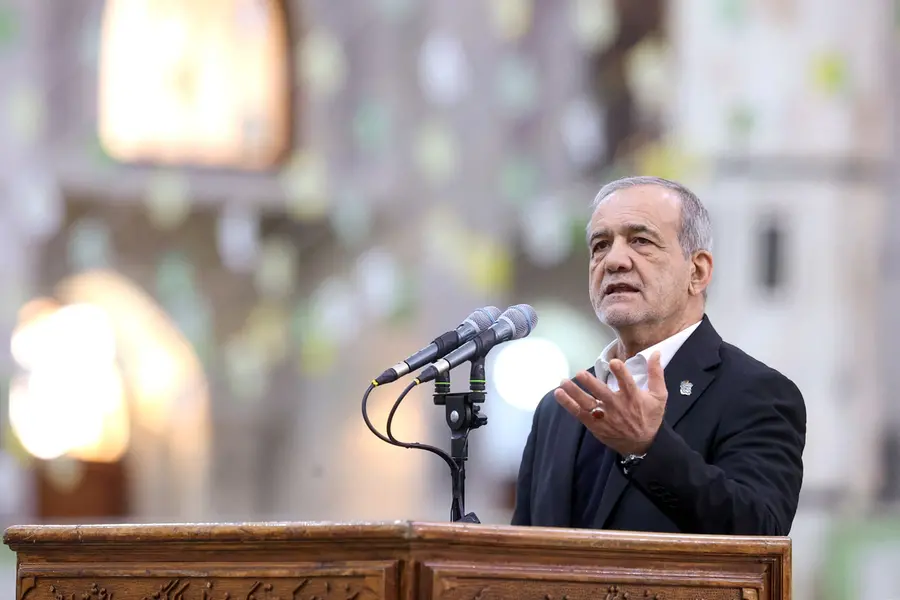
Tehran/Washington – In a pivotal shift, Iranian President Masoud Pezeshkian has ordered the start of nuclear talks with the United States, opening a new chapter in the fraught relationship between the two nations. The move comes as U.S. President Donald Trump expresses hope for a deal while simultaneously threatening military action and deploying an aircraft carrier group to the region.
Fragile Diplomacy
President Trump has warned that “time is running out,” while Tehran insists it “never accepts ultimatums.” Iran’s key condition for any agreement remains the lifting of sanctions.
Foreign Minister Abbas Araghchi signaled cautious optimism, stating that a deal is “possible,” aligning with Trump’s stated goal of preventing Iran from developing nuclear weapons but only through diplomacy.
Regional Powers Push for Calm
Neighboring states are urgently mediating, fearing that a U.S. strike could ignite a wider regional war. Iran’s supreme leader warned that any American attack would trigger a “regional war,” prompting diplomatic outreach to Turkey, Saudi Arabia, and Egypt.
Domestic Crackdown and International Fallout
The order for talks follows a deadly crackdown on anti-government protests inside Iran. Authorities have acknowledged over 3,000 deaths, while rights groups estimate the toll to be twice as high, with at least 40,000 arrests.
In response to the crackdown, the European Union designated Iran’s Revolutionary Guard a terrorist organization. Tehran retaliated by labeling European armies with the same designation, escalating tensions further.
A Narrow Path Forward
The path ahead remains perilously narrow, balancing fragile diplomacy against the backdrop of military posturing and severe domestic unrest. While the talks offer a potential opening for de-escalation, the combination of sanctions, regional fears, and human rights concerns underscores the complexity of achieving lasting peace.