
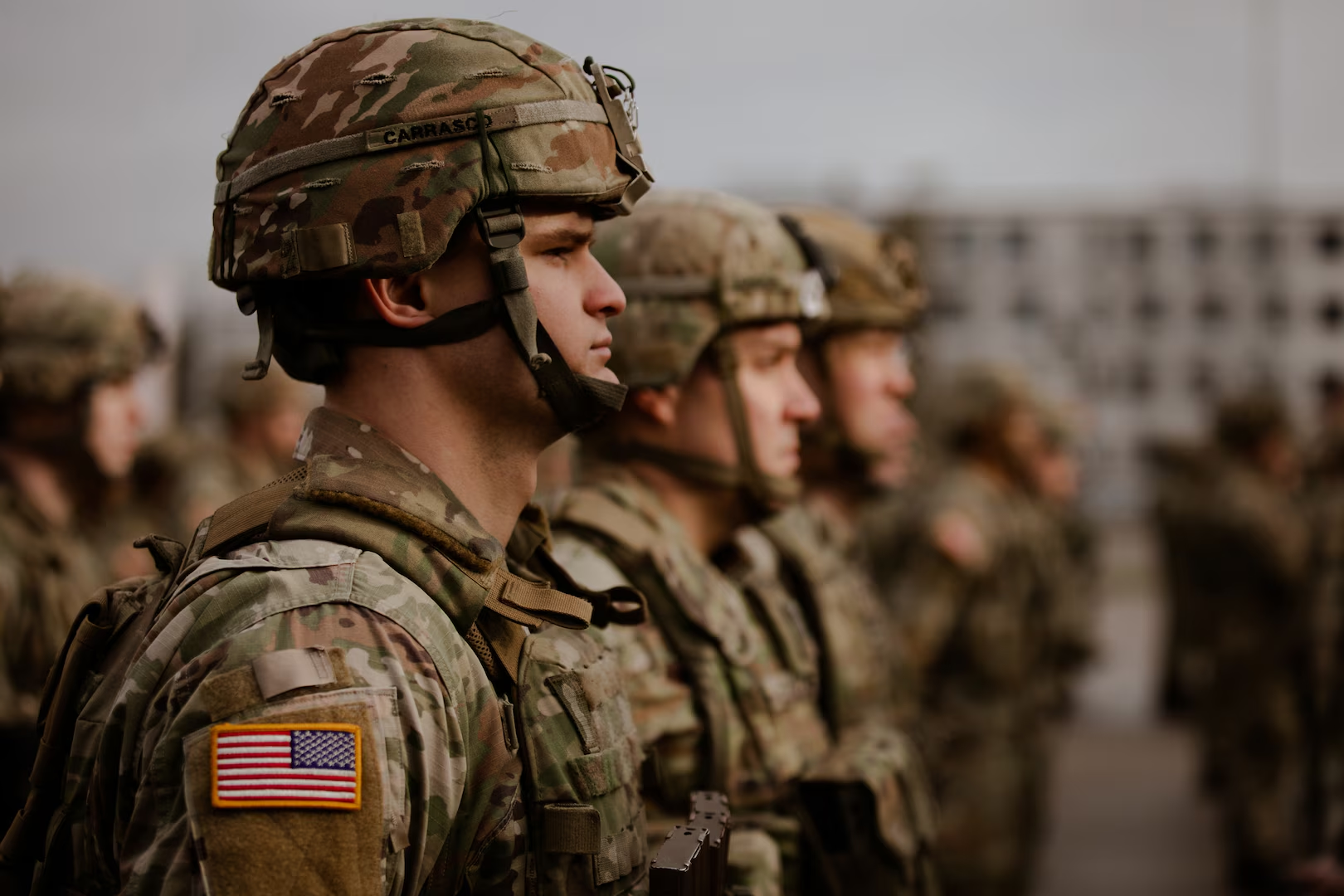
Abuja, Nigeria – The United States will deploy 200 troops to Nigeria to train its armed forces in counter-jihadist operations, officials from both countries confirmed Tuesday. The move marks a significant expansion of military cooperation between Washington and Abuja as Nigeria battles a long-running insurgency.
Training and Technical Support
Major General Samaila Uba, spokesman for Nigeria’s Defense Headquarters, told AFP:
“We are getting US troops to assist in training and technical support.”
The deployment, first reported by the Wall Street Journal, will supplement a small US team already in Nigeria assisting with air strike targeting. The additional troops are expected to arrive in the coming weeks, providing training and technical guidance to help Nigerian forces coordinate operations involving both air strikes and ground troops.
A US Africa Command spokeswoman confirmed the details, emphasizing that American forces will not engage in direct combat.
Diplomatic Context
Nigeria has faced diplomatic pressure from Washington over insecurity, with US President Donald Trump describing the violence as “persecution” and “genocide” against Christians. However, analysts and Nigerian officials reject this framing, noting that jihadist groups such as Boko Haram and Islamic State West Africa Province (ISWAP) kill both Muslims and Christians in large numbers.
Independent experts argue the crisis reflects broader state failure to curb violence across sparsely governed regions, where jihadist insurgents and armed gangs operate with impunity.
Recent Operations
In December, US forces conducted joint strikes with Nigeria against militants in Sokoto state, underscoring the growing collaboration. Going forward, the US military has pledged to supply intelligence for Nigerian air strikes and expedite arms purchases.
“US troops aren’t going to be involved in direct combat or operations,” Uba told the Wall Street Journal. “Nigeria requested the additional assistance.”
Nigeria’s Security Challenges
Africa’s most populous country faces multiple security threats:
- Northeast: A jihadist insurgency led by Boko Haram and ISWAP.
- Northwest: Armed “bandit” gangs conducting kidnappings and village raids.
- Central regions: Violence between mostly Christian farmers and Muslim Fulani herders, driven largely by competition over dwindling land and resources.
Conclusion
The deployment of 200 US troops represents a significant scaling up of bilateral military cooperation. While Nigeria continues to reject claims of religious persecution, the partnership highlights shared priorities in combating jihadist violence and stabilizing one of Africa’s most strategically important nations.

