
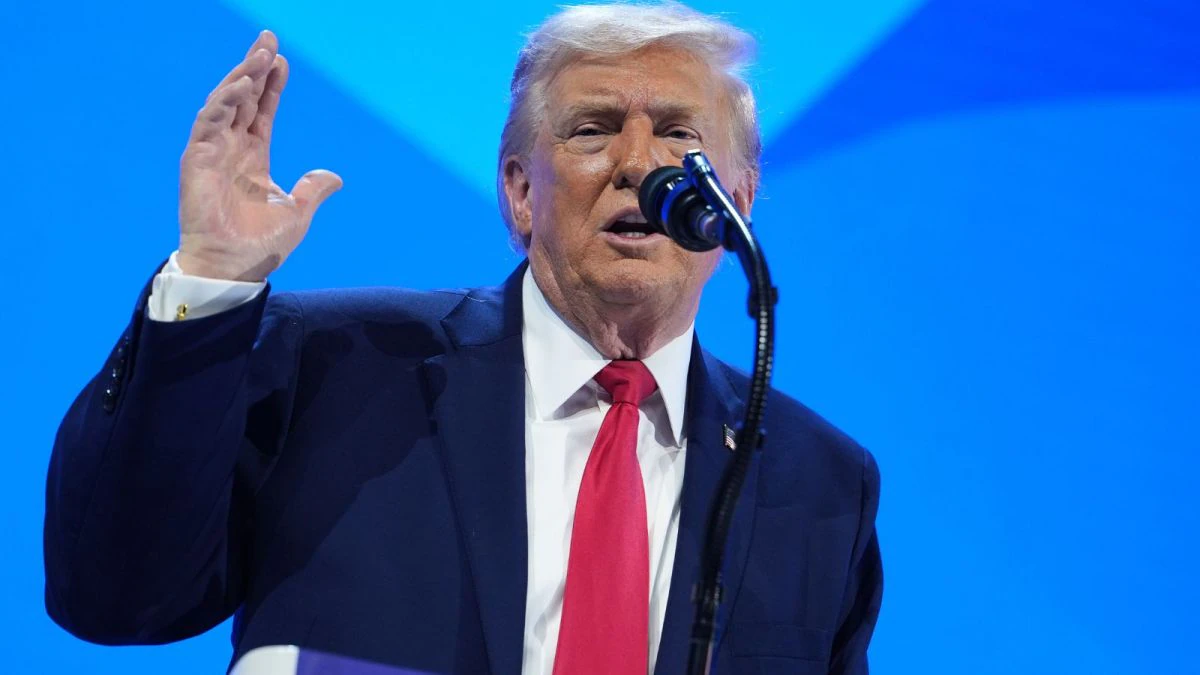
US President Donald Trump on Friday unleashed an extraordinary personal attack on the Supreme Court justices who struck down his sweeping global tariffs, accusing them of being “swayed by foreign interests” and branding them “fools and lap dogs.”
Sharp Rebuke of Justices
Speaking at a White House press conference, Trump said he was “ashamed” of certain members of the court, including two of his own appointees, Amy Coney Barrett and Neil Gorsuch, who joined Chief Justice John Roberts and the court’s three liberals in the 6–3 ruling.
“I think their decision was terrible. I think it’s an embarrassment to their families if you want to know the truth,” Trump said.
The president praised conservative justices Clarence Thomas, Samuel Alito, and Brett Kavanaugh for siding with him, calling Kavanaugh a “genius” for his 63-page dissent.
Allegations of Foreign Influence
Trump alleged that foreign interests had influenced the ruling, though he offered no evidence.
“It’s my opinion that the court has been swayed by foreign interests… whether it’s through fear or respect or friendships, I don’t know,” he said.
Asked if he had proof, Trump replied: “You’re going to find out.”
Political and Legal Context
The tariffs ruling was the first major setback for Trump before the conservative-dominated court since his return to the White House. While the Supreme Court has largely sided with him on other issues, the decision struck down his use of the International Emergency Economic Powers Act (IEEPA) to impose global tariffs.
Vice President JD Vance echoed Trump’s criticism, calling the ruling “lawlessness from the court.”
Expert Reaction
Legal scholars warned that Trump’s attacks reveal a misunderstanding of the separation of powers. Steven Schwinn, a constitutional law professor at the University of Illinois Chicago, said:
“He seems to believe that any good-faith disagreement with his own interpretation of the law is, by definition, illegitimate. This is not how a democracy works.”
Conclusion
The clash underscores mounting tensions between the White House and the Supreme Court, drawing comparisons to historic confrontations such as Franklin D. Roosevelt’s court-packing plan. With Trump openly questioning the loyalty of justices, the fallout from the tariffs ruling is likely to reverberate across both legal and political arenas.

