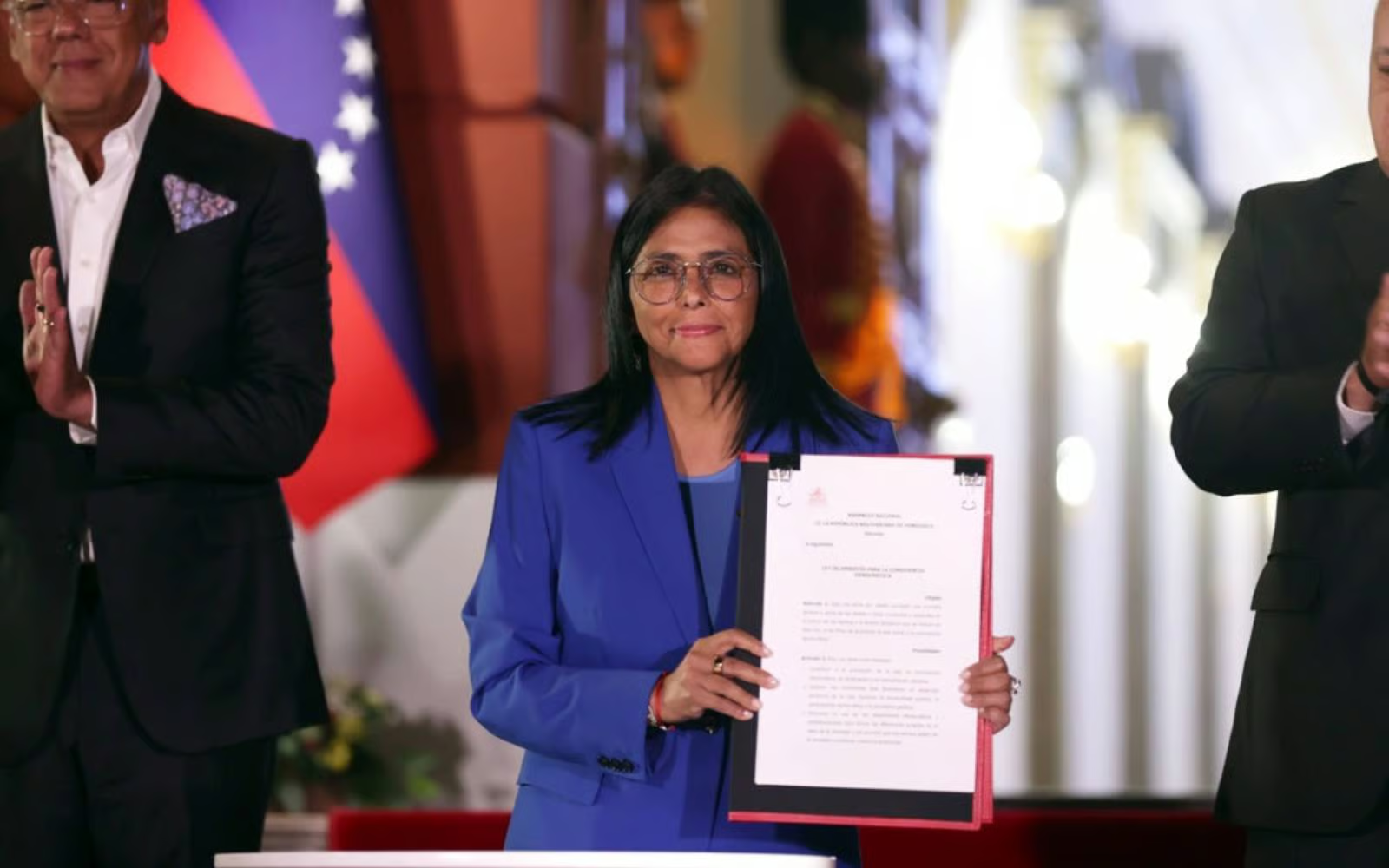
Venezuela’s interim president Delcy Rodriguez pledged on Monday, February 23, 2026, that citizens in exile would be welcomed back following the passage of a landmark amnesty law, as authorities continued releasing prisoners in a bid to foster reconciliation after the ouster of Nicolas Maduro.
Amnesty and Return for Exiles
In a televised address, Rodriguez declared:
“The doors of Venezuela, the arms of the Venezuelan people, are open to those who want to return in this process of healing from hatred.”
An estimated seven million Venezuelans fled the country during years of political and economic crisis, with many opposition figures living abroad.
Prisoner Releases
On Monday, 34 prisoners were freed from the Rodeo I penitentiary east of Caracas, including military cadets accused of plotting coups and civilians linked to alleged assassination conspiracies. Families celebrated outside the prison gates, with scenes of joy and relief marking the releases.
Since January, approximately 500 people have been released, though NGOs such as Foro Penal estimate that 600 political prisoners remain behind bars.
International Dimension
While Venezuela presses ahead with reconciliation, its authorities have demanded the release of Nicolas Maduro, who is currently jailed in the United States on drug trafficking charges. Foreign Minister Yvan Gil Pinto, addressing the UN Human Rights Council in Geneva, condemned the U.S. raid that captured Maduro on January 3, 2026, calling it an “illegal military action.”
Legislative and Diplomatic Shifts
The amnesty law, unanimously adopted last Thursday, has been hailed by Rodriguez as a step toward “a more democratic, fairer, freer Venezuela.” Her brother, parliament chief Jorge Rodriguez, said 1,500 people had already applied for amnesty.
The legislation has also accelerated Venezuela’s thaw with the West. The European Union’s top diplomat Kaja Kallas announced plans to propose lifting EU sanctions on Rodriguez, while the UN rights office confirmed talks to reopen its mission in Caracas.
In a further sign of change, Rodriguez dismissed Camilla Fabri, wife of businessman Alex Saab, from her cabinet. Saab, previously indicted in the U.S. for money laundering, had served as industry minister before being removed earlier this year.
Conclusion
The amnesty law and prisoner releases mark a turning point in Venezuela’s post-Maduro era, signaling efforts to reconcile past divisions while reshaping ties with international partners. Whether these reforms will fully address lingering concerns over political freedoms and accountability remains to be seen.