
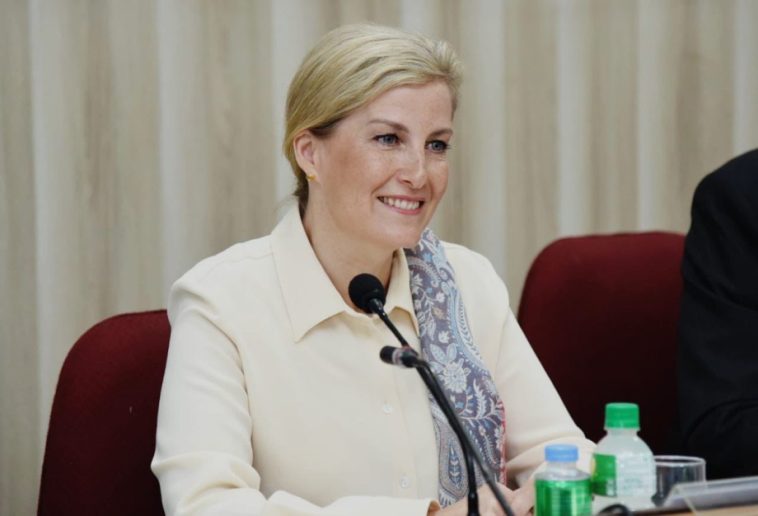
The Duchess of Edinburgh has called for decisive and immediate action to address gender-based violence (GBV) in Kenya and globally, as the world prepares to mark International Women’s Day on March 8.
Speaking during her two-day visit to Kenya, the Duchess long a champion of the Women, Peace and Security agenda said her engagement with William Ruto had opened pathways toward strengthening protections for Kenyan families affected by gender-based violence.
While acknowledging that progress from policy intent to implementation remains uneven, she expressed optimism following discussions with the President. “I was very gratified by his response, his empathy, and his understanding of the issues,” she said during a meeting held on February 25. “We have to move from intent to action. The narrative has started to shift, and I do feel a change in the air.”
The Duchess highlighted Kenya’s forthcoming third National Action Plan as a positive development, noting its focus on elevating women’s leadership and participation in decision-making, including on regional peace and security. She stressed that women’s roles are particularly critical in regions affected by climate change and cross-border instability.
“The word is action,” she said. “We have to change things from being plans into actions, because we know that if we do, everybody stands to win.”
Importantly, she urged for a more inclusive approach to addressing GBV, emphasising that men and boys must also be recognised as victims and partners in prevention efforts. “When we speak of gender-based violence, this doesn’t just mean women and girls. It means men and boys as well,” she said. “Women’s bodies should not be a battleground. The world is a better place when we work together.”
Kenya’s Principal Secretary for Foreign Affairs, Korir Sing’oei, noted that although the 2010 Constitution enshrines equality and sets minimum thresholds for women’s participation in public institutions, these targets have yet to be fully realised. He also cited Kenya’s peacekeeping deployments in Somalia, Haiti and other regions as valuable sources of insight into conflict-related gender-based violence.
“We have brought back real lessons and real capacities that we can now apply at home,” Sing’oei said, adding that measures are being developed to protect and support women candidates ahead of the 2027 elections, particularly during party primaries.
Dr. Edward Barnett, Chargé d’Affaires at the British High Commission, warned that technology-facilitated gender-based violence is a growing threat to democratic participation. He cited global data showing that between 16 and 58 percent of women experience online abuse, with figures exceeding 60 percent among women in public life in Kenya.
“Preventing and responding to technology-facilitated gender-based violence against women in public life is essential to safeguarding democracy itself,” Barnett said.
He outlined ongoing UK–Kenya initiatives, including survivor-centred policing with the National Police Service, university partnerships to develop tools against online harassment, and collaboration with civil society organisations such as Kiktonet to better understand and counter online abuse.
As Kenya and its partners look ahead to International Women’s Day, the message from leaders and advocates was clear: meaningful progress against gender-based violence will depend on sustained political will, inclusive engagement, and turning commitments into measurable action.

