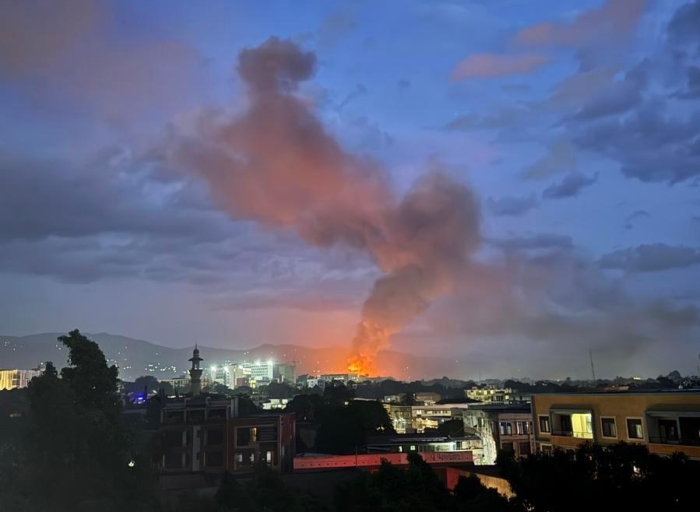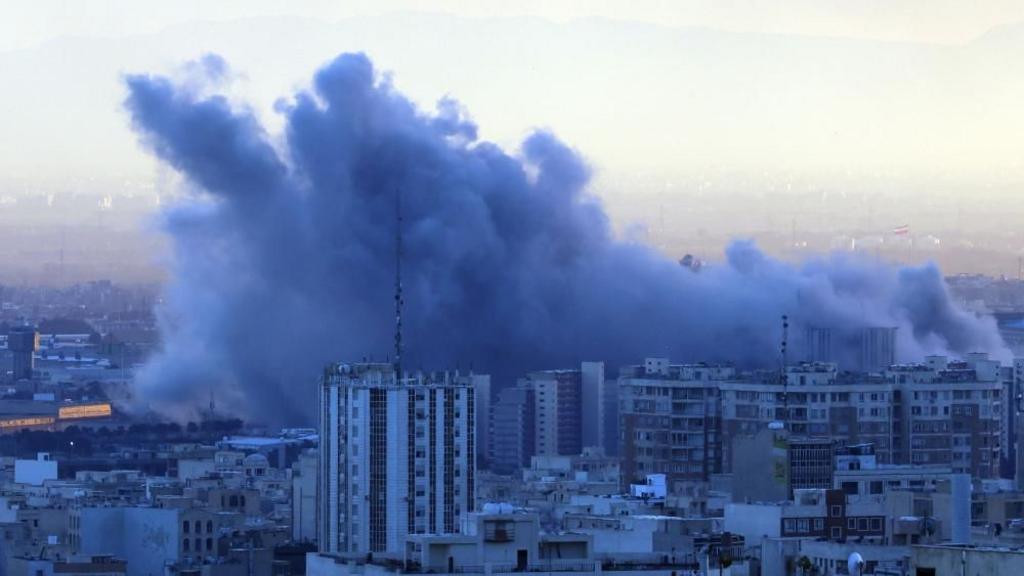
Israel early Wednesday launched a new wave of attacks on Iran, as the United States military confirmed it has struck nearly 2,000 targets inside the Islamic republic since joining the conflict alongside Israel over the weekend.
The escalation comes amid rising global energy prices, with President Donald Trump saying the United States Navy was prepared to escort oil tankers through the Strait of Hormuz, a vital shipping route Iran has repeatedly threatened to close.
Israel’s military said it carried out a “broad wave of strikes” across Iran shortly after midnight. Hours earlier, Iran had launched three separate missile barrages toward Israel, with authorities reporting minor injuries to a woman in Tel Aviv.
U.S. Confirms Scale of Military Operations
Admiral Brad Cooper, commander of United States Central Command, said American forces have targeted ballistic missile systems and other capabilities posing threats to U.S. and allied forces.
He described the deployment as the largest U.S. military buildup in the Middle East in a generation, adding that the first day of strikes exceeded the scale of the 2003 “shock and awe” campaign against Iraq.
Iran’s Red Crescent said at least 787 people had been killed in Iran during the U.S.–Israeli attacks, a figure that could not be independently verified.
Retaliation Spreads Across the Region
Iran vowed to impose heavy costs in response. Drones struck near the U.S. consulate in Dubai, causing a fire but no casualties, and targeted the Al Udeid Air Base in Qatar. Similar attacks were reported near U.S. diplomatic and military facilities in Saudi Arabia, Kuwait, and Bahrain.
A senior Islamic Revolutionary Guard Corps commander, Ebrahim Jabbari, warned that Iran would strike economic centers across the region if its core interests were attacked.
Diplomacy Collapses, Leaders Defiant
The conflict erupted days after U.S. envoys held nuclear talks with Iran in Geneva. Trump said it was now “too late” for negotiations, despite insisting Tehran wanted to resume talks. He also contradicted earlier remarks by Secretary of State Marco Rubio, saying he may have pressured Israel into acting sooner.
Meeting German Chancellor Friedrich Merz at the White House, Trump said Iran’s military leadership had been severely degraded and claimed that many potential successors had been killed.
U.S. and Israeli strikes have already killed Iran’s supreme leader, Ayatollah Ali Khamenei, according to U.S. statements, triggering a leadership transition in Tehran.
Lebanon Front Widens
The war has increasingly engulfed Lebanon, where Hezbollah launched rockets and drones at Israel, citing retaliation for Khamenei’s killing. Hezbollah said it targeted a naval base in Haifa, while Israel responded with strikes on southern Beirut.
Lebanon’s government said at least 52 people have been killed, and the United Nations reported more than 30,000 displaced. Israel also confirmed troop movements across the border to establish a buffer zone.
Region on Edge
In Iran, images showed damage at Mehrabad Airport, while strikes were also reported in Qom, including facilities linked to the body responsible for selecting a new supreme leader, according to Tasnim News Agency.
Across the Gulf, Hamad International Airport was briefly targeted, Oman reported drone attacks near the port of Duqm, and debris from intercepted drones caused a fire in the United Arab Emirates.
The United States ordered non-essential personnel to leave embassies across much of the region and urged Americans to depart if possible. Some 9,000 U.S. citizens have already returned home, according to the State Department.
Calls for De-Escalation
Civilian life has been severely disrupted, particularly in Tehran, where residents remain indoors amid heavy security and reduced movement. Casualties have also been reported in Israel, including in the town of Beit Shemesh.
International support for the U.S.–Israeli campaign has been limited. Canadian Prime Minister Mark Carney, speaking in Sydney, called for rapid de-escalation, reflecting growing global concern that the conflict could spiral further across the Middle East.