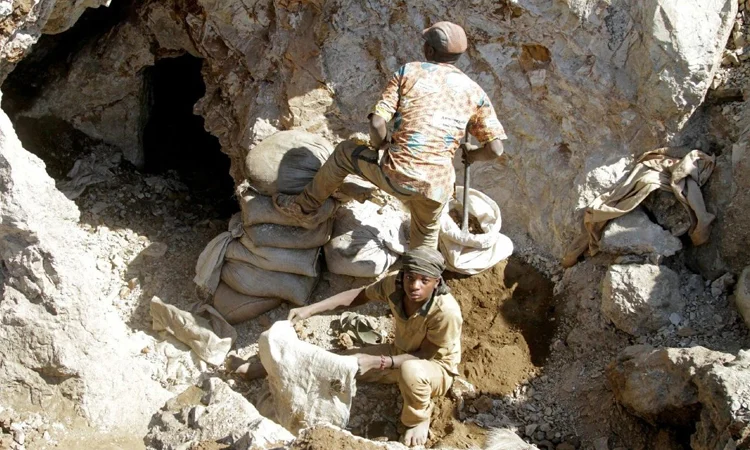
At least six people were killed Tuesday when a shaft collapsed at the Rubaya mine, the Democratic Republic of Congo’s largest coltan site located in the rebel-controlled east, witnesses told AFP.
Three women and three men died when the shaft gave way around 70 kilometres west of Goma, the provincial capital, while others were reported seriously injured.
“People died and others were seriously injured,” said witness Daniel, reached by phone from Goma. “After authorities ordered an evacuation, I saw two bodies on stretchers.”
Another witness confirmed the recovery of six bodies but declined to be named. Relatives of miners rushed to the site seeking news of loved ones.
Precarious Mining Conditions
Thousands of artisanal miners work in Rubaya under dangerous conditions, often equipped with only shovels and rubber boots. The mine accounts for 15 to 30 percent of global coltan production and has been controlled by the M23 rebels since April 2024. The Rwanda-backed movement reportedly earns around $800,000 a month from the mine through a $7-per-kilogram tax on coltan production and sales.
The collapse occurred in the area known as the Gasasa quarry. It follows a previous fatal incident at Rubaya, where a massive landslide at the end of last month may have killed up to 200 people, according to government estimates.
Conflict and Regional Instability
Since its resurgence in 2021, M23 has seized large areas of eastern DR Congo, exploiting the region’s rich natural resources. The area has been a hotspot of conflict for over three decades, and fighting around Rubaya has intensified in recent days. Notably, a drone strike on February 24 killed M23 military spokesman Willy Ngoma, escalating tensions further.
The tragedy highlights the ongoing dangers faced by artisanal miners in the region and underscores the broader risks posed by rebel control over key resource-rich areas.