
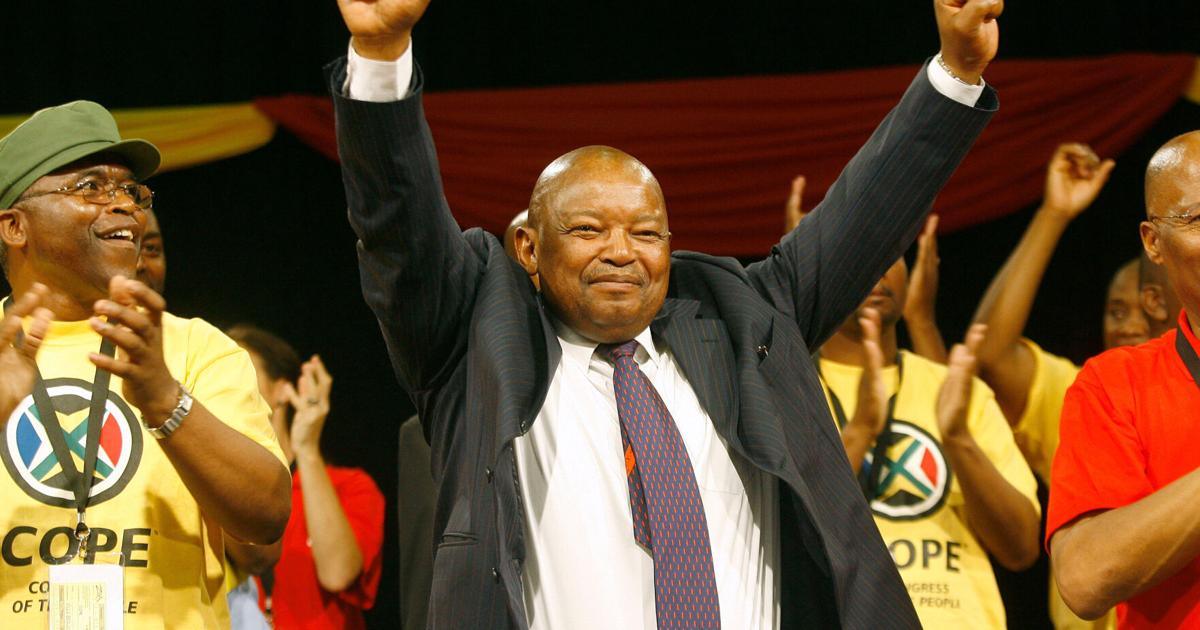
South Africa is mourning the death of veteran anti-apartheid activist and former defence minister Mosiuoa Lekota, who passed away on Wednesday at the age of 77 after a long illness, his political party confirmed.
Widely known by his nickname “Terror,” Lekota was a central figure in the struggle against white minority rule and spent eight years imprisoned on Robben Island from 1974 to 1982. During his incarceration, he was jailed alongside other leading anti-apartheid figures, including Nelson Mandela. Even after his release, Lekota remained under constant pressure from the apartheid regime and was repeatedly detained for his continued activism.
Following the advent of democracy in 1994, Lekota rose to senior leadership within the African National Congress (ANC), serving as the party’s national chairperson and later as South Africa’s minister of defence from 1999 to 2008. His tenure placed him at the heart of the country’s post-apartheid security reforms and regional peace initiatives.
Lekota’s relationship with the ANC deteriorated after the political upheaval that followed the removal of President Thabo Mbeki in 2008, after Mbeki lost the party presidency to Jacob Zuma the previous year. In response, Lekota led a major split from the ruling party and co-founded the Congress of the People (COPE).
COPE emerged as a significant political force in the 2009 general elections, securing just over seven percent of the national vote and 30 seats in parliament, becoming the third-largest opposition party at the time. The breakaway marked one of the most serious electoral setbacks for the ANC since 1994 and reshaped South Africa’s opposition landscape.
Although COPE later declined amid internal factional disputes and failed to win parliamentary representation in the 2024 elections, Lekota remained widely respected as a principled lawmaker who helped strengthen opposition politics. He stepped away from active politics in 2025 due to ill health, with his party appointing an acting leader.
Tributes have poured in from across South Africa’s political spectrum. Bantu Holomisa, deputy defence minister and leader of the United Democratic Movement, said Lekota’s decision to leave the ANC and form COPE played a critical role in reinforcing democratic pluralism.
“By forming COPE, he strengthened opposition parties and reminded the country of the original values of the liberation struggle,” Holomisa said.
Lekota is remembered not only as a fearless anti-apartheid campaigner, but also as a statesman whose career reflected both the achievements and the unresolved tensions of South Africa’s democratic journey.

