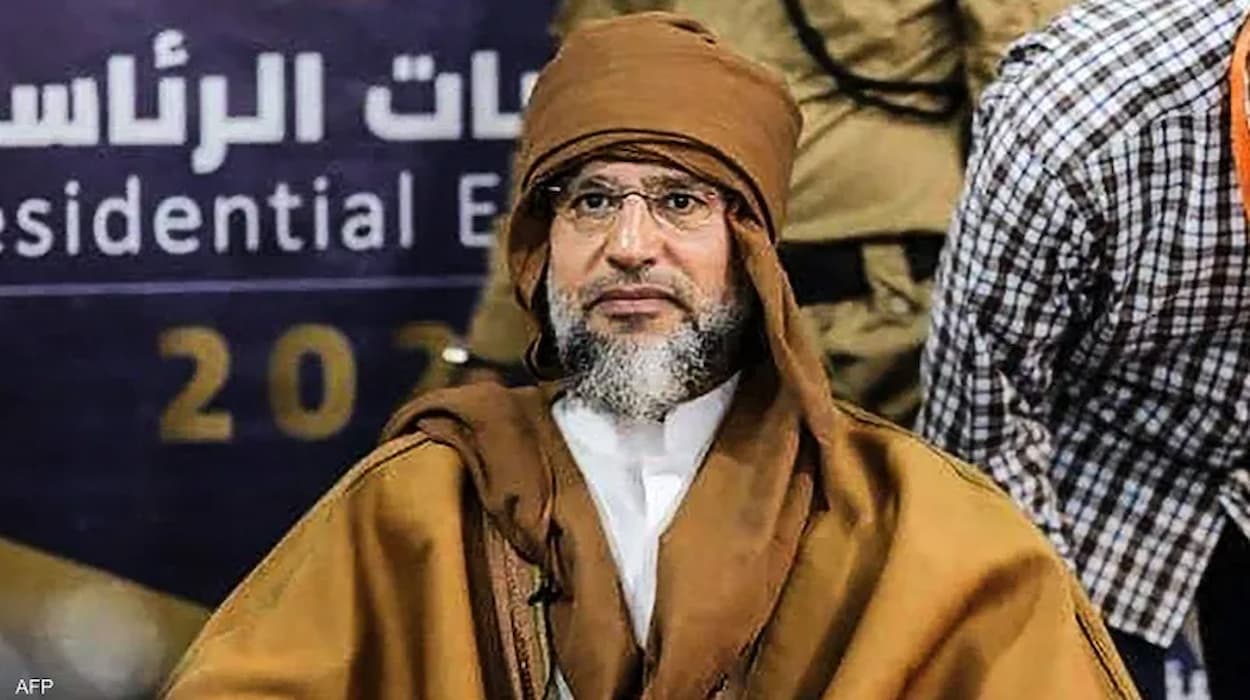
Authorities in Libya have ordered the arrest of three suspects linked to the assassination of Saif al-Islam Gaddafi, according to a statement released Thursday by the country’s public prosecutor’s office.
Investigators said they had identified three individuals believed to be involved in the killing and had determined when and where the murder took place. However, officials have not yet released further details regarding the identities of the suspects or the circumstances surrounding the attack.
Saif al-Islam was assassinated on February 3 in the north-western city of Zintan. Authorities previously confirmed that an initial investigation indicated he died from gunshot wounds, but additional details about the incident have remained limited.
Details of the Attack
Following the killing, Saif al-Islam’s political team issued a statement alleging that four masked men forced their way into his residence before carrying out the attack.
According to the statement, the assailants disabled security cameras before storming the property and shooting him in what his supporters described as a “cowardly and treacherous assassination.”
Political Legacy and Controversy
Saif al-Islam was the son of former Libyan leader Muammar Gaddafi, who ruled the country for more than four decades before being overthrown and killed during the Libyan Civil War, an uprising backed by NATO forces.
During his father’s rule, Saif al-Islam was widely viewed as a reform-minded figure within the government and was often seen as the regime’s international face.
After the collapse of the Gaddafi government in 2011, he was captured by fighters in Zintan. Though later sentenced to death by a court aligned with eastern authorities, local leaders in Zintan refused to hand him over.
He was eventually released in 2017 and continued to reside in the city, maintaining a controversial political presence.
Role in Libya’s Political Landscape
For many of his supporters, Saif al-Islam became a symbolic figure representing potential reconciliation in a country deeply divided since the civil war. Libya remains split between rival administrations based in the east and west, with competing institutions claiming legitimacy.
In 2021, Saif al-Islam announced plans to run for president in national elections intended to unify the country under a United Nations-backed political process. However, his candidacy was later disqualified.
Those elections were subsequently postponed indefinitely amid ongoing political disputes and security concerns.
The assassination and the latest arrests could further complicate Libya’s fragile political environment as authorities attempt to determine responsibility for the killing.