
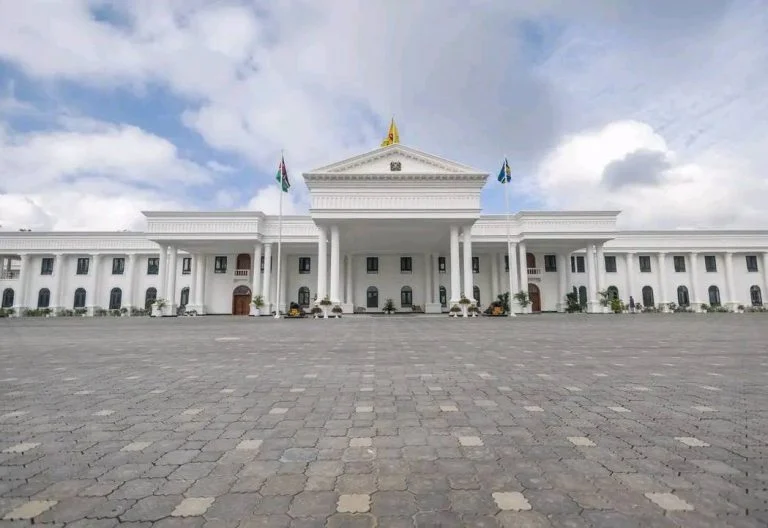
Nairobi, Kenya – New audit data has revealed that State House and the offices of the President and Deputy President spent Ksh.298.58 million on fuel in just the first six months of the 2025/26 financial year, raising concerns over government spending amid ongoing austerity pledges.
According to the Office of the Controller of Budget, State House alone accounted for Ksh.202.96 million, making it the second-highest government fuel consumer after the National Police Service, which spent Ksh.377.65 million during the same period.
If the current pace continues, analysts warn that fuel expenditure at State House could exceed all previous records by the end of the financial year.
Breakdown of Presidential and Deputy Presidential Fuel Use
- Deputy President’s office: Ksh.68.77 million, reflecting Prof. Kithure Kindiki’s extensive travel for national empowerment programs and political engagements, including campaigning for United Democratic Alliance (UDA) candidates in mini-polls.
- President Ruto’s office: Ksh.26.85 million, contributing further to the overall fuel bill.
Collectively, the vehicles consumed approximately 1.7 million litres of fuel, covering an estimated 14 million kilometres.
Since assuming office in September 2022, State House has spent Ksh.1.092 billion on fuel, with expenditures rising from Ksh.407.92 million in FY 2023/24 to Ksh.481.39 million in FY 2024/25.
The figures highlight a widening gap between the government’s austerity promises and actual operational costs, as political and administrative activities continue to drive high consumption.
Context of Government Recurrent Expenditure
In FY 2025/26, ministerial recurrent expenditure was allocated Ksh.1.80 trillion, compared to Ksh.1.77 trillion the previous year. Within the first six months, spending reached Ksh.899.74 billion, nearly 50 percent of the annual allocation, far above the 24 percent recorded during the same period in FY 2024/25.
Meanwhile, State House’s total projected expenditure for the current financial year is set at Ksh.17 billion, nearly double the initial allocation of Ksh.8.5 billion, with an additional Ksh.20 billion requested for FY 2026/27, citing four new state lodges as a key driver of increased costs.
Political Implications
Critics note that fuel expenditure is likely to rise further ahead of the 2027 General Election, as government officials and party leaders traverse the country for political mobilisation. Prof. Kindiki’s growing visibility, with popular slogans such as “Fire si Fire” and “Wewe Goliathi”, underscores the nexus between government operations and political activity.
The revelations have sparked debate over government priorities, especially as many Kenyans continue to face high living costs, increased taxation, and economic pressures. Analysts say the rising fuel bills reflect broader challenges in balancing operational requirements with fiscal discipline.

