
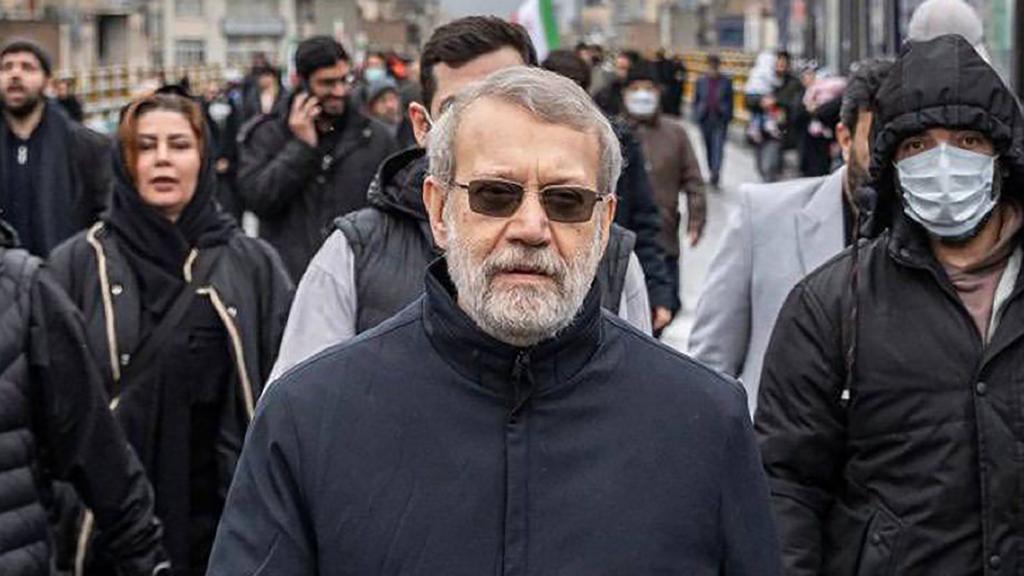
Israel announced on Tuesday that it had killed Ali Larijani, Iran’s national security chief, marking a potentially significant blow to Tehran amid intensifying regional hostilities.
Israeli Defence Minister Israel Katz stated that Larijani was “eliminated last night,” though the claim has yet to be independently confirmed by Iranian authorities. Earlier, Israel’s military also reported the death of Gholamreza Soleimani, head of the Basij paramilitary force of Iran’s Revolutionary Guards, following strikes on Tehran.
These developments come less than three weeks after US-Israeli strikes on February 28 killed Ayatollah Ali Khamenei, Iran’s supreme leader, triggering a wider war that has affected multiple countries across the Middle East. Khamenei’s son, Mojtaba Khamenei, has since assumed leadership, though his status remains unclear, with US President Donald Trump stating that “we don’t know… if he’s dead or not.”
Regional Impact and Rising Oil Prices
The conflict has resulted in hundreds of deaths and millions displaced, particularly in Iran and Lebanon, and has sent global oil prices surging. Iran’s attacks on vessels in the Strait of Hormuz, a critical corridor for crude oil and liquefied natural gas, have effectively disrupted international shipping. Early Tuesday, oil prices rose more than five percent amid concerns over supply.
Israeli strikes have targeted Tehran as well as Lebanon, where a residential building in the southern suburbs of Beirut an area dominated by Hezbollah was hit at dawn. Firefighters were reported at the scene, with rubble and debris scattered across surrounding streets.
Cross-Border Retaliation
Iran has retaliated against US and Israeli actions by targeting military, energy, and civilian infrastructure in the region. Its missile and drone attacks have primarily struck Gulf states, including Qatar, Saudi Arabia, UAE, Bahrain, and Kuwait. Falling debris from an intercept in Abu Dhabi killed one civilian on Tuesday.
The ongoing war has also drawn Iraq into the conflict, with drone and rocket attacks targeting the US embassy in Baghdad and a strike reportedly killing four people at a site hosting Iranian advisors.
International Response
Global powers have responded cautiously. While Canada, France, Germany, Italy, and the UK urged Israel to exercise restraint in Lebanon, Israel’s President Isaac Herzog called for European support to eliminate Hezbollah.
US President Donald Trump has demanded allies assist in securing the Strait of Hormuz, warning of consequences for NATO if countries refuse. European leaders, including UK Prime Minister Keir Starmer and German officials, have resisted direct military involvement, citing the conflict as outside NATO’s mandate. Analysts note that Washington’s unilateral approach has strained alliances.
Humanitarian Toll
The war has displaced over a million people in Lebanon, with more than 130,000 residing in temporary shelters. In Iran, the health ministry reports over 1,200 fatalities from US and Israeli strikes as of March 8, though these figures remain unverified.
As the conflict continues, the Middle East faces escalating instability, rising humanitarian needs, and significant disruptions to global energy markets.

