
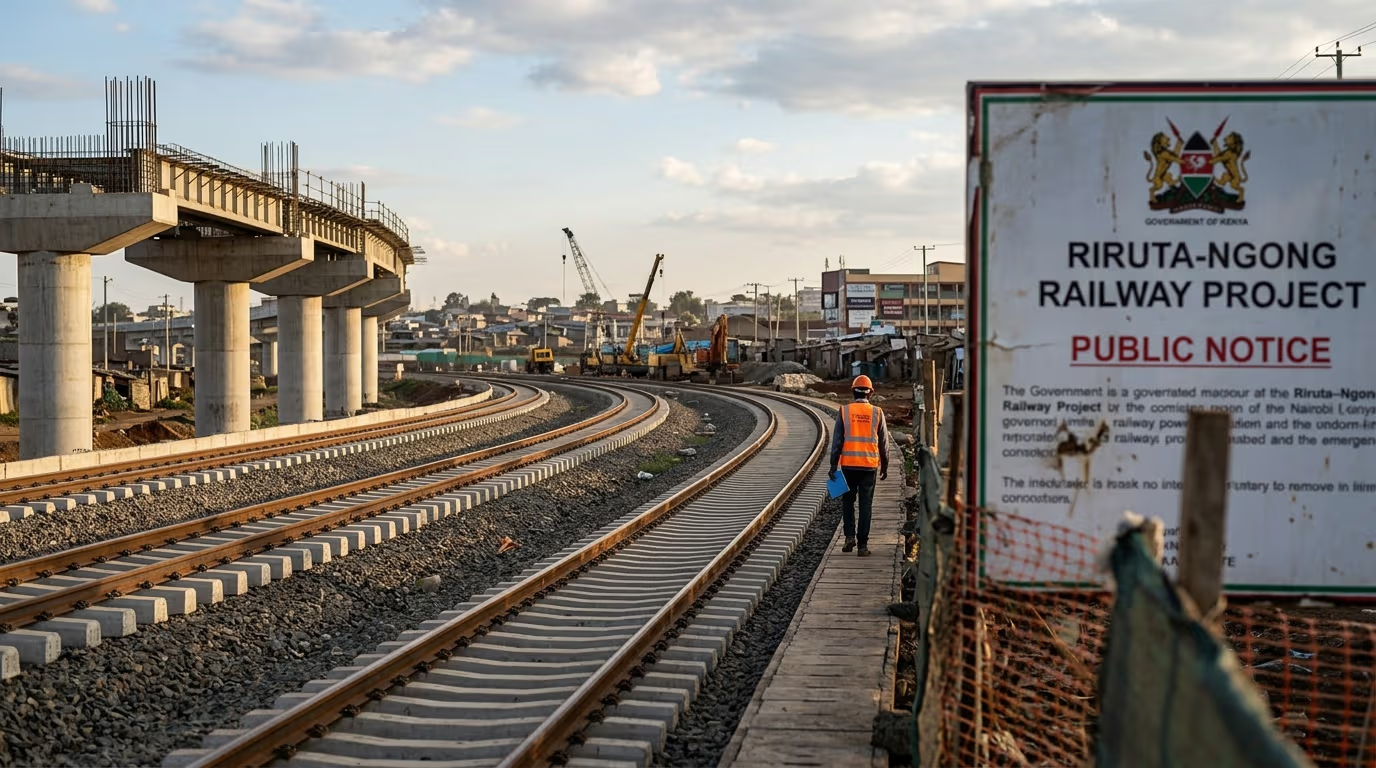
The High Court of Kenya has directed the government to produce key documents relating to the controversial Riruta–Ngong railway project, as scrutiny intensifies over its planning and implementation.
The 12.5-kilometre commuter meter-gauge railway (MGR) line is designed to ease congestion along Ngong Road and reduce travel time to Nairobi’s central business district. However, the project has faced legal challenges over concerns about transparency and compliance with statutory requirements.
Court Maintains Suspension Orders
In its ruling, the court upheld earlier interim orders suspending the project, stating that the status quo will remain in force pending the hearing and determination of the case, unless otherwise vacated.
The judge also issued mandatory directives requiring the government to submit verified records within 30 days.
Key Documents Required
The government has been ordered to provide:
- The feasibility study report for the project
- Engineering, procurement, and construction (EPC) contracts
- Financing agreements and related financial instruments
- Minutes of meetings associated with the project
- Parliamentary approvals authorising funding
- Evidence of public participation, including media notices
- Cabinet memoranda and approvals
- Loan agreements, liabilities, and other financing arrangements
The court emphasised that the documents are necessary to assess whether due process was followed in initiating and implementing the project.
Rising Scrutiny
The orders come amid growing public and legal scrutiny of the Riruta–Ngong railway, with petitioners questioning whether the project adhered to principles of accountability, transparency, and public participation as required under Kenyan law.
The case is expected to test compliance with constitutional and statutory safeguards in large-scale infrastructure developments, particularly those involving public funds and external financing.

