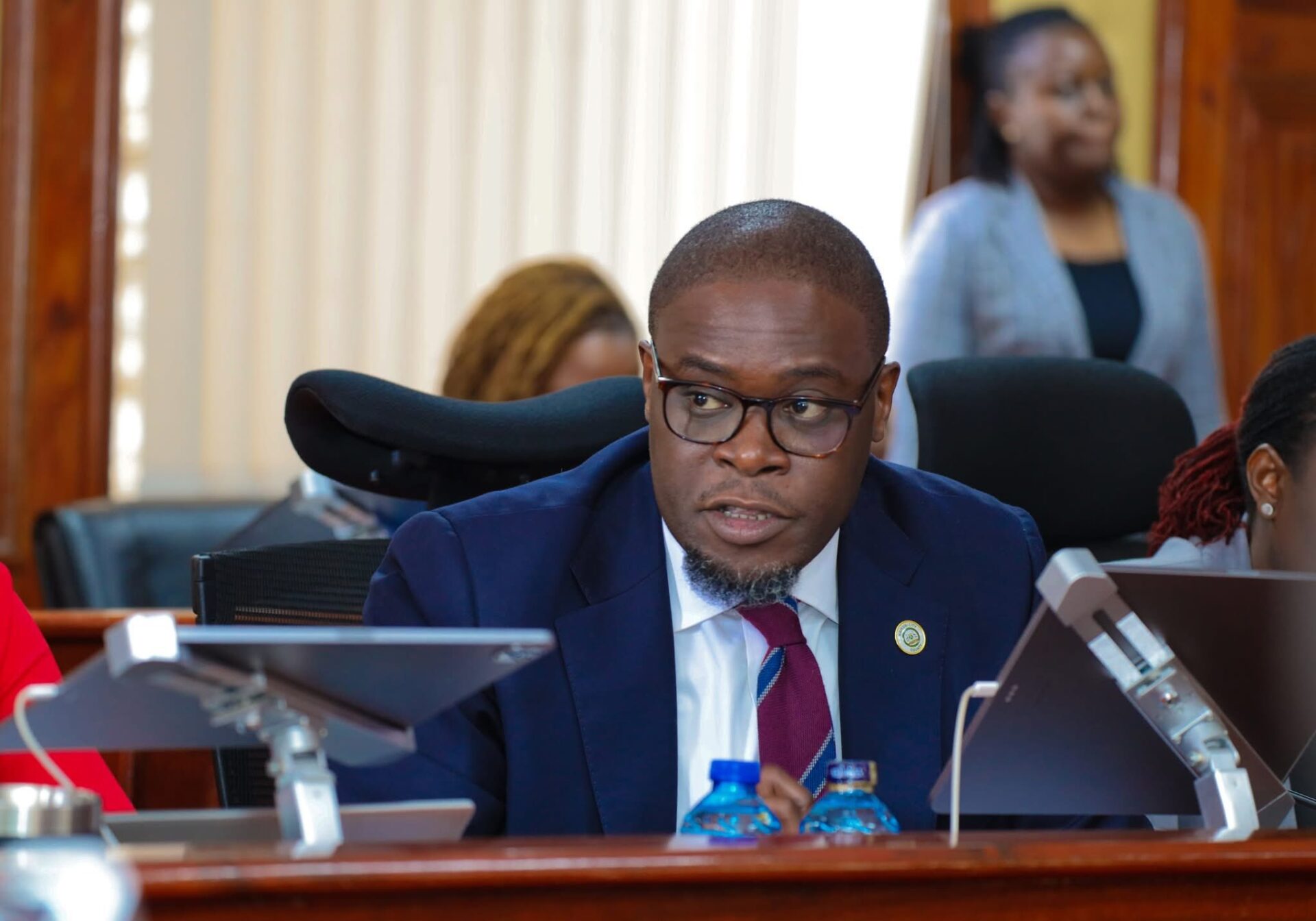
Nairobi Governor Johnson Sakaja is under fire after the Senate raised concerns over the appointment of seven advisors within his county government, roles the upper house says duplicate the functions of County Executive Committee (CEC) members.
The issue emerged during a session of the Senate County Public Accounts Committee, which was reviewing the Auditor-General Kenya’s report for the 2024/2025 financial year. Committee officials interrogated Nairobi County representatives about the necessity and cost of the advisory appointments.
Senate Questions Need for Advisors
Committee Chair Moses Kajwang’ criticized the governor for outsourcing duties that are typically handled by CECs and chief officers.
“In this report, it emerges that the Nairobi Governor has advisors for every other docket where there’s a CEC and a chief officer. He’s got seven advisors to advise on things that would be handled by the substantive CECs and chief officers,” Kajwang’ said.
“Sometimes you ask yourself, by the time someone decides to become a governor, they should understand the challenge before them rather than outsourcing their functions to advisors.”
Nairobi Senator Edwin Sifuna, a committee member, also questioned the financial burden of the appointments, noting that each advisor earns Ksh.203,000, bringing the total monthly cost to Ksh.9.7 million.
Warning to Non-Compliant Governors
Governor Sakaja failed to appear before the committee, prompting Kajwang’ to caution that continued absence could trigger formal action.
“We will hand over the files to the Directorate of Criminal Investigations, Ethics and Anti-Corruption Commission, Office of the Director of Public Prosecutions and Independent Electoral and Boundaries Commission. IEBC has a responsibility to ensure that persons running for office are persons who don’t have integrity issues or have ongoing investigations against them,” he warned.
Kajwang’ stressed that any failure by governors to explain discrepancies would result in the committee treating audit findings as factual and demanding action.
Public and Political Backlash
Sakaja’s administration has faced growing criticism following flooding that claimed 69 lives and displaced hundreds in Nairobi, raising questions about the county’s emergency preparedness and oversight.
The governor is also under pressure over an Ksh.80 billion cooperation agreement with the national government aimed at improving Nairobi’s infrastructure. Critics argue that the deal was rushed, lacked public participation, and bears similarities to the defunct Nairobi Metropolitan Services, though Sakaja insists it does not constitute a takeover.
In a recent interview, Sakaja dismissed calls for his resignation, emphasizing his commitment to implementing “tough decisions” for Nairobi’s transformation, even as questions about timing and accountability persist.