On the sandy shores of Gabon, the journey from nest to ocean is a perilous race for survival for newly hatched sea turtles one that underscores both the fragility of marine ecosystems and the growing challenges facing conservation efforts.
Each hatchling must scramble roughly 10 metres across open sand to reach the Atlantic Ocean, dodging predators such as crabs and birds. Yet even before this moment, their survival is far from guaranteed. Coastal erosion, habitat disruption, and plastic pollution increasingly threaten nesting sites along Gabon’s coastline.
A Global Stronghold for Leatherback Turtles
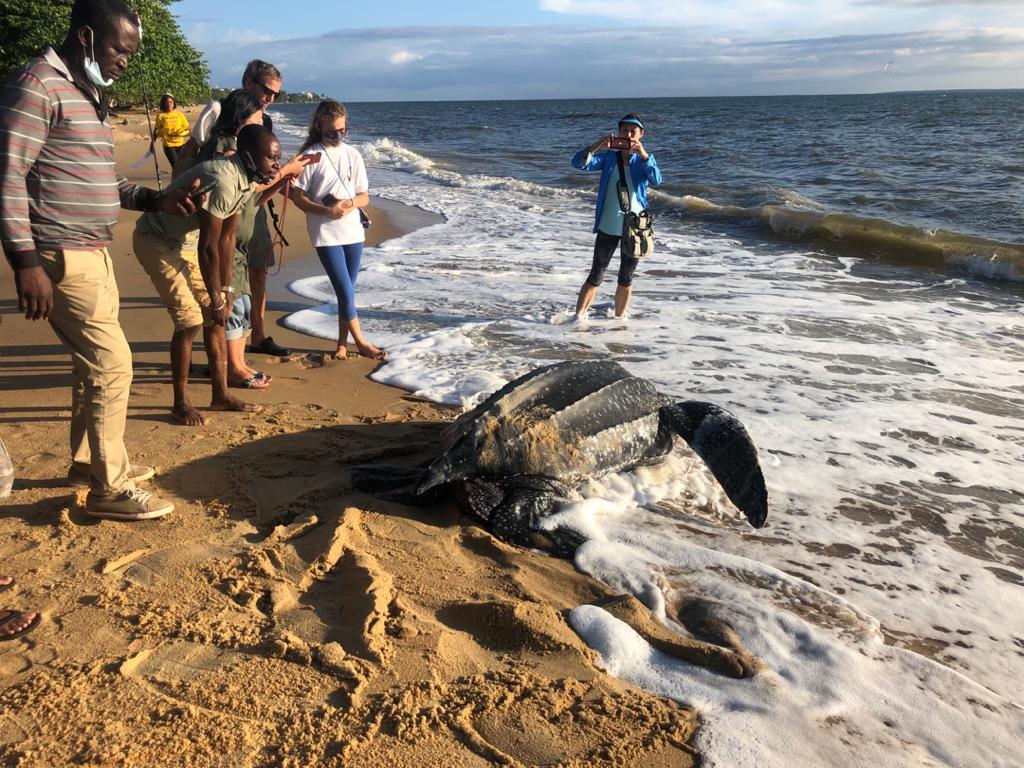
Gabon is recognized as the world’s most important nesting ground for the leatherback sea turtle, the largest of all sea turtle species and classified as threatened by the International Union for Conservation of Nature.
Despite the country’s ecological significance, survival rates remain extremely low. Conservationists estimate that only one in 1,000 hatchlings reaches adulthood due to natural and human-induced threats.
To improve survival chances, rangers often relocate vulnerable nests into protected enclosures near the shoreline. Once hatched, the turtles are released at a safe distance from the water, allowing them to build the strength needed to swim effectively.
Conservation Efforts Under Pressure
Key conservation work is concentrated in areas such as Pongara National Park, located near the capital, Libreville. The park’s gentle-sloping beaches and equatorial climate create ideal conditions for nesting, attracting four different sea turtle species each year.
During the October to April nesting season, eco-rangers and conservation groups patrol the coastline daily, protecting nests and monitoring turtle populations. Organizations such as the Wildlife Conservation Society and Aventures Sans Frontières play a central role in these efforts.
However, recent funding cuts linked to policies under former U.S. President Donald Trump have significantly disrupted operations. Monitoring programs have slowed or halted altogether, reducing both field capacity and critical data collection.
Rangers Persist Despite Hardship
The funding shortfall has left many eco-rangers working under severe constraints, with some going months without pay. Despite these challenges, patrols continue, driven by a commitment to protect one of the world’s most vulnerable marine species.
Conservationists warn that reduced monitoring could have long-term consequences, including increased nest losses and weakened protection frameworks.
A Delicate Balance for the Future
Gabon’s coastline remains one of the last strongholds for leatherback turtles, but sustaining this status will require renewed investment and international support.
As environmental pressures intensify, the survival of these ancient marine creatures will depend not only on natural resilience but also on the continuity of conservation programs working quietly along the country’s shores.