
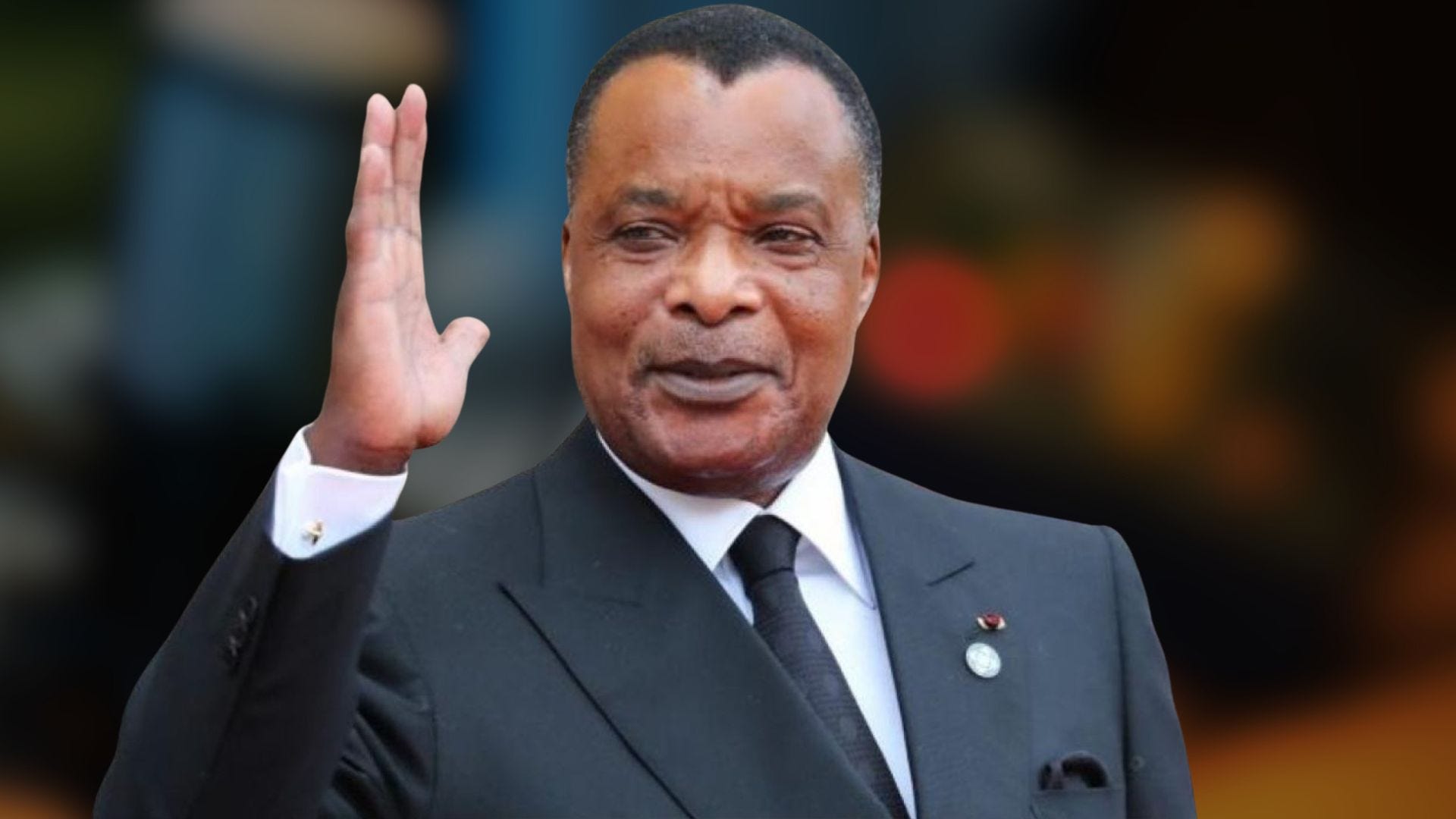
Veteran leader Denis Sassou Nguesso has secured another term in office after winning 94.9 percent of the vote in Congo-Brazzaville’s presidential election, according to official results announced by the constitutional court.
The March 15 vote extends Sassou Nguesso’s decades-long rule over the oil-rich Central African nation, formally known as the Republic of the Congo, granting him a new five-year mandate.
Landslide Victory Confirmed
Speaking during a public hearing, Constitutional Court president Auguste Iloki confirmed that Sassou Nguesso had secured an outright majority, with voter turnout reported at 65.9 percent.
The outcome, however, has been strongly contested by opposition figures, continuing a pattern that has followed nearly every election involving the incumbent leader.
Opposition candidate Dave Mafoula filed a petition seeking to annul the results, alleging irregularities. The court rejected the request, effectively validating the election outcome.
Four Decades in Power
Sassou Nguesso, 82, is among Africa’s longest-serving leaders. He first assumed power in 1979 under a one-party system and governed until 1992, when he lost the country’s first multi-party elections.
He returned to power in 1997 after a civil war that ousted the elected government, and has since maintained control through successive elections held from 2002 onward.
His extended tenure places him alongside other long-serving African leaders, including Teodoro Obiang Nguema Mbasogo and Paul Biya.
Stability vs Democratic Concerns
Supporters credit Sassou Nguesso with maintaining relative stability in a country that has experienced periods of conflict. However, international rights groups have consistently raised concerns about political repression and the lack of electoral transparency.
Several opposition figures have faced legal action, with two former presidential candidates from the 2016 election currently serving 20-year prison sentences on charges related to national security.
Constitutional Limits Ahead
Despite his latest victory, the current constitution bars Sassou Nguesso from contesting the presidency again after his new term expires in 2031. This provision could mark the first definitive endpoint to his political dominance in Congo-Brazzaville.
Regional Implications
The election outcome reinforces continuity in one of Central Africa’s key oil-producing states, but also highlights ongoing governance challenges across the region particularly around electoral credibility, democratic institutions, and political succession.
As Sassou Nguesso begins another term, attention is likely to shift toward how the government addresses both domestic dissent and international scrutiny over its democratic record.

