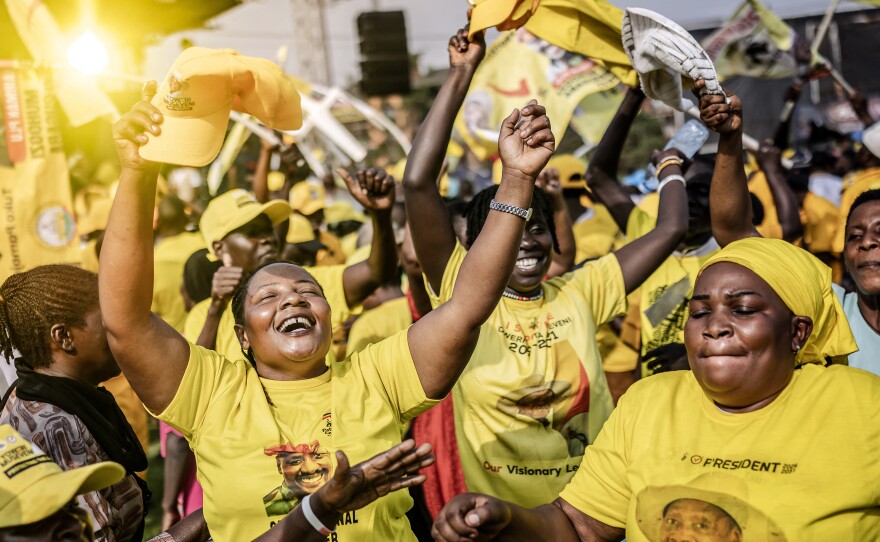
Ugandan President Yoweri Museveni hailed his election victory on Sunday as a demonstration of his party’s enduring dominance, following official results that awarded him a seventh term in office. Museveni, who has governed the East African nation for four decades, secured 71.6 percent of the vote, while opposition leader Bobi Wine, also known as Kyagulanyi Ssentamu, garnered 24.7 percent.
Speaking from his country home in western Uganda, Museveni suggested that the low voter turnout of 52 percent the lowest since the country’s return to multiparty politics in 2006 favoured his party. “Ten million of my people did not turn up. They [the opposition] would have been embarrassed badly,” he said. Museveni indicated that many of the non-voters were members of his own party, underscoring the perceived strength of his political base.
The president, Africa’s third-longest-serving leader, emphasized the relative peace and stability his administration has maintained, noting Uganda’s role as a refuge for hundreds of thousands fleeing violence in neighbouring countries. He also accused opposition forces of attempting to incite violence during the elections and urged religious leaders to guide young people away from unrest. Museveni cited incidents in Mpigi district where at least seven supporters of Wine’s party were killed following clashes with police.
Uganda’s election process was marked by controversy, including a days-long internet shutdown and the failure of biometric voter identification machines, which delayed voting in areas such as Kampala. Wine has alleged ballot stuffing in Museveni strongholds and faces obstacles in challenging the results in courts that have historically upheld the president’s victories while recommending electoral reforms.
Security concerns were a defining feature of the campaign. Wine campaigned under heavy protection, wearing a flak jacket and helmet amid reported surveillance and harassment by state authorities. Meanwhile, veteran opposition leader Kizza Besigye remains imprisoned on treason charges he maintains are politically motivated.
With constitutional amendments having removed age and term limits, Museveni shows no indication of stepping down, and no clear rivals have emerged from within his party. Uganda has yet to experience a peaceful transfer of presidential power since independence from British colonial rule over six decades ago.