
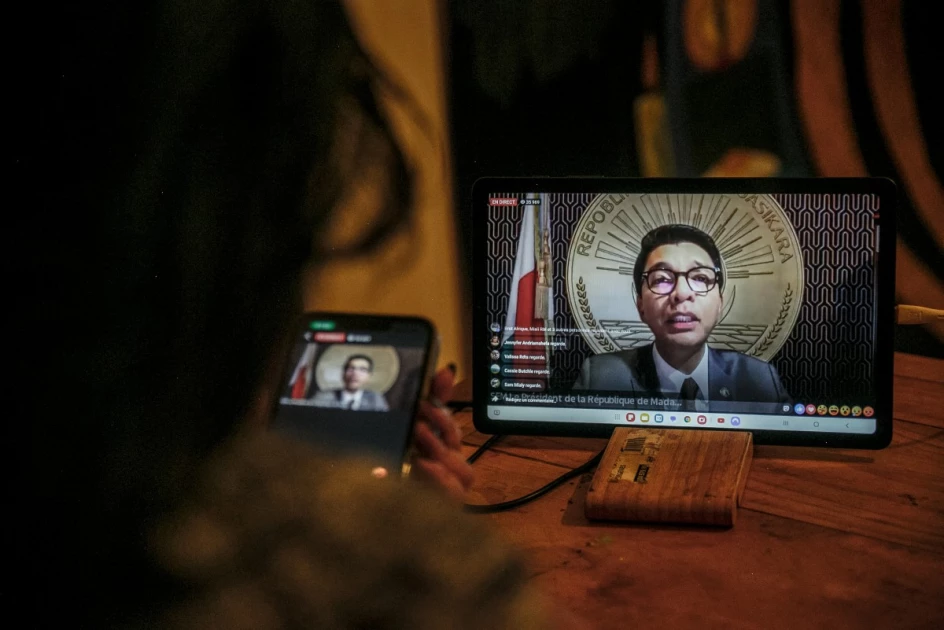
Madagascar’s President Andry Rajoelina has revealed that he is in a “safe place” following what he described as attempts on his life and a coup plot by elements within the military and political class. The embattled leader’s televised address on Monday marked his first public appearance since unrest swept the country and reports circulated that he had fled abroad.
“Since September 25, there have been attempts on my life and coup attempts. A group of military personnel and politicians planned to assassinate me,” Rajoelina said during a live Facebook address, declining to disclose his current location.
The president said he was forced into hiding to protect his life and called for the constitution to be respected, rejecting opposition demands for his resignation. “I am on a mission to find solutions,” he added.
The protests, initially triggered by persistent power and water shortages, have evolved into a nationwide anti-government movement, largely led by young demonstrators. Clashes between protesters and security forces have resulted in several deaths, with the United Nations reporting at least 22 casualties in the early days of the unrest.
The situation escalated over the weekend as mutinous soldiers joined demonstrators in Antananarivo, openly refusing orders to suppress the protests. Members of the CAPSAT army unit, instrumental in the 2009 coup that brought Rajoelina to power, were seen rallying alongside civilians. Some officers from the gendarmerie, accused of using excessive force, publicly admitted to “faults and excesses” in handling the unrest.
Amid growing speculation that Rajoelina had fled, Radio France Internationale reported that he had left the country aboard a French military aircraft, though neither Paris nor Antananarivo has confirmed the claim. French President Emmanuel Macron expressed “great concern” over the situation but declined to comment on Rajoelina’s whereabouts.
In a bid to ease tensions, the president issued a pardon for eight prisoners, including dual French-Malagasy national Paul Maillot Rafanoharana, previously convicted of an attempted coup.
Madagascar’s political instability is not new — the island nation has experienced repeated upheavals since gaining independence from France in 1960. The African Union has since urged all security forces to uphold their constitutional duties and refrain from intervening in political affairs.
Rajoelina, who first seized power through a coup in 2009 before winning elections in 2019, now faces the toughest test of his presidency as calls for his resignation grow louder amid a nation gripped by economic hardship and political turmoil.

