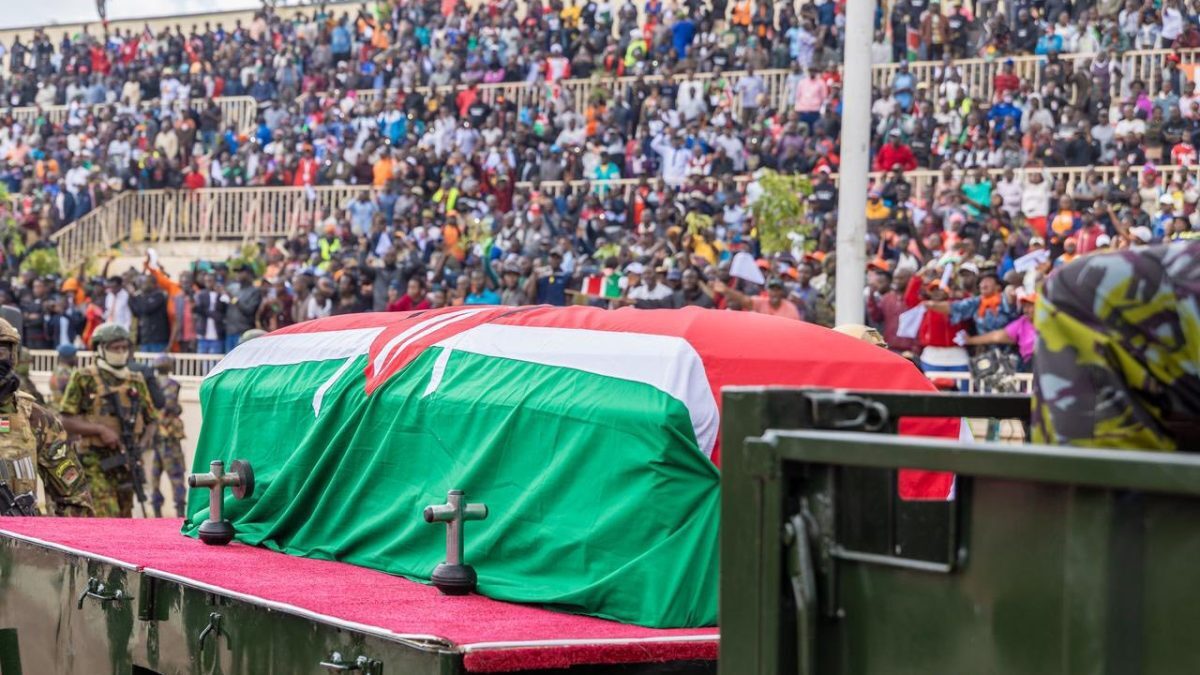
The passing of former Prime Minister Raila Amolo Odinga has prompted the revival of traditional Luo funeral customs, as elders seek to accord him the full honours befitting an elder and a statesman. Deeply rooted in Luo culture, these rites are meant to ensure that the deceased transitions peacefully and that the community pays proper respect to their memory.
Traditionally, the Luo people observe 14 distinct rituals before a funeral is considered complete. The process begins with the announcement of death, a solemn duty traditionally reserved for women. The death is made known through loud wailing accompanied by the beating of drums, typically either late in the evening signifying the passing of an elder or in the early hours of the morning.
In earlier times, cultural protocols governed mourning: married daughters could not mourn their father until they had informed their husband’s family and returned home, while sons-in-law were expected to refrain from mourning until after the burial. Families would also take this period to settle outstanding matters, including notifying relatives, completing home repairs, and finalizing dowry obligations before the burial preparations began.
For Raila Odinga, the death was formally announced by his elder brother Dr. Oburu Oginga, upon returning from India with the late leader’s body. “We have just landed from Mumbai, where we went to collect the body of Raila. As culture dictates, I am here at his Bondo home to announce his death,” Oburu stated.
Since the announcement on Wednesday, October 15, 2025, Luo elders have gathered at Opoda Farm in Bondo, Raila’s ancestral home, in a ritual known as “padho” meaning to sit at the deceased’s home until the burial day.
The next significant rite is the digging of the grave, a task traditionally led by a male cousin of the deceased, followed by grandsons and male relatives, as an act of honour and duty. The burial site is selected by elders, often located in front of the first wife’s house with the head facing the gate a custom symbolizing respect and continuity. Raila had reportedly chosen his final resting place beside his father, Jaramogi Oginga Odinga, at their Kang’o Ka Jaramogi home.
The groundbreaking ceremony is conducted by a senior male relative, blessed by both family elders and the church. In this instance, Dr. Oburu Oginga performed the ritual.
In Luo tradition, additional rites accompany the funeral of an elder, including the “tero buru” ceremony a symbolic procession where mourners, often in costumes and masks, chant, sing, and chase away evil spirits from the homestead. This ritual blends mourning with celebration, honouring the life of the departed while cleansing the environment.
Other rituals observed include the shaving of widows, which signifies the end of the mourning period and the beginning of a new chapter in life. The distribution of property and clothing follows, conducted publicly to symbolize transparency and unity among the surviving family.
A particularly symbolic custom known as “duogo liel”, or sharing a meal with the deceased, is performed twice first by married women and later by the children of the deceased to signify reconciliation and continuity.
Each rite serves as a step in guiding both the living and the departed through transition, ensuring spiritual balance within the community. As Raila Odinga’s burial approaches, the observance of these traditional practices underscores the profound respect and cultural significance that surround the farewell of one of Kenya’s most iconic leaders.