
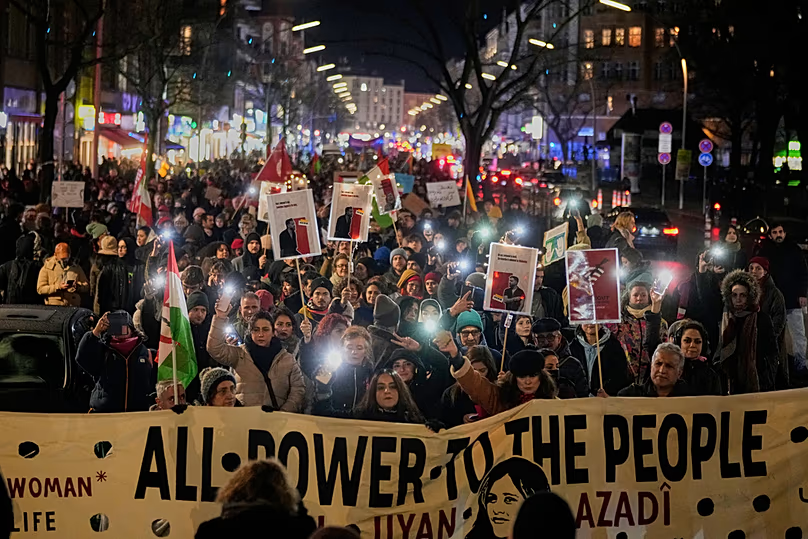
Tens of thousands of mourners took to the streets of Tehran on Wednesday for a mass funeral honoring security forces and civilians, as Iran faces an intensifying political and humanitarian crisis. Caskets draped with red and white roses were paraded through the capital, while crowds held images of Supreme Leader Ayatollah Ali Khamenei.
The demonstration coincides with reports that more than 2,500 people have died in ongoing protests, the majority of them demonstrators, following nationwide unrest sparked by economic grievances. According to the Human Rights Activists News Agency, 2,403 protesters and 147 government-affiliated individuals have been killed.
The government’s plans for rapid trials and executions have sparked international concern. Iran’s top judge, Gholamhossein Mohseni-Ejei, recently stated that the authorities must swiftly punish over 18,000 detained individuals. Meanwhile, a 26-year-old protester, Erfan Soltani, who had been scheduled for execution, has had his sentence temporarily postponed, leaving his family in distress.
Communication restrictions have made independent verification of casualty figures difficult. However, activists report that satellite internet services such as Starlink are increasingly being used to share images and videos from inside the country.
International reactions have intensified. The United States has requested an emergency meeting of the UN Security Council, while the UK has temporarily closed its embassy in Tehran, withdrawing diplomatic staff due to security concerns. The US has also issued travel warnings for personnel in Kuwait and Qatar, advising caution and limiting nonessential movement at military bases.
Iranian officials, including Foreign Minister Abbas Araghchi, have accused foreign actors of influencing the protests and urged the UN to condemn what they described as terrorist acts. Araghchi also emphasized Iran’s willingness for diplomacy, calling for negotiations rather than conflict.
As Iran faces one of the deadliest rounds of unrest in decades, observers warn that tensions remain high, with potential implications for regional security and international diplomatic relations.

