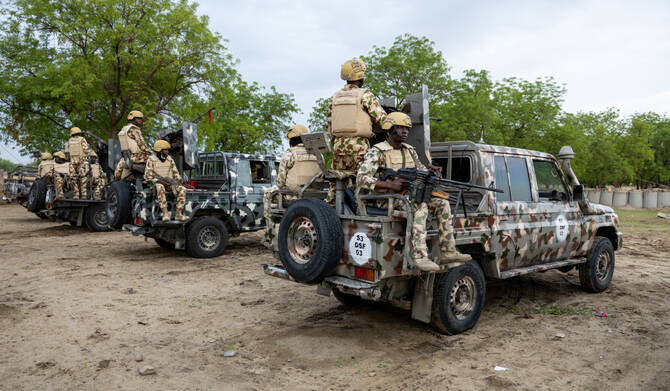
Abuja, Nigeria – The Nigerian military has confirmed that several officers will face trial over an alleged plan to oust President Bola Tinubu last year, acknowledging a plot that the government had initially denied.
In October 2025, the Armed Forces of Nigeria (AFN) announced the arrest of 16 officers over what it described as “issues of indiscipline.” However, sources within government and military circles later revealed the arrests were linked to a suspected coup attempt.
If successful, the plot would have ended more than 25 years of uninterrupted democracy in Africa’s most populous nation.
Military Statement
On Monday, January 26, 2026, AFN spokesman Major General Samaila Uba confirmed that investigations into the matter had been concluded.
“The findings have identified several officers with allegations of plotting to overthrow the government. Those with cases to answer will be formally arraigned before an appropriate military judicial panel to face trial,” Uba said.
No date has been set for the trials. Legal experts note that the officers could face the death penalty if convicted.
Government Response and Leadership Shuffle
Shortly after denying the alleged coup plot last year, President Tinubu reshuffled Nigeria’s top military leadership. General Christopher Musa was removed as Chief of Defence Staff, though he has since returned as Defence Minister.
A senior administration official told AFP at the time:
“Normally, when such a thing happens, it means there is a gap in intelligence. No leader would accept that.”
Historical Context
Nigeria has a long history of military takeovers, spending much of the 20th century under junta rule following independence from Britain. The country transitioned to civilian rule in 1999 and has remained under democratic governance since.
Hints of the alleged coup first surfaced on October 4, 2025, when Defence Headquarters announced the arrest of 16 officers, citing indiscipline and career stagnation. Reports of a foiled coup later appeared in the Nigerian press, though the government strongly denied them at the time.
Security Challenges
The coup allegations come as Nigeria’s military grapples with multiple security crises:
- A long-running insurgency by Boko Haram and Islamic State West Africa Province (ISWAP) in the northeast.
- Armed gangs, known as bandits, in the northwest who kidnap for ransom.
- Separatist movements in the southeast.
While violence from Boko Haram has waned compared to its peak a decade ago, deadly attacks on military bases continue. Analysts warned of rising insecurity in 2025, with reports of unpaid wages and poor conditions among troops further straining morale.
International Cooperation
The United States has stepped up military cooperation, launching joint strikes against Islamic State Sahel Province militants in the northwest and pledging increased intelligence sharing to support Nigeria’s air operations across the north.
Conclusion
The upcoming trials mark a pivotal moment for Nigeria’s democracy, testing both the resilience of its institutions and the military’s commitment to constitutional order. As the country prepares for proceedings, the outcome will likely shape perceptions of stability in a nation already under pressure from multiple security challenges.