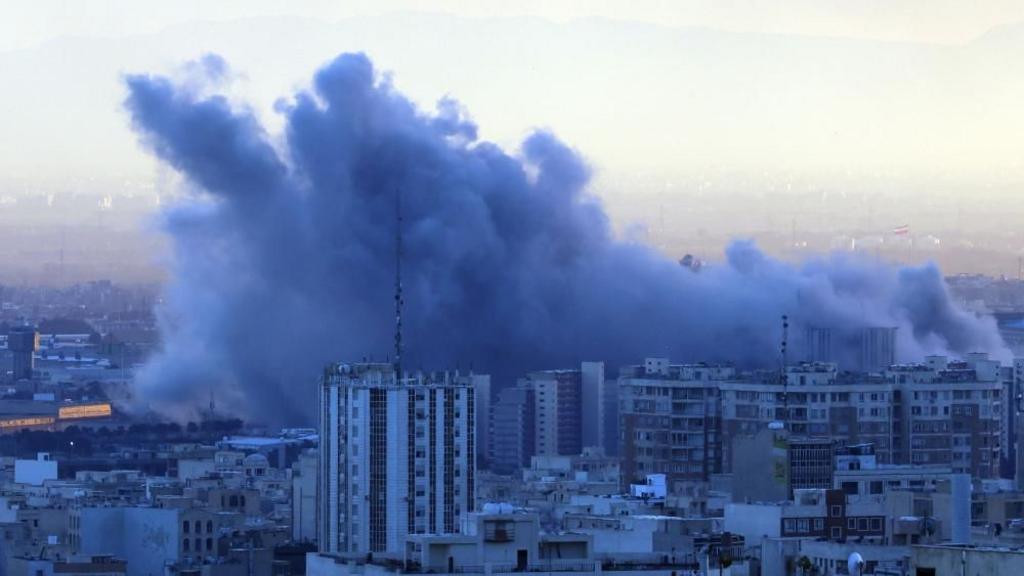
Iran launched a new wave of missiles toward Israel early Thursday, forcing millions of civilians into bomb shelters as the expanding conflict between the two regional powers entered its sixth day.
The missile strikes came amid a broader escalation involving the United States and other international actors, intensifying concerns that the confrontation could widen across the Middle East and disrupt global security and economic stability.
Missile Attacks Trigger Mass Shelter Alerts
Israeli authorities activated nationwide warning systems after multiple missiles were detected heading toward Israeli territory. Residents across major cities were instructed to move immediately into shelters as air defence systems worked to intercept incoming projectiles.
The attack occurred only hours after lawmakers in the United States Senate rejected a motion that sought to halt the American air campaign against Iran. The resolution would also have required congressional approval for continued military operations.
The Senate voted 53–47 against advancing the measure, largely along party lines, leaving President Donald Trump with broad authority to continue directing U.S. military actions in the conflict.
Conflict Expands Beyond the Middle East
The confrontation has widened geographically, raising fears of a broader regional war. On Wednesday, a U.S. submarine reportedly sank an Iranian warship off the coast of Sri Lanka, killing at least 80 people.
At the same time, air defence systems associated with NATO intercepted an Iranian ballistic missile reportedly heading toward Turkey. The incident marked the first time Turkey home to NATO’s second-largest military has been directly drawn into the conflict.
However, U.S. Defense Secretary Pete Hegseth said there were no indications the strike would trigger NATO’s collective defence clause.
Oil Shipments Disrupted in the Strait of Hormuz
The war has also disrupted global energy markets. Shipping through the critical Strait of Hormuz has slowed dramatically, with roughly 200 vessels anchored offshore as security concerns escalate.
The narrow waterway carries a significant share of the world’s oil and gas exports from the Middle East. Disruptions there have pushed global oil prices higher and triggered volatility in financial markets.
The U.S. government has indicated it may deploy naval escorts for commercial oil tankers once operational priorities allow.
Energy Secretary Chris Wright said the U.S. Navy is currently focused on military operations aimed at weakening Iran’s military capacity but would provide escort services when feasible.
Leadership Crisis in Iran
The conflict has intensified political uncertainty inside Iran following the killing of the country’s Supreme Leader, Ali Khamenei, in an Israeli airstrike earlier in the week an unprecedented event in modern geopolitics.
Plans for public mourning ceremonies in Tehran have been postponed indefinitely. Iran’s leadership selection body, the Assembly of Experts, is expected to name a successor soon.
Potential candidates reportedly include Mojtaba Khamenei and Hassan Khomeini, grandson of the Islamic Republic’s founding leader.
Israeli officials have said they would continue targeting Iran’s leadership and military infrastructure regardless of who ultimately assumes power.
Global Impact and Diplomatic Uncertainty
The widening conflict has triggered evacuation flights across the region as governments attempt to repatriate citizens stranded by disrupted air travel. Major aviation hubs, including those in the Gulf, have experienced significant flight cancellations.
Financial markets have reacted with volatility as investors weigh the possibility of further escalation. Some traders expressed cautious optimism after reports suggesting Iranian intelligence officials had quietly explored possible diplomatic channels with the United States, although Iranian authorities denied those claims.
With missile exchanges continuing and multiple international actors now involved, analysts warn the confrontation risks evolving into one of the most dangerous geopolitical crises in recent decades.