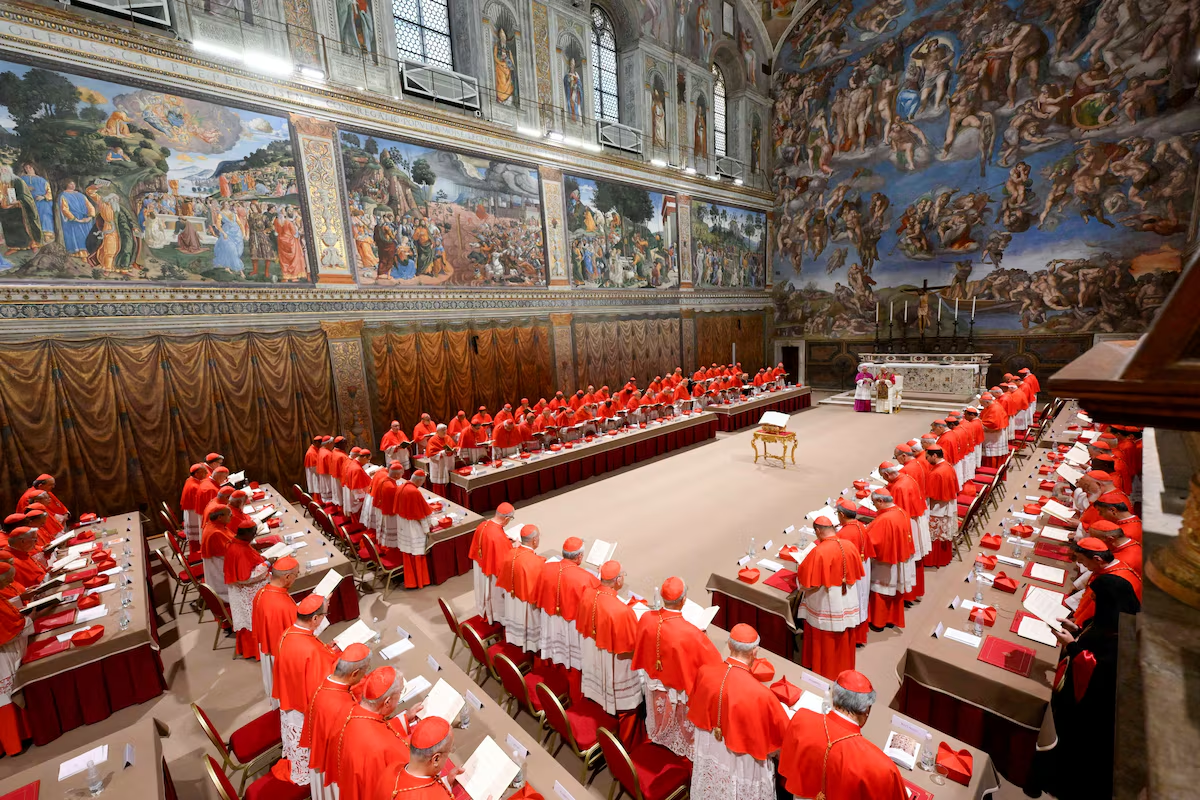
Sistine Chapel was the scene of an unexpected security scare during the secret conclave that elected Pope Leo XIV, according to a newly released book detailing the historic vote.
The incident occurred in May when 133 cardinals gathered inside the Vatican to elect a successor to Pope Francis, who died earlier that year. The conclave, one of the most confidential electoral processes in the world, was briefly disrupted after security officials detected an active cellphone signal among the cardinals.
Phone Discovery Inside the Conclave
According to the book “The Election of Pope Leo XIV”, written by veteran Vatican correspondents Gerard O’Connell and Elisabetta Piqué, the security breach occurred just before the first vote was cast.
The Sistine Chapel had been equipped with electronic jamming systems designed to block all communications with the outside world. However, Vatican security officials detected a signal indicating an active mobile connection.
Cardinals reportedly looked at one another in confusion before an elderly cleric realised he still had a cellphone in his pocket. The device was immediately surrendered.
The book states the unnamed cardinal appeared “disoriented and distressed,” and there was no suggestion that the phone had been intentionally brought into the conclave.
A Rare Breach in a Highly Secretive Process
Participants in a papal conclave are required to take strict vows of secrecy and surrender all electronic devices before the voting begins. Communication with the outside world is strictly prohibited for the duration of the process.
The authors described the episode as unprecedented in modern Vatican history.
“It was unimaginable even for a film,” the authors wrote, noting that the event surpassed fictional depictions such as the 2024 film Conclave.
Speaking about the incident, O’Connell said the real-life episode was more surprising than any fictional portrayal of Vatican intrigue. “Reality was better than fiction,” he remarked.
The Holy See Press Office did not comment on the claims following the book’s publication.
Two Leading Candidates Emerged
The conclave took place from May 7 to May 8, attracting global attention as the Church prepared to elect a new spiritual leader for its estimated 1.4 billion members worldwide.
Despite speculation that a pope from Asia or Africa might be chosen due to the geographic diversity of the electors who came from roughly 70 countries the contest quickly narrowed to two candidates.
One leading contender was Pietro Parolin, a senior Vatican official widely viewed as a strong favourite before the vote.
The other was Robert Prevost, a relatively low-profile cleric outside Church circles who would ultimately become the first pope from the United States.
Voting Results Revealed
According to the book’s account based on interviews with participating cardinals, Prevost received between 20 and 30 votes on the first ballot, an unusually strong showing for an early round.
Another widely discussed candidate, Luis Antonio Tagle, reportedly received fewer than 10 votes throughout the voting process.
On the fourth ballot, conducted on the afternoon of May 8, Prevost secured a decisive victory with 108 votes, sealing his election as Pope Leo XIV.
In a small human moment captured by the book, Tagle who was seated beside Prevost during the final vote count offered him a cough drop as the tension built in the chapel.
Rare Insight into a Closed Process
Details about papal elections rarely emerge immediately because cardinals are sworn to secrecy regarding the voting process. Over time, however, journalists and historians often gather information through confidential interviews.
The book offers one of the most detailed behind-the-scenes accounts so far of the conclave that chose the Catholic Church’s newest leader.