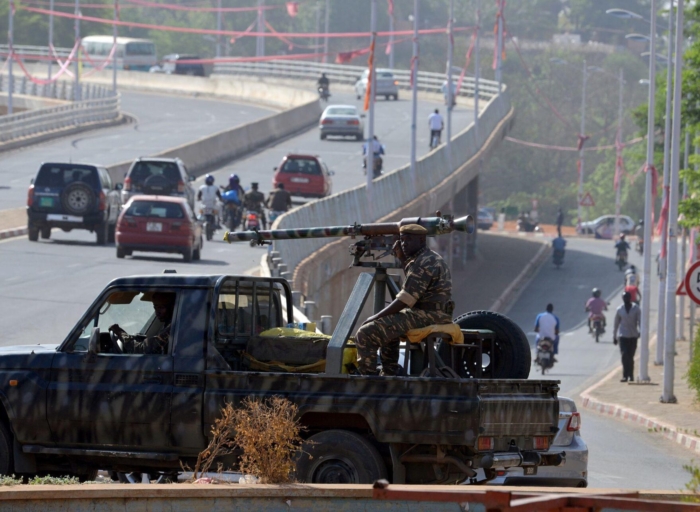
Ouagadougou, Burkina Faso – Nearly four years after seizing power, Burkina Faso’s military leader Ibrahim Traoré has openly criticized democratic governance, urging citizens to reconsider its relevance as his administration deepens its hold on power.
In a recent address, Traoré argued that democracy has failed African nations, particularly in protecting civilians from ongoing violence. His remarks come amid continued efforts by the military government to consolidate authority following the 2022 coup that brought him to leadership.
“Democracy has not delivered security for our people,” Traoré said, framing his position as a response to persistent instability.
Democratic Institutions Dismantled
Since taking power, the junta has systematically rolled back key democratic structures. The national electoral commission has been dissolved, and political parties already suspended since the coup have now been formally banned.
Authorities have also extended the transition period to civilian rule by five years, delaying elections that were initially scheduled for mid-2024.
“The transition must reflect the realities on the ground,” a government spokesperson said, defending the extension.
Security Crisis Driving Policy
Burkina Faso remains at the center of the Sahel’s security crisis, facing nearly a decade of jihadist violence that has killed thousands and displaced millions. The military leadership argues that strong centralized control is necessary to combat insurgent groups effectively.
“This is a fight for survival, and it requires decisive leadership,” a military official stated.
However, critics warn that restricting political freedoms could deepen instability rather than resolve it.
International Concerns Over Civic Space
The United Nations has called on Burkina Faso’s authorities to reverse the ban on political parties and restore civic freedoms, cautioning that shrinking political space could undermine long-term stability.
“Inclusive governance and respect for civil liberties are essential for sustainable peace,” a UN representative said.
Analysts note that while the government’s focus on security resonates with a population affected by violence, the erosion of democratic institutions raises concerns about accountability and governance.
“Security and democracy are not mutually exclusive both are critical to lasting stability,” a regional expert observed.
Uncertain Political Future
As Burkina Faso navigates its complex security and political challenges, Traoré’s stance signals a significant shift in governance philosophy one that prioritizes control and security over democratic processes.
“The direction taken now will shape the country’s political landscape for years to come,” an observer said.
With elections postponed and political activity curtailed, the country faces an uncertain path forward, balancing immediate security needs against long-term democratic aspirations.