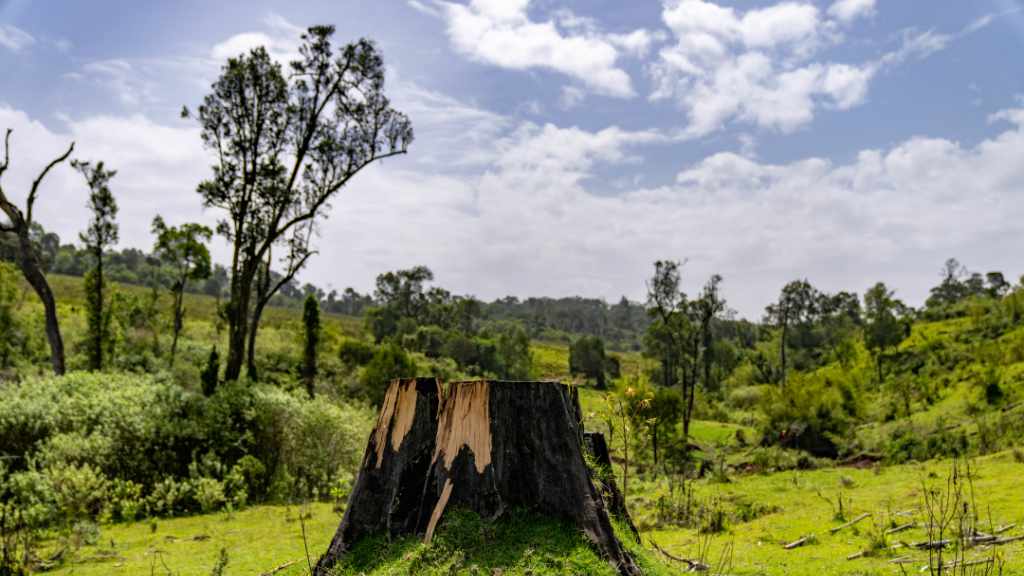
Bomet County, Kenya – The Mau Forest Complex, Kenya’s largest water tower and source of 12 rivers serving millions across East Africa, is under mounting pressure from settlement, farming, and deforestation. Yet in the South Western Mau, community-led restoration efforts are breathing new life into endangered springs, securing water access for thousands of households.
A Lifeline for Families
For 86-year-old Mary Ng’eno of Siomo East Village, the Tiriakan Spring has shaped daily life for decades. For more than 60 years, she trekked up and down the slopes to fetch water. Today, thanks to restoration projects, water flows directly to her compound.
Her son, Robert Rono, recalls the transformation:
“We used to fetch water from the spring down the slope. As children, we helped mum with water only during weekends because weekdays we were in school. Right now we have water at our compound we are enjoying life.”
Mary even donated part of her land for a community water tank, underscoring the local commitment to safeguarding water sources.
Addressing Degradation
A 2021 Initiative for Sustainable Landscapes (ISLA) report warned that the South Western Mau bloc was highly degraded, with declining water availability and low awareness among users.
Experts say misunderstanding of spring dynamics has worsened the problem. Judy Muriu of the ESPAL project at SNV explained:
“People assumed if they dig a water source, they will get more water not knowing they are interfering with the flow, and in most cases that spring would definitely disappear.”
Other drivers of degradation include overgrazing, charcoal production, and timber extraction.
Restoration in Action
Where restoration has taken hold, the results are transformative:
- Protective structures over spring eyes reduce human and livestock traffic.
- Solar-powered systems pump water directly to homes, schools, and hospitals.
- Filtration systems using stones, gravel, sand, and polythene sheeting safeguard water quality.
- Community committees manage conservation, governance, and maintenance, charging small user fees to sustain infrastructure.
According to SNV Project Manager Reinilde Eppinga, costs vary: smaller spring systems range from Sh1–2 million, while larger solar-powered structures can cost Sh6–8 million.
Unequal Access
Not all communities have benefited. In Kipreres, residents like Faith Cherotich still trek long distances to fetch water from fragile sources like Bethel Spring, often using improvised scoops.
“We make two rounds for water to be enough for a day. Alone I have to make four rounds at the spring. Please help us too to have water near home,” Faith pleaded.
Muriu noted that while 61 springs have been mapped, only 10 have been restored in two years due to limited funding.
Safeguarding the Future
The Water Resources Authority (WRA) stresses that abstraction must be documented and regulated to protect river systems, including the transboundary Mara River.
“Abstraction from here has to be documented and properly controlled to ensure the rivers don’t dry during the dry seasons,” said John Kinyanjui, WRA’s Manager for Water Resources Assessment.
Already, more than 2,000 households in the South Western Mau bloc are benefiting from improved spring protection. Project partners argue that community-led restoration demonstrates a viable path forward but scaling it across the wider Mau Complex will require stronger enforcement, consistent funding, and long-term commitment as climate pressures grow.
Conclusion
The Mau Forest Complex remains a critical lifeline for East Africa. Community-driven restoration projects show that protecting springs is not only possible but transformative. Sustaining these gains will be essential to securing water access for generations to come.