Lima, Peru – As political developments unfold in Venezuela, members of the country’s extensive diaspora in Peru are finding meaningful ways to stay emotionally connected to events back home. Among these, some Venezuelan migrants in Lima have turned to a blend of creativity and commerce: selling politically themed T‑shirts that reflect both their sentiments and their lived experience abroad.
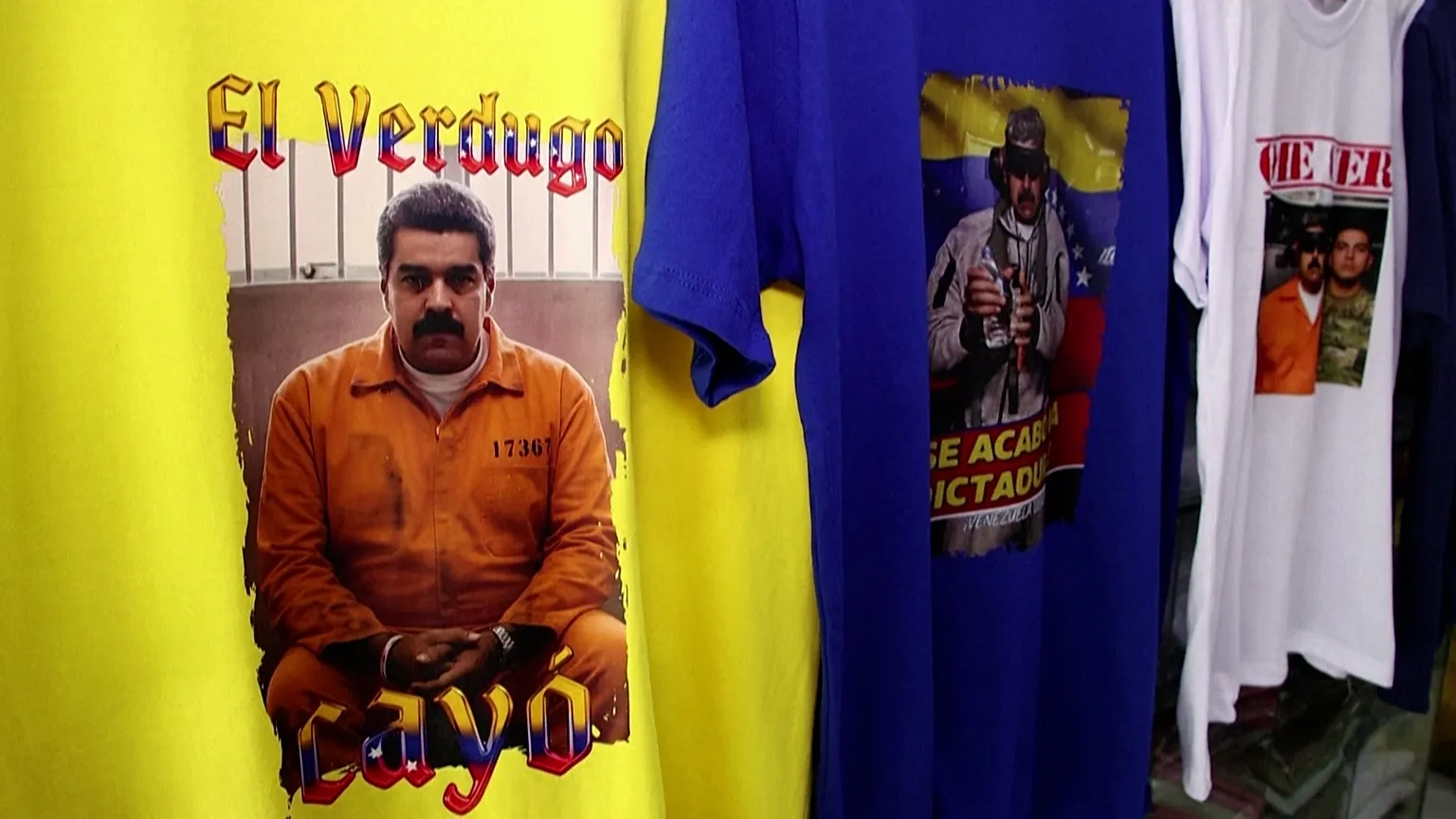
At a modest street stall in the Peruvian capital, entrepreneurs Kely Peraza and Jeanelys Torres display a range of T‑shirts featuring an image of Venezuelan President Nicolás Maduro portrayed as captured. For Peraza and Torres, these designs are not merely fashion statements but emotional touchstones—visual narratives that help bridge the distance between their present circumstances and the dramatic political shifts occurring in their homeland.
Torres, who produces the graphics on her computer with the assistance of artificial intelligence tools, prepared multiple design versions in anticipation of rising political tensions. Her approach underscores how digital creativity can be repurposed to serve community expression and identity in the diaspora.
Informal Economy and Emotional Resonance
Peru is host to one of the largest Venezuelan migrant populations in the region, with estimates suggesting between 1.5 and 1.7 million Venezuelans now reside in the country, most concentrated in Lima. Many work in informal trade and service roles, navigating daily life as a mix of opportunity and ongoing economic strain.
For Peraza and Torres, the T‑shirt initiative provides more than modest supplemental income. It also functions as a form of cultural and emotional expression, enabling fellow migrants to wear a symbol of shared hope and memory. In a context where conventional news and distant political developments can feel remote, these bespoke garments serve as a tangible connection to collective experience.
Diaspora Context and Broader Trends
The emergence of politically themed merchandise among Venezuelan migrants in Peru reflects broader trends in diaspora communities worldwide, where cultural expression often intersects with economic necessity. In recent days, Venezuelans in Peru have also gathered in public demonstrations such as in front of the Venezuelan embassy in Lima expressing joy and emotion in response to developments in their home country’s political leadership.
While the informal T‑shirt trade may appear simple, it captures the layered reality of life in diaspora: migrants balancing financial survival with the maintenance of identity, memory, and connection to home. For many, these creative expressions are a means of marking presence and belonging as individuals and as a community amid shifting political and social landscapes.