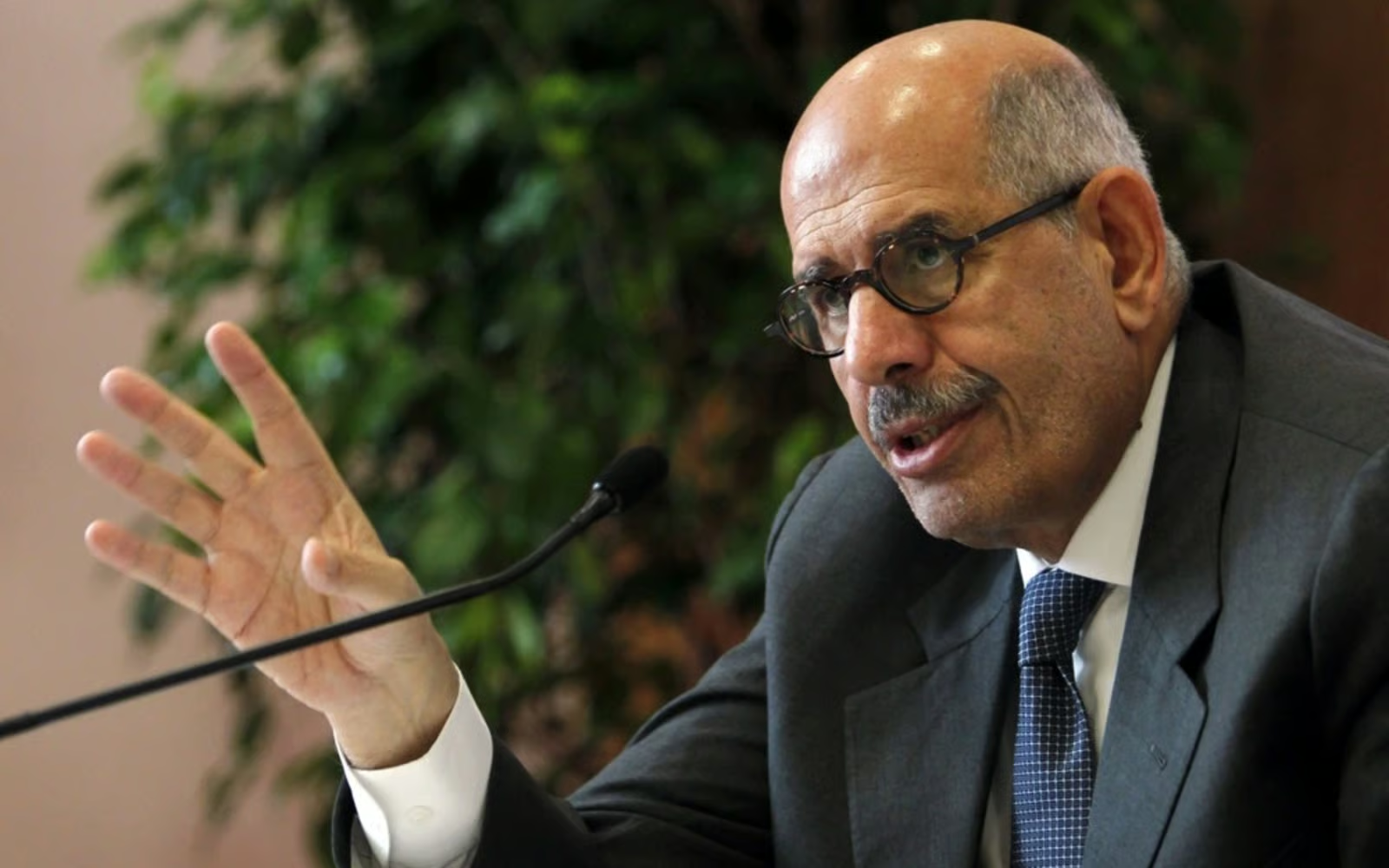
Middle East – Former nuclear watchdog chief Mohamed ElBaradei has called on Gulf nations to urgently intervene following renewed threats by U.S. President Donald Trump toward Iran, warning of potentially catastrophic regional consequences.
ElBaradei, who led the International Atomic Energy Agency (IAEA) from 1997 to 2009, issued a strongly worded appeal on social media as tensions between Washington and Tehran continue to escalate.
“To the Gulf governments: Please, once again, do everything in your power before this madman turns the region into a ball of fire,” ElBaradei wrote.
Growing Alarm Over Escalation
The remarks come after Trump warned that Iran would face severe consequences unless it agrees to a deal, intensifying fears of a broader regional conflict.
In a separate post, ElBaradei questioned the international community’s response, directly appealing to global institutions and leaders.
“Nothing can be done to stop this madness?!” he wrote, tagging the United Nations, the European Union, and French President Emmanuel Macron.
Diplomatic Pressure Mounts
ElBaradei’s intervention underscores rising concern among diplomatic and security experts about the potential for rapid escalation in the Middle East. The Gulf region, already geopolitically sensitive, remains central to global energy flows and international security.
Analysts warn that continued threats and countermeasures could destabilize key maritime routes and trigger wider geopolitical fallout.
“This is a moment that requires urgent diplomacy and restraint from all sides,” a regional affairs analyst noted.
A Veteran Voice on Nuclear Diplomacy
A Nobel Peace Prize laureate, ElBaradei has long been a leading advocate for nuclear non-proliferation and peaceful conflict resolution. His latest warning reflects deep concern over the trajectory of U.S.–Iran relations and the risks posed by escalating rhetoric.
What’s Next
With tensions rising and diplomatic channels under pressure, attention is now turning to Gulf states and international actors to mediate and de-escalate the situation before it spirals into a wider conflict.