
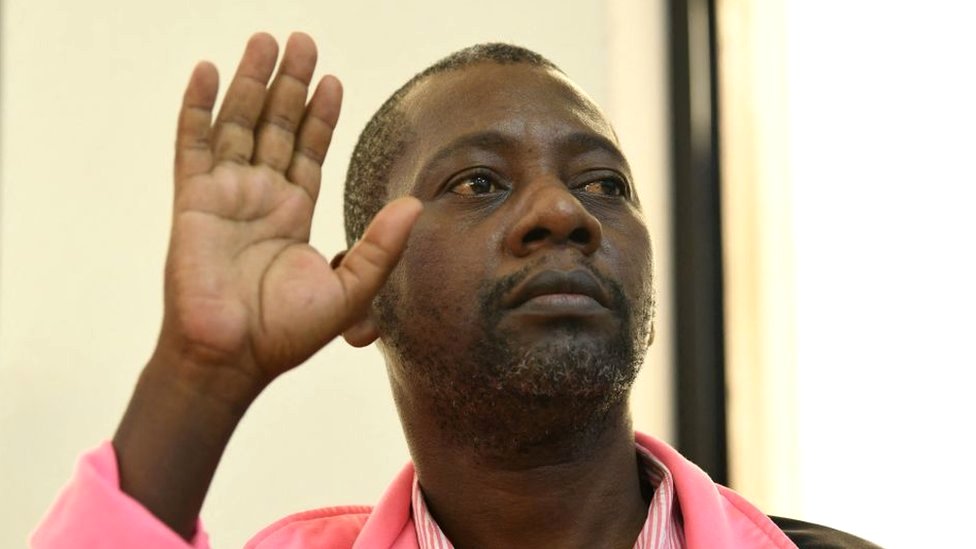
Malindi, Kenya – Former cult leader Paul Nthenge Mackenzie, already on trial for multiple counts of manslaughter linked to the Shakahola Forest Massacre, is now facing fresh charges after prosecutors connected him to 52 additional deaths in Binzaro village, Kilifi County.
Background: Shakahola Massacre
Mackenzie, a self-proclaimed preacher and former taxi driver, gained notoriety in 2023 when the Shakahola tragedy near Malindi came to light. More than 400 people died after being coerced into starving themselves in what Mackenzie described as a path to “meet Jesus.”
He has pleaded not guilty to charges related to the massacre, though testimonies in court have accused him of using enforcers to prevent followers from leaving the forest.
New Charges in Binzaro
On Monday, the Office of the Director of Public Prosecutions (ODPP) confirmed that a Malindi court had authorized formal charges against Mackenzie and his co-accused over the deaths of 52 people discovered at the Binzaro homestead.
“The court has given its go-ahead to formally charge Good News International Church leader Paul Nthenge Mackenzie and his co-accused over the deaths of 52 people at the Binzaro homestead in Kilifi County,” the ODPP said in a statement on X.
The charges include:
- Radicalisation
- Facilitation of terrorist acts
- Murder
The discovery of bodies in Binzaro suggested that Mackenzie’s cult continued to operate even after the Shakahola site was exposed and he was arrested.
Public Criticism and Regulatory Debate
Authorities faced sharp criticism after Shakahola, with many questioning whether the deaths could have been prevented through stricter oversight. The tragedy reignited debate over regulating religious organizations in Kenya, a majority-Christian country.
Efforts to introduce tighter controls have often been resisted, with opponents arguing that such measures undermine constitutional guarantees of the separation between church and state.
Conclusion
The new charges against Paul Mackenzie deepen the gravity of one of Kenya’s most shocking criminal cases in recent history. As the trials proceed, the Binzaro revelations highlight the urgent need for stronger safeguards against extremist religious movements while balancing constitutional freedoms.

