Ghana is stepping up its diplomatic efforts at the United Nations, blending cultural advocacy with political lobbying to secure international acknowledgment of the transatlantic slave trade as one of history’s gravest crimes.
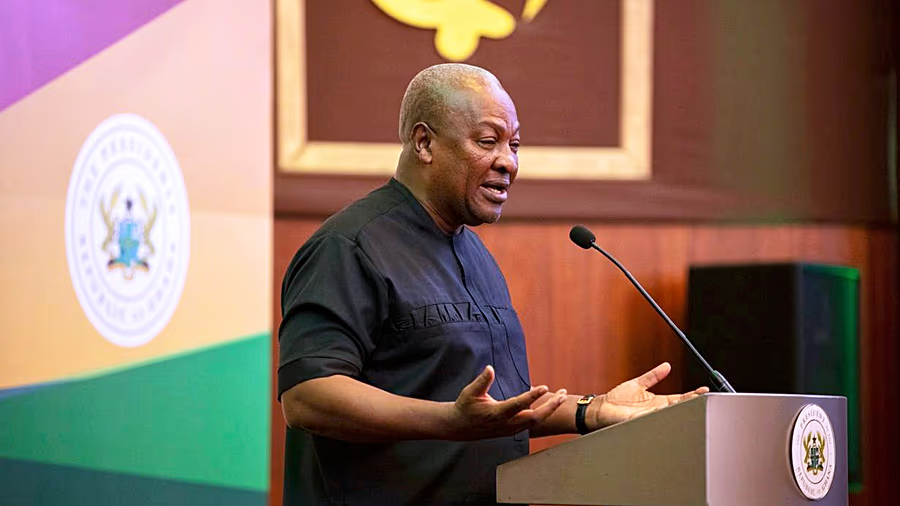
Speaking in New York, former President John Dramani Mahama highlighted the enduring legacy of slavery, emphasizing that centuries of systematic dehumanization of Africans continue to shape global inequalities today. His remarks were delivered during a high-level United Nations meeting on reparatory justice, where he called for renewed international attention to the long-term impacts of the slave trade.
Draft Resolution Submitted to the UN
Ghana has formally submitted a draft resolution to the United Nations General Assembly, aiming to reframe global understanding of slavery and its consequences. The resolution calls for explicit recognition of the human suffering inflicted and the structural inequities that persist.
Foreign Minister Samuel Okudzeto Ablakwa stressed that the initiative is not a comparison of historical suffering but a matter of acknowledgment and dignity for affected communities. He argued that treating slavery as a closed chapter ignores ongoing injustices and undermines the voices of descendants of enslaved Africans.
Cultural and Historical Advocacy
As part of its campaign, Ghana is increasing efforts to document and preserve historical records of slavery, reinforcing its diplomatic push with evidence of its enduring social, economic, and cultural impact.
Officials said the combination of cultural expression, archival research, and political advocacy is designed to strengthen the moral and legal case for international recognition and reparatory justice.
The initiative positions Ghana at the forefront of global efforts to confront the legacies of slavery and ensure accountability, while fostering dialogue on human rights, historical truth, and long-term reconciliation.