
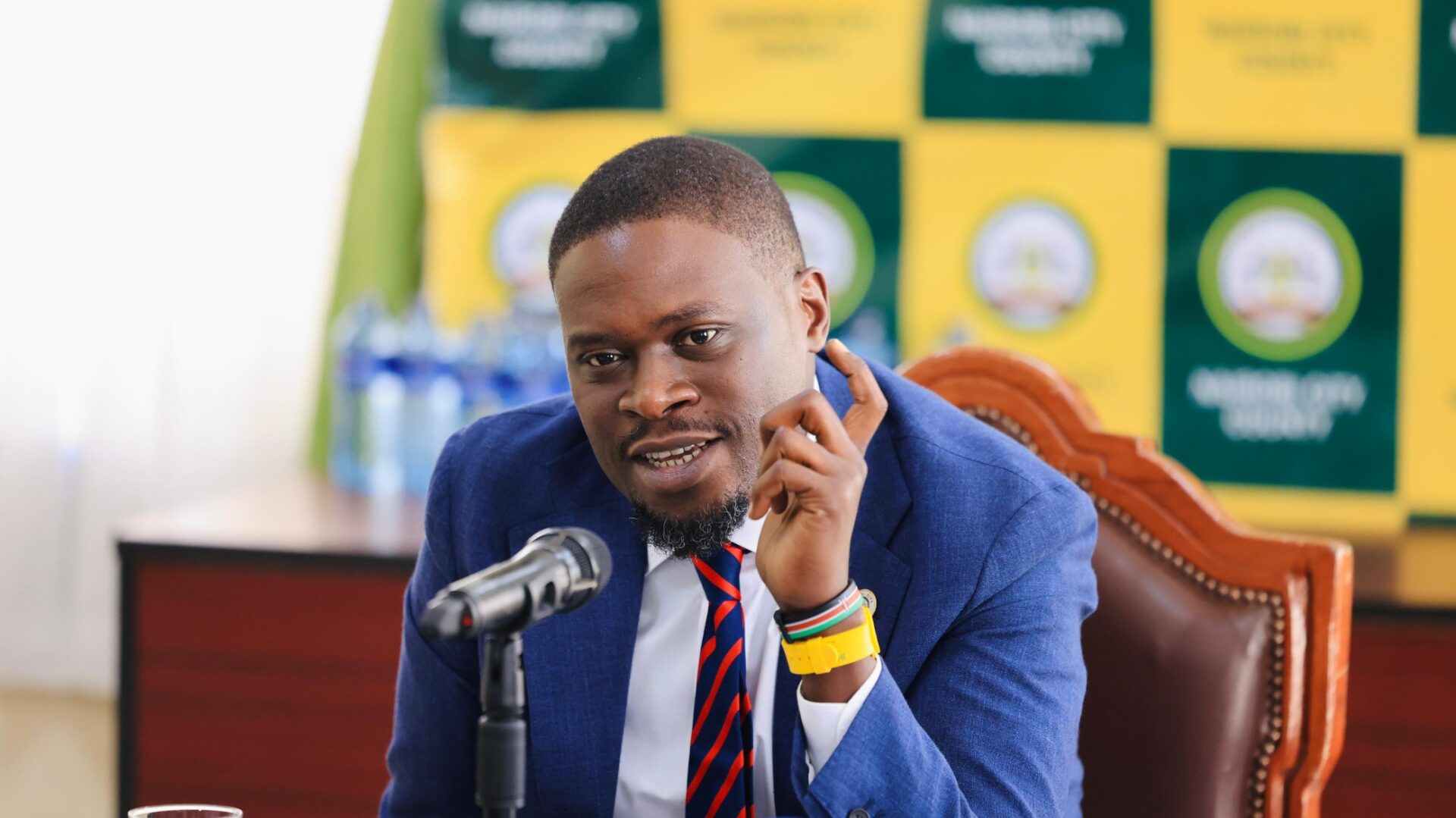
Nairobi, Kenya – Governor Johnson Sakaja has dismissed speculation that his recent meeting with President William Ruto signaled a transfer of county functions to the National Government, insisting that he would “not betray” the constitutional mandate entrusted to him by Nairobi residents.
Delivering his State of the County Address at the County Assembly, Sakaja described the claims as a “misadventure,” drawing a clear line between intergovernmental collaboration and the surrender of devolved powers.
Protecting Devolution
Sakaja directly referenced the Nairobi Metropolitan Services (NMS) era, which he termed costly and disruptive, leaving the county with KSh16 billion in pending bills.
“Honourable Members, I honour the mandate given to me by the people of Nairobi. They entrusted me with constitutional authority, and I will not betray that trust. In 2020, Nairobi got into a misadventure the NMS experience left the county with a KSh16 billion pending-bills burden. We shall not transfer any county functions,” Sakaja said.
He emphasized that while collaboration with the National Government is inevitable given Nairobi’s status as the capital city, devolved functions remain firmly under county control.
Strategic Partnerships
Despite rejecting suggestions of a power shift, Sakaja acknowledged that cooperation with the National Government has yielded visible development gains over the past two years. Among the achievements he cited were:
- Construction of new classrooms
- Expanded road construction and recarpeting projects supported by KURA and KeRRA
- A joint programme on cleanliness, roads, and water improvement
A flagship initiative is the large-scale waste-management rollout scheduled to begin in April. Funds have been allocated, a contractor selected, and land secured in Ruai for a modern waste-processing facility expected to convert refuse into fertilizer and energy.
Additional national support is also expected in urban roads, sewerage expansion, water-supply projects, and public lighting, with several stalled infrastructure projects initiated under the defunct NMS earmarked for completion.
Shared-Responsibility Framework
Sakaja reiterated that the cooperation model preserves Nairobi’s constitutional mandate while enabling faster delivery of large-scale projects.
President Ruto and Governor Sakaja recently formalized a shared-responsibility framework for managing critical departments in Nairobi during a meeting at State House, following a joint pledge to restore the city’s reputation as the “City in the Sun.”
Conclusion
Governor Sakaja’s firm stance underscores the delicate balance between protecting devolution and leveraging national partnerships for development. As Nairobi pursues ambitious infrastructure and service delivery projects, the governor insists that collaboration will remain strategic but county functions are not up for transfer.
