
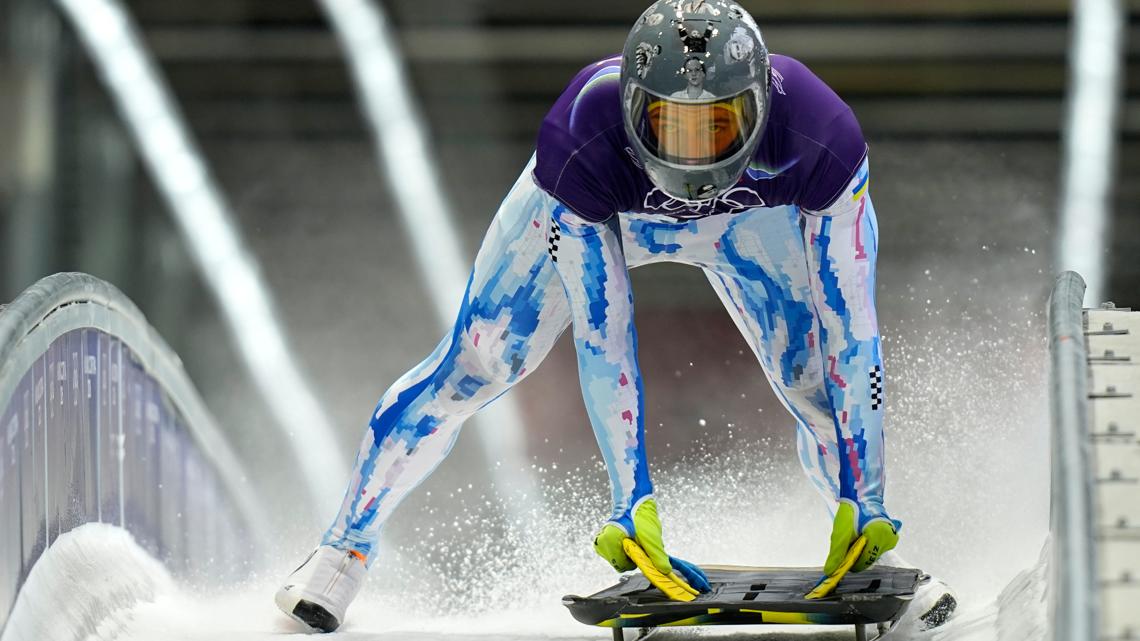
Milan-Cortina, Italy – The International Olympic Committee (IOC) confirmed on Tuesday that Ukrainian skeleton racer Vladyslav Heraskevych will be permitted to wear a black armband at the Winter Olympics, but his helmet featuring images of Ukrainian sportspeople killed in the war with Russia has been banned.
IOC Decision
IOC spokesperson Mark Adams explained that the helmet contravened guidelines prohibiting political symbols at the Games under Article 50 of the Olympic Charter. However, the committee agreed to make an exception by allowing Heraskevych to wear a black armband during competition as a gesture of commemoration.
“I think what we’ve tried to do is to address his desires with compassion and understanding. We will not stop him expressing himself in press conferences, as he leaves competition, in the mixed zone, and elsewhere. We feel this is a good compromise,” Adams said.
Ukrainian Response
The decision sparked strong reactions in Ukraine. President Volodymyr Zelensky defended Heraskevych’s right to wear the helmet, calling it a reminder of the human cost of Russia’s invasion.
“This truth cannot be inconvenient, inappropriate or called a ‘political demonstration at a sporting event.’ It is a reminder to the entire world of what modern Russia is,” Zelensky said.
Heraskevych, who carried Ukraine’s flag at the opening ceremony, expressed heartbreak over the ban:
“The decision to ban my helmet simply breaks my heart.”
Broader Context
Ukraine’s Sports Minister Matviy Bidnyi recently told AFP that Russia has killed more than 650 athletes and coaches since the invasion began in 2022. The IOC’s ruling highlights the tension between its neutrality policy and athletes’ desire to honor victims of war.
Conclusion
As the Milan-Cortina Games unfold, Heraskevych’s black armband will serve as a symbol of remembrance, even as the IOC enforces its rules against political expression. The compromise underscores the delicate balance between Olympic neutrality and athletes’ calls to spotlight human tragedy.

