
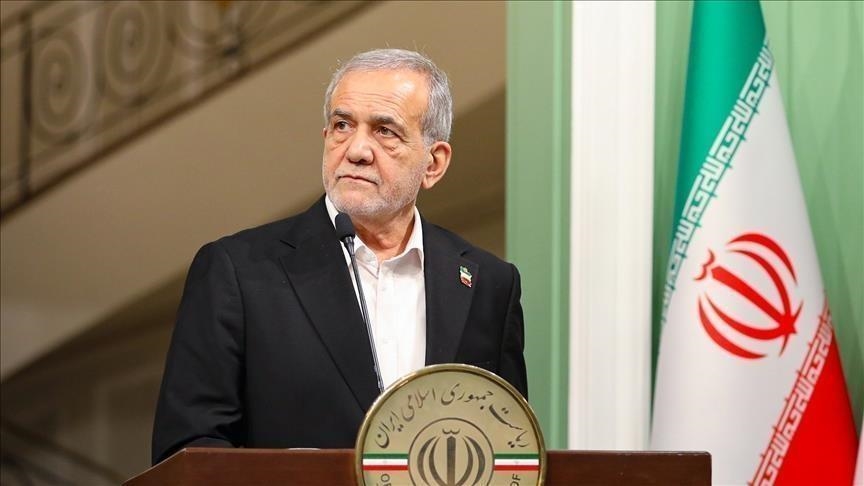
Iran’s President Masoud Pezeshkian declared on Saturday that the country would never surrender to Israel or the United States as the Middle East conflict entered its second week.
Speaking on state television, Pezeshkian asserted, “The enemies of Iran must take their wish for the unconditional surrender of the Iranian people to their graves,” emphasizing Tehran’s defiance in the face of escalating military action.
Background of the Conflict
The regional crisis began on February 28, when strikes attributed to Israel and the United States reportedly killed Iran’s Supreme Leader, Ayatollah Ali Khamenei, sparking retaliatory missile and drone attacks by Iran on Israeli and U.S. interests in the Gulf and surrounding countries.
Since Khamenei’s death, an interim leadership council, including Pezeshkian, has been overseeing Iran’s administration, coordinating military and diplomatic responses amid rising regional tensions.
Apology and Conditional Restraint
During his address, Pezeshkian issued an apology to neighboring countries affected by Iran’s military operations, clarifying that attacks would not be directed at them unless provoked.
“I must apologise on my own behalf and on behalf of Iran to the neighbouring countries that were attacked by Iran,” he stated. “The interim leadership council agreed yesterday that no more attacks will be made on neighbouring countries and no missiles will be fired unless an attack on Iran originates from those countries.”
This declaration signals Tehran’s attempt to limit the spread of hostilities while maintaining a hardline stance against perceived aggression from Israel and the United States.
Regional Implications
Analysts warn that the conflict could further destabilize the Gulf region, with the potential to draw in neighboring countries and international powers. The interim leadership council’s statements reflect Iran’s dual strategy of deterrence and conditional restraint, but the situation remains volatile as military actions continue.

