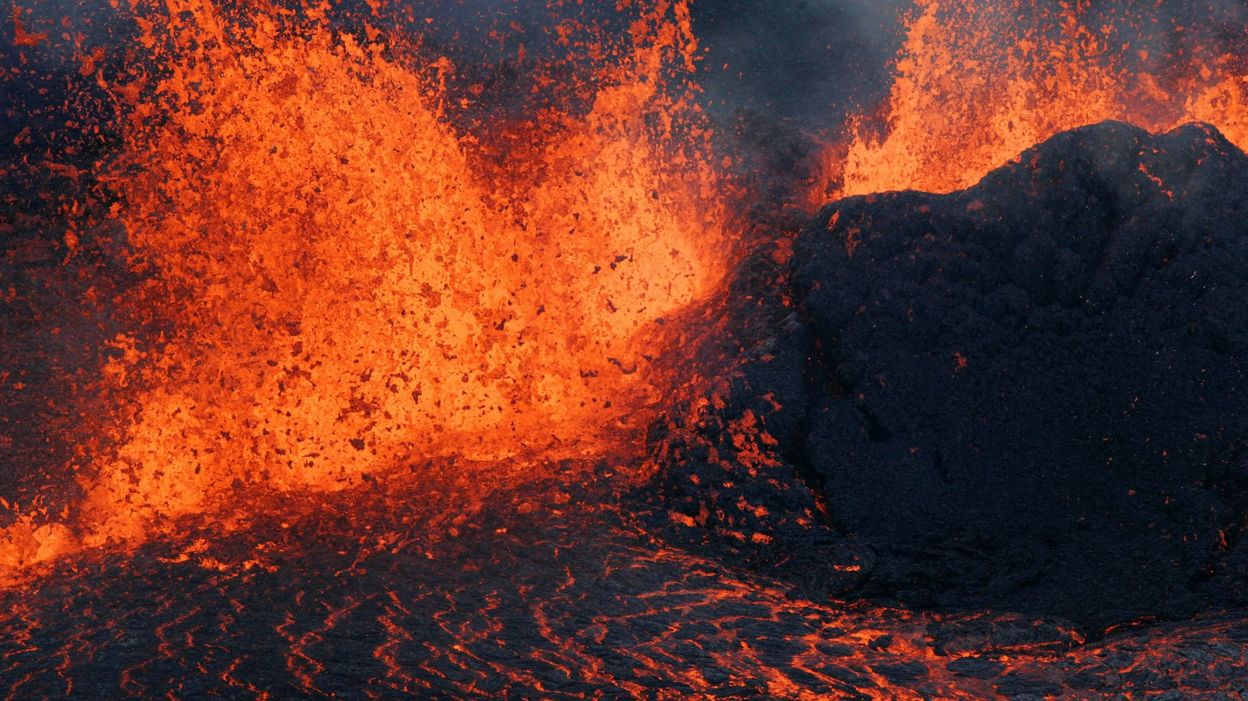
Lava flows from the Piton de la Fournaise volcano have reached the ocean on Réunion Island, marking the first such event in nearly two decades and drawing widespread attention from residents and tourists alike.
The eruption, which began about a month ago, culminated in dramatic scenes as molten rock poured into the sea, producing plumes of steam and striking visual contrasts along the coastline. Authorities confirmed this is the first time in 19 years that lava from the highly active volcano has made contact with the ocean.
Spectacle Draws Crowds
Images and videos circulating online show glowing streams of lava cascading into the water, as onlookers gathered at designated viewing points to witness the rare natural phenomenon. Many described the event as a once-in-a-lifetime experience.
Local authorities responded by closing nearby roads to manage safety risks and control access, while helicopters were deployed to monitor the lava flow and surrounding conditions from the air.
Ongoing Volcanic Activity
Before reaching the coast, the lava advanced through forested areas, highlighting the scale and persistence of the eruption. The volcano, located on the southeastern part of the island, is one of the most active in the world and is closely monitored by geological agencies.
While eruptions at Piton de la Fournaise are relatively frequent, lava reaching the ocean is a far rarer occurrence, dependent on the intensity, duration, and direction of the flow.
Safety Measures in Place
Authorities have urged the public to remain cautious, warning of hazards such as toxic gases, unstable ground, and sudden changes in volcanic activity. Controlled access points and ongoing surveillance aim to ensure public safety while allowing limited viewing of the phenomenon.
Natural Wonder and Scientific Interest
Beyond its visual spectacle, the event provides scientists with valuable insights into volcanic behaviour and the interaction between lava and seawater. Such occurrences can lead to the formation of new land, while also reshaping coastal ecosystems.