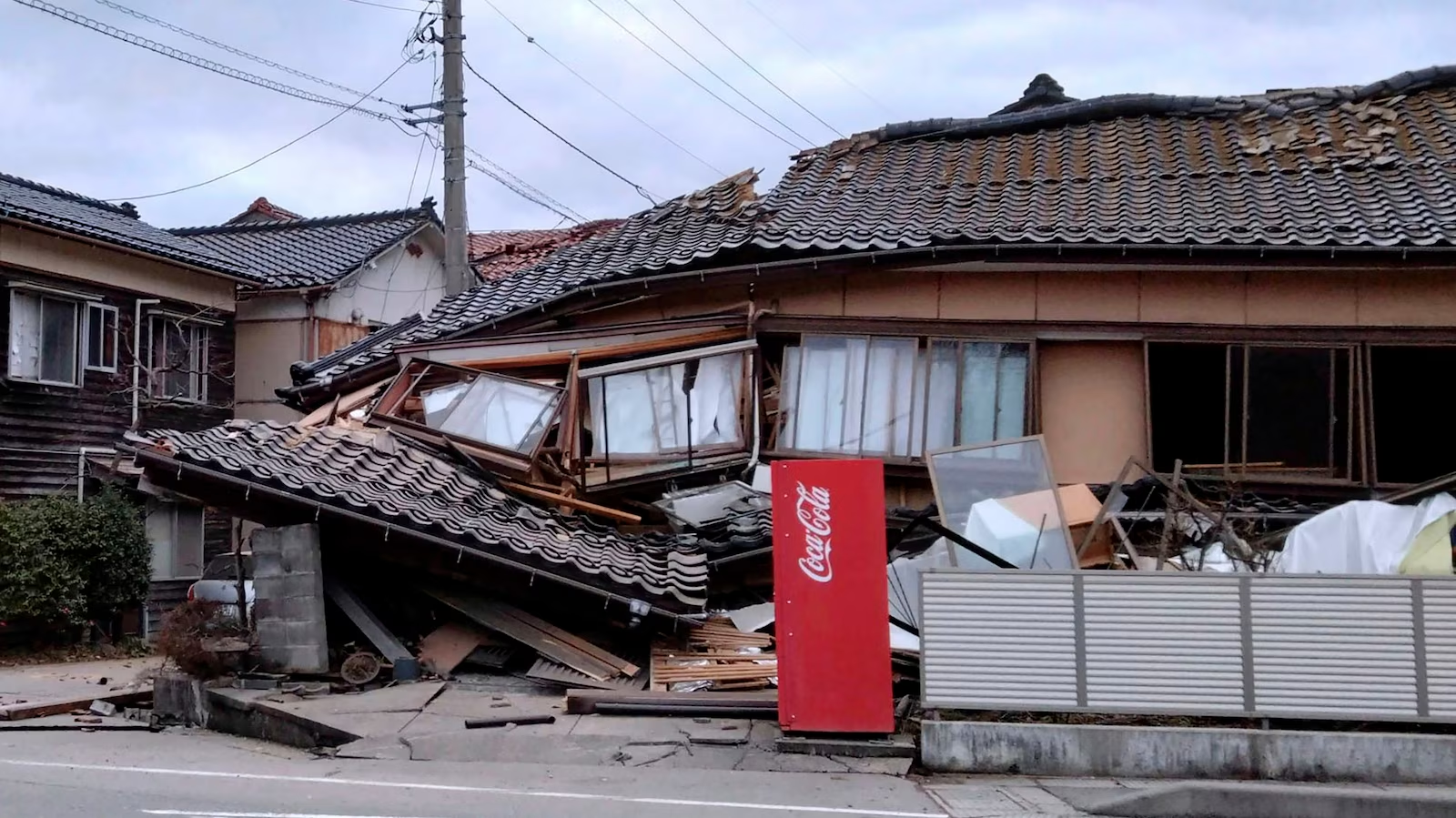
A powerful magnitude 7.5 earthquake struck northeastern Japan on the night of Monday, December 8, 2025, leaving at least 30 people injured and forcing thousands of residents to evacuate their homes.
According to the Japan Meteorological Agency, the quake occurred at a depth of 50 kilometers (31 miles) approximately 80 kilometers off the coast of the Aomori region. The tremor prompted tsunami warnings, which have since been lifted, with waves reaching heights of up to 70 centimeters (27 inches).
The earthquake caused significant disruption to daily life in the affected areas. Some train services have been suspended, and roughly 2,700 homes in the region remain without power. Authorities have urged the public to remain vigilant, warning that stronger aftershocks may occur in the coming days. Citizens are advised to maintain heightened preparedness for at least a week, according to local media reports.
Government Response and Emergency Measures
Japanese Prime Minister Sanae Takaichi addressed the public, emphasizing the importance of earthquake preparedness. “Reconfirm your daily earthquake preparedness, such as ensuring that you secure furniture, and prepare to evacuate immediately if you feel shaking,” she said.
Emergency orders were issued for approximately 90,000 residents to evacuate. The government has activated a response office within the Prime Minister’s Crisis Management Centre, with Chief Cabinet Secretary Minoru Kihara confirming that an emergency team has been convened.
“We are making every effort to assess the damage and implement emergency disaster response measures, including rescue and relief operations,” Kihara said.
Impact on Infrastructure and Nuclear Facilities
Tohoku Electric Power reported no irregularities at its Higashidori and Onagawa nuclear power plants following the quake. Authorities also confirmed that no issues were detected at the disabled Fukushima nuclear site, which suffered catastrophic damage during the magnitude 9.0 earthquake and tsunami on March 11, 2011. That disaster claimed more than 18,000 lives and devastated large parts of Honshu.
Japan’s Seismic Risk
Japan is among the world’s most earthquake-prone countries, situated along the Pacific “Ring of Fire,” and experiences approximately 1,500 earthquakes annually. Earlier this year, the nation’s earthquake investigation panel warned of a 60-90 percent chance of a megaquake occurring along the Nankai Trough within the next 30 years. Such an event could result in trillions of dollars in damage and potentially cost hundreds of thousands of lives.
The Nankai Trough, a zone of high seismic activity stretching along Japan’s Pacific coast, has historically been responsible for thousands of deaths, highlighting the persistent threat earthquakes pose to the country.
As recovery and assessment efforts continue in Aomori and surrounding regions, authorities are urging residents to remain cautious, adhere to evacuation orders, and follow safety protocols to minimize risk during this period of heightened seismic activity.