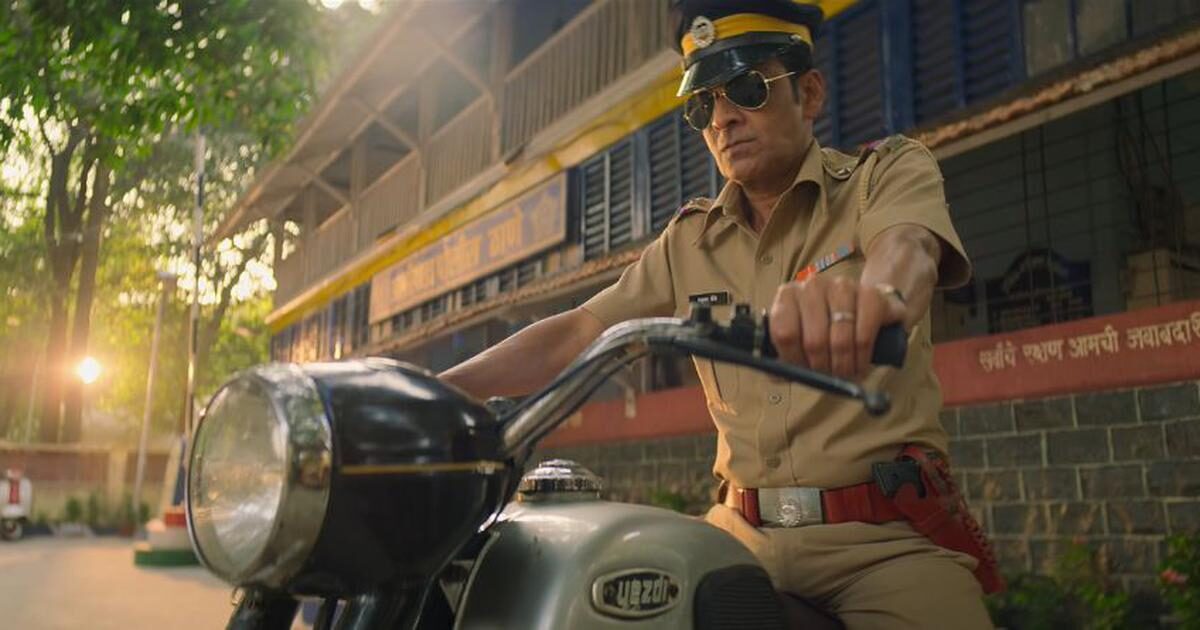
Netflix’s latest true-crime drama, Inspector Zende, dives into the gripping real-life story of the Indian police officer who captured one of the world’s most elusive serial killers Charles Sobhraj, the man nicknamed The Serpent. The film stars acclaimed Bollywood actor Manoj Bajpayee as Inspector Madhukar Zende, while Jim Sarbh takes on the role of Sobhraj, reimagined as Carl Bhojraj.
Set over three intense weeks in 1986, the film chronicles a high-stakes cat-and-mouse chase between the cunning fugitive and the relentless Mumbai cop who had already caught him once before.
A Fugitive on the Run
The story begins on 16 March 1986, when Sobhraj escapes from Delhi’s high-security Tihar Jail, where he was serving a 12-year sentence for the murder of a French tourist. Using his trademark deception, Sobhraj drugs prison staff and inmates with sweets laced with sedatives pretending it’s his birthday before fleeing into the night.
When reports surface that Sobhraj has resurfaced in Mumbai, authorities summon Inspector Zende, who had famously arrested him in 1971. The film’s release has reignited public interest in Zende’s daring exploits, bringing the now 88-year-old retired officer who makes a cameo as the “original” Inspector Zende back into the spotlight.
The Making of a “Supercop”
In an interview with the BBC and his book Mumbai’s Most Wanted, Zende recalls how capturing Sobhraj earned him a reputation as one of India’s finest detectives.
Sobhraj, born in Saigon to an Indian father and Vietnamese mother, grew up in France and was relatively unknown until a 1970 jewellery heist in Delhi’s Ashok Hotel brought him to prominence. Zende arrested him a year later in Mumbai, but Sobhraj escaped custody by climbing down a hospital drainpipe a preview of the serial escapes and killings that would follow.
Over the next few years, Sobhraj was linked to more than 20 murders across India, Nepal, and Thailand, targeting mostly young Western travelers. His mastery of disguise and ability to evade capture earned him the moniker The Serpent, later immortalized in the BBC-Netflix series of the same name.
The Hunt in Goa
When Sobhraj escaped again in 1986, Zende was called out of retirement to track him down. “He was known for using sedatives to trick people. Nobody could be sure he wouldn’t do it again,” Zende recalled.
The chase led Zende and his team to Goa, where they received intelligence that Sobhraj might attempt to flee by boat to the United States. They eventually traced him to the O’Coqueiro Restaurant in Porvorim, one of the few places offering international phone calls to tourists.
On 6 April 1986, as crowds gathered for an India-Pakistan hockey match and a nearby wedding, Zende’s team staked out the restaurant. At around 10:30 p.m., Sobhraj entered. “The moment I saw him, I knew it was him,” Zende later wrote. “The ten years of not seeing him vanished in an instant.”
The arrest made front-page news across India. Headlines hailed Zende as a national hero “Zendabad!” and his fame soared. He appeared on magazine covers, received the President’s Medal for Bravery, and was honored by Bollywood’s biggest stars.
In a quirky tribute, O’Coqueiro even added a dish called the “Zende Platter” to its menu, celebrating the cop who brought down The Serpent again.
The Legacy of Charles Sobhraj
After his second capture, Sobhraj served another decade in prison. He later claimed his escape had been a deliberate move to avoid extradition to Thailand, where he faced the death penalty for multiple murders.
Following his release in 1997, he lived in Paris, profiting from paid interviews and media appearances. But in 2003, he returned to Nepal, where he was arrested and convicted for the 1975 murders of an American and a Canadian tourist. After 19 years in jail, he was freed in 2022 on health grounds and deported to France.
Today, Sobhraj is 81 and living quietly in Paris. Inspector Zende, now retired, says he has moved on.
“He’s served his sentence. I’m not concerned about him anymore,” Zende told the BBC.