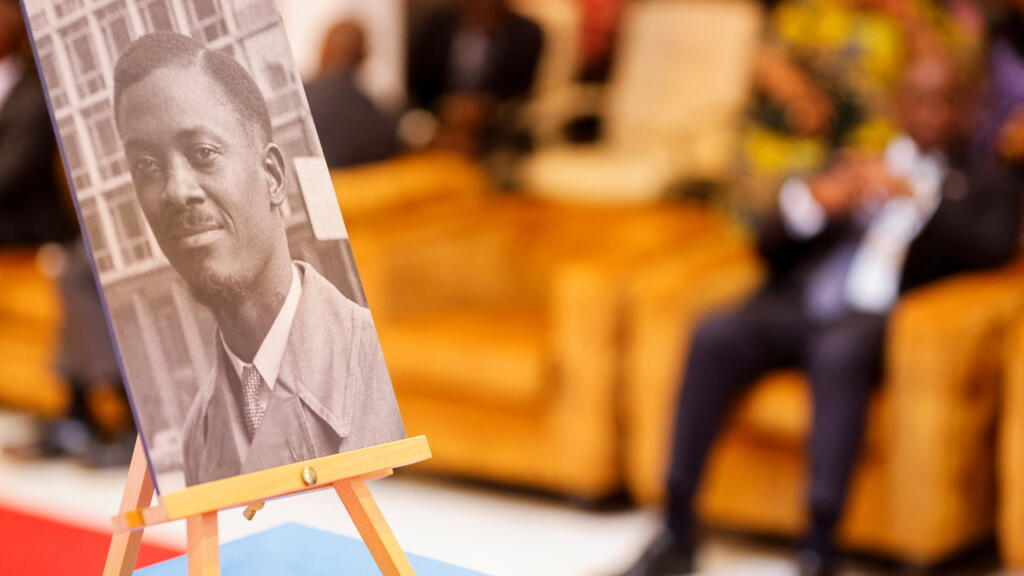
Patrice Emery Lumumba, one of Africa’s most iconic independence leaders, rose rapidly to prominence after delivering a fiery speech on June 30, 1960, during the Democratic Republic of Congo’s independence ceremony. In front of Belgium’s King Baudouin, the newly appointed prime minister openly condemned the brutality and racism of colonial rule, accusing Belgium of imposing “humiliating slavery” on Congolese people. The address instantly cemented Lumumba’s status as a symbol of African liberation but also marked him as a threat to powerful interests at home and abroad.
Born on July 2, 1925, in the village of Onalua in central Congo’s Sankuru province, Lumumba came from the Tetela ethnic group. He trained initially as a nurse before joining the colonial postal service, where he worked his way up to a clerk in Stanleyville, now Kisangani. In 1956, he was jailed on embezzlement charges, an episode he later framed as reclaiming wealth taken by colonial authorities. Despite the setback, his political profile continued to rise after his release, aided by connections with liberal Belgians.
By the late 1950s, Lumumba had become a prominent nationalist voice. In 1958, he founded the Congolese National Movement (MNC), advocating for independence and a secular Congolese state. Although his opponents branded him a communist, historians note that Lumumba consistently described himself as a nationalist. His participation in the 1960 Brussels Round Table Conference on independence further elevated his standing, and his party’s victory in national elections that May paved the way for his appointment as Congo’s first prime minister.
Lumumba’s time in office, however, was short-lived. He governed for just over two months, from independence on June 30, 1960, until his removal in September. His outspoken criticism of Belgium and his willingness to seek support from the Soviet Union during the Cold War alarmed Western governments. Belgium and the United States, fearing his influence, supported rival Congolese leaders, including army chief Joseph-Désiré Mobutu, who led a coup that deposed Lumumba.
Following his arrest, Lumumba was transferred to the breakaway mineral-rich Katanga province, which had seceded with Belgian backing. On January 17, 1961, he was executed alongside two allies by Katangese separatists and Belgian mercenaries. He was just 35 years old. In an attempt to erase his legacy, his body was dissolved in acid, though a Belgian officer involved in the killing kept one of Lumumba’s teeth—a relic that Belgium returned to his family in 2022.
More than six decades after his death, Lumumba remains a powerful symbol of African nationalism and resistance to colonial domination. As a Belgian court now considers whether to prosecute a former senior diplomat over his killing, Lumumba’s life and legacy continue to resonate, underscoring the enduring impact of his vision and the high cost he paid for challenging entrenched global interests.