
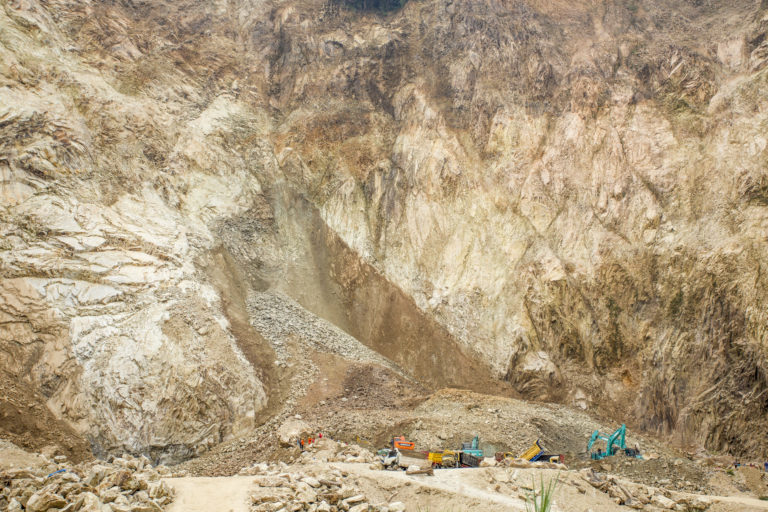
A tragic quarry collapse in Giathumbi, Kinyaga village, Mwea-West sub-county, Kirinyaga County, claimed the life of one man and left another seriously injured on Thursday evening, January 22, 2026.
The Incident
Residents reported that Phillip Njaragu, 64, and Francis Muriithi, 50, were harvesting stones when the quarry walls suddenly gave way. Njaragu, who had leased the quarry and employed Muriithi, was buried under a large mass of soil.
Witness Rachel Nyokabi explained that rescuers were unable to save Njaragu due to the sheer volume of soil that collapsed.
“Njaragu is the one who leased the quarry and employed Muriithi. They were working together,” she said.
Muriithi was rescued but sustained serious injuries and remains under medical care.
Official Response
Following the tragedy, Mwea-West Sub-County Deputy County Commissioner Kennedy Mounde ordered the closure of the quarry until a public participation forum is held to address safety concerns.
“We have closed the quarries at Giathumbi until we have a public participation because we cannot risk their lives,” Mounde stated.
Community Division
The closure has sparked mixed reactions among residents. Some villagers support the directive, citing safety concerns, while others oppose it, arguing that quarrying is their primary source of livelihood.
Local resident Pius Murimi Kiama voiced opposition:
“We will continue with harvesting despite the Deputy County Commissioner’s directive.”
Conversely, Peter Kinyua urged caution:
“Our people should mind about their safety. They should exercise caution when harvesting stones otherwise these quarries must be closed.”
Safety Concerns
Quarry collapses have long been a safety issue in parts of Kenya, where stone harvesting is a common economic activity. Experts warn that without proper safety measures, such tragedies will continue to occur, putting lives at risk.
Conclusion
The Giathumbi quarry collapse underscores the urgent need for stricter safety regulations and community dialogue to balance economic survival with the protection of lives. As residents remain divided, authorities face the challenge of ensuring that livelihoods are preserved without compromising safety.

