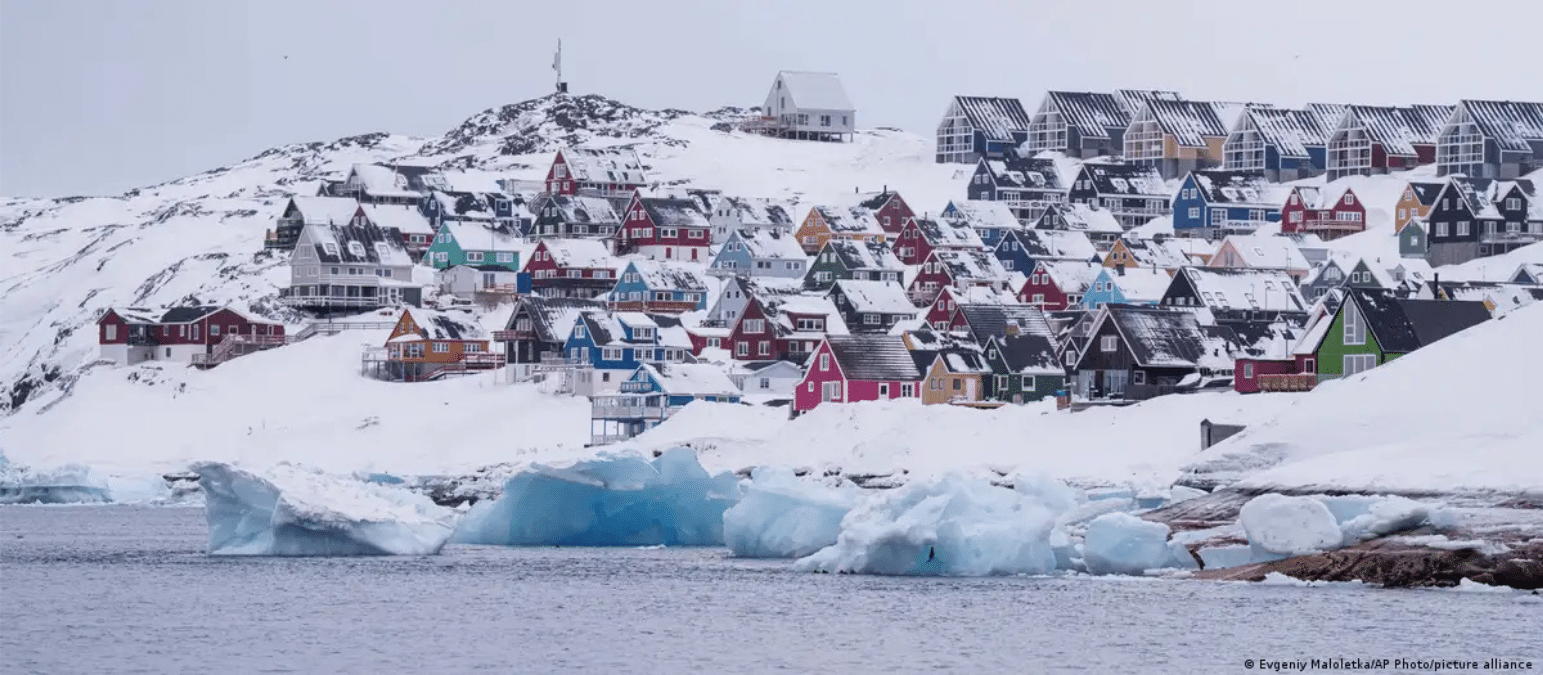
Cotonou, Benin – Tensions are mounting in the Arctic after several European countries deployed small troop contingents to Greenland, following repeated remarks by U.S. President Donald Trump about wanting to annex the island.
The icy, resource-rich territory, strategically located between North America and Europe, is increasingly viewed as a geopolitical hotspot, drawing global attention over its mineral wealth and shipping routes.
Russia’s Warning
Russia has issued a stern warning against Western military expansion in Greenland. Foreign Minister Sergei Lavrov said Moscow would take “adequate counter-measures, including military ones” if Greenland were militarised in a way that threatens Russia.
At the same time, Lavrov stressed that Russia’s “principled position” remains that the Arctic should be a zone of peace and cooperation, underscoring Moscow’s preference for diplomacy even as it signals readiness to respond militarily.
U.S. Position
President Trump recently appeared to soften earlier threats to seize the island, saying he had reached a “framework” understanding with NATO chief Mark Rutte to ensure greater U.S. influence in the region. He had previously warned that without stronger American involvement, Russia or China could step in.
Greenland’s Response
Greenland, home to around 57,000 people, has been a self-governing Danish territory for decades. Its leaders have insisted that sovereignty and territorial integrity are non-negotiable, even as competition over the Arctic intensifies.
Conclusion
The developments highlight Greenland’s growing strategic importance and the fragile balance of power in the Arctic. With Western deployments, Russian warnings, and U.S. ambitions converging, the region risks becoming a new theatre of geopolitical rivalry.