
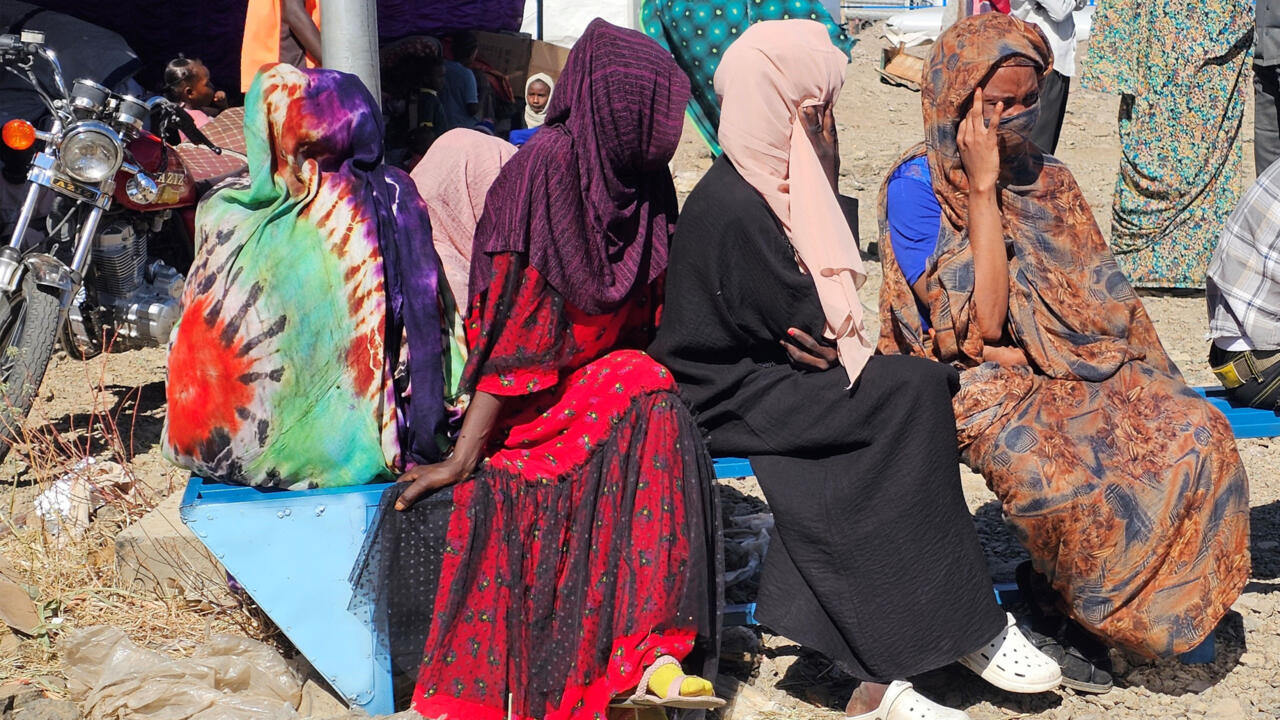
Port Sudan – Women have emerged as the primary victims of Sudan’s brutal war, enduring what rights activists describe as “the world’s worst” sexual violence, alongside other crimes committed with impunity.
Since April 2023, the conflict between the Sudanese army and the paramilitary Rapid Support Forces (RSF) has killed tens of thousands, displaced around 11 million people, and been marked by widespread atrocities.
Systematic Abuse
Sulaima Ishaq al-Khalifa, a longtime women’s rights activist and trained psychologist recently appointed as social affairs minister in the army-backed government, told AFP that sexual violence routinely accompanies looting and attacks.
“There is no age limit. A woman of 85 could be raped, a child of one year could be raped,” Khalifa said.
Her ministry has documented more than 1,800 rapes between April 2023 and October 2025, excluding atrocities in western Darfur and Kordofan from late October onwards.
Khalifa accused the RSF of using sexual violence “as a weapon of war” and a tool of “ethnic cleansing,” aimed at humiliating communities, breaking social fabrics, and fueling cycles of revenge.
War Crimes Investigations
A report by the SIHA Network, which documents abuses against women in the Horn of Africa, found that more than three-quarters of recorded cases involved rape, with 87 percent attributed to the RSF.
The United Nations has repeatedly raised alarm over targeted attacks on non‑Arab communities in Darfur, while the International Criminal Court (ICC) has opened a formal investigation into war crimes committed by both sides.
Briefing the UN Security Council in January, ICC deputy prosecutor Nazhat Shameem Khan said investigators had uncovered evidence of an “organised, calculated campaign” in El-Fasher, involving mass rapes and executions “on a massive scale,” sometimes filmed and celebrated by perpetrators.
Survivors’ Accounts
Survivors in Darfur reported RSF fighters justifying assaults by calling victims “slaves” and claiming sexual violence was an “honour” bestowed by men of “pure blood.”
Khalifa described the situation as “much more ugly” than past atrocities, noting that RSF fighters appear emboldened, acting as though they have a “green light to do whatever they want.”
Foreign Mercenaries and Trafficking
Women in Khartoum and Darfur have also reported rapes carried out by foreign mercenaries allegedly fighting alongside the RSF. These include nationals from Mali, Burkina Faso, Nigeria, Chad, Colombia, and Libya.
Some victims were abducted and held as sexual slaves, while others were trafficked across Sudan’s porous borders. Documentation remains difficult due to the collapse of state institutions and persistent social stigma.
In conservative communities, families often force victims into marriage to “cover up” rape, particularly when pregnancies result. Khalifa described these forced unions as part of a broader “torture operation”, with adolescent girls under 18 especially vulnerable.
Conclusion
The testimonies and documentation emerging from Sudan paint a harrowing picture of systematic sexual violence used as a weapon of war. As investigations by the ICC and international bodies continue, activists stress that accountability and justice are essential to breaking cycles of abuse and ensuring protection for women and girls in Sudan’s ongoing conflict.

