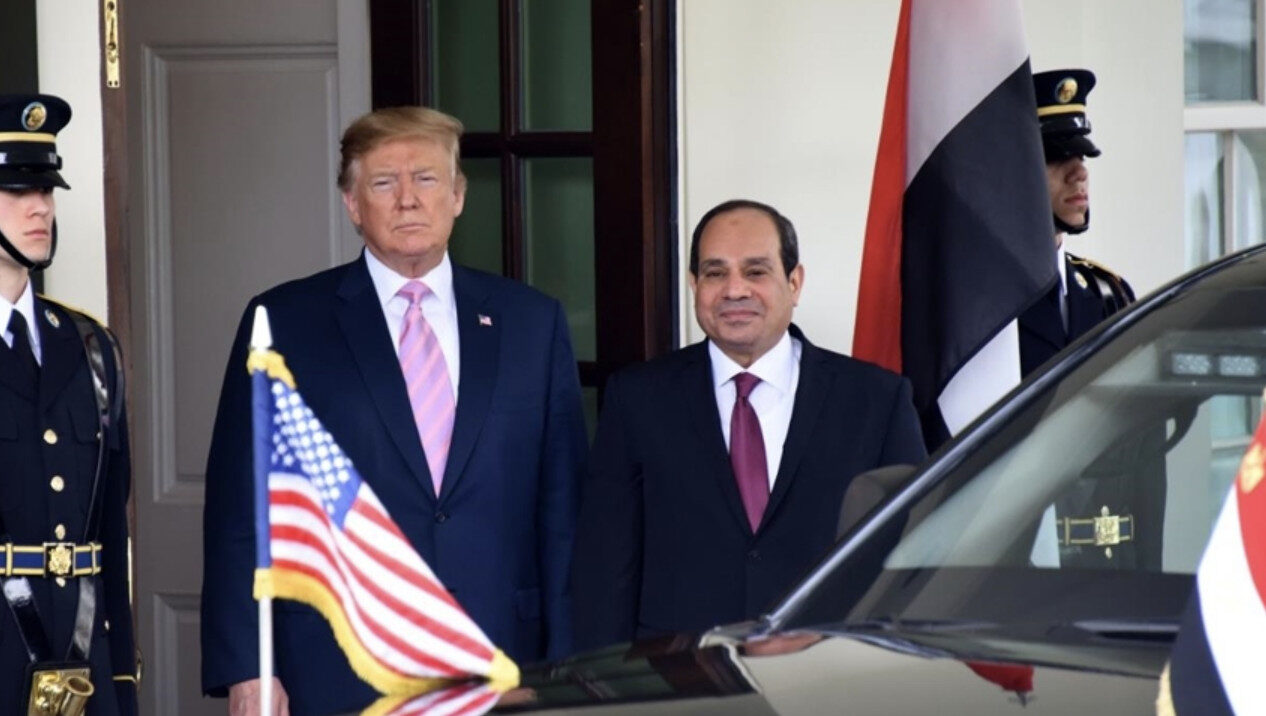
U.S. President Donald Trump and Egyptian President Abdel Fattah al-Sisi are set to co-host a high-stakes summit in Sharm El-Sheikh on Monday, bringing together more than 20 world leaders in what is being described as the most significant diplomatic gathering on the Middle East in years.
The summit, held shortly after Trump’s visit to Israel, where he is scheduled to address the Knesset and meet families of hostages, aims to solidify a fragile ceasefire and outline a long-term roadmap for peace in Gaza.
According to a statement from the Egyptian presidency, the meeting seeks “to end the war in the Gaza Strip, enhance efforts to achieve peace and stability in the Middle East, and usher in a new era of regional security.”
Global Leaders Converge on Sharm El-Sheikh
The summit boasts a formidable lineup of attendees, many of whom were instrumental in negotiating the ongoing ceasefire and prisoner-release agreement between Israel and Hamas. Discussions will center on the next phase of the deal and its alignment with Trump’s 20-point peace plan, including questions about Gaza’s post-war governance and the future of Hamas.
Key attendees include:
- Donald Trump, U.S. President – Expected to promote his peace framework and emphasize regional reconstruction once hostilities cease.
- Abdel Fattah al-Sisi, Egyptian President – A central mediator throughout the two-year conflict, credited with facilitating dialogue between Israel and Hamas.
- Sheikh Tamim bin Hamad Al Thani, Emir of Qatar – Advocated for sustained U.S. engagement in the peace process.
- Mahmoud Abbas, President of the Palestinian Authority – His potential administrative role in Gaza remains disputed, with Israeli Prime Minister Benjamin Netanyahu rejecting the idea.
Other confirmed participants include Emmanuel Macron (France), Recep Tayyip Erdoğan (Turkey), Keir Starmer (UK), Pedro Sánchez (Spain), Giorgia Meloni (Italy), Antonio Costa (EU Council), António Guterres (UN), Ahmed Aboul Gheit (Arab League), King Abdullah II (Jordan), Ahmad Al Abdullah Al Sabah (Kuwait), King Hamad bin Isa Al Khalifa (Bahrain), Prabowo Subianto (Indonesia), Ilham Aliyev (Azerbaijan), Friedrich Merz (Germany), Kyriakos Mitsotakis (Greece), Nikol Pashinyan (Armenia), Viktor Orbán (Hungary), Shehbaz Sharif (Pakistan), Mark Carney (Canada), Jonas Gahr Støre (Norway), and Mohammed Shia al-Sudani (Iraq).
Notably Absent
Israel will not send a representative to the summit, according to Netanyahu’s office.
Representatives from Hamas are also excluded, with the group stating it “will not be involved,” having relied previously on Qatari and Egyptian mediation.
Despite receiving an invitation, Iran declined to attend. Its foreign minister Abbas Araghchi confirmed via X (formerly Twitter) that neither he nor President Masoud Pezeshkian would participate, citing U.S. sanctions and military hostilities.
“Neither President Pezeshkian nor I can engage with counterparts who have attacked the Iranian people and continue to threaten and sanction us,” Araghchi wrote, referencing joint U.S.-Israeli strikes on Iran’s nuclear facilities during June’s 12-day conflict.
As the leaders gather in Egypt, the world will be watching closely to see whether this summit marks the first step toward a sustainable peace or merely another fleeting truce in one of the world’s most enduring conflicts.