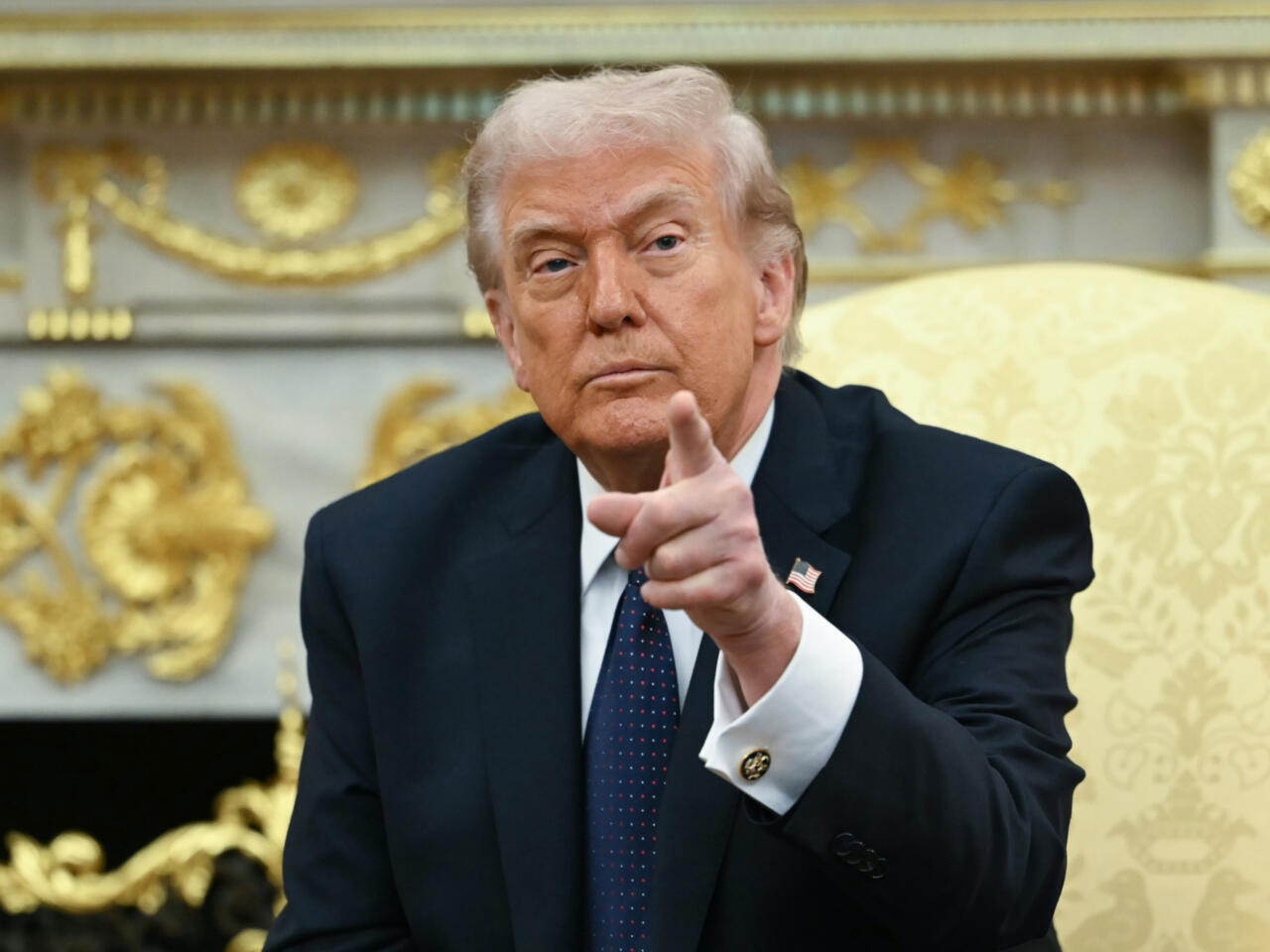
President Donald Trump said on Tuesday that he ordered U.S. forces to join Israel’s attack on Iran because he believed Tehran was preparing to strike first remarks that contradicted explanations offered a day earlier by his own administration on how the conflict began.
On Monday, Secretary of State Marco Rubio told reporters that Washington acted out of concern that Iran would retaliate against anticipated Israeli military action. According to Rubio, U.S. officials believed a failure to act preemptively would expose American forces to higher casualties.
“We knew that there was going to be an Israeli action; we knew that that would precipitate an attack against American forces, and we knew that if we didn’t preemptively go after them before they launched those attacks, we would suffer higher casualties,” Rubio said.
Speaking to reporters in the Oval Office during a meeting with German Chancellor Friedrich Merz, President Trump rejected claims that Israel had pressured the United States into war. He acknowledged that his actions may have accelerated events but insisted the decision was driven by intelligence assessments.
“I might have forced their hand,” Trump said. “We were having negotiations with these lunatics, and it was my opinion that they were going to attack first. If we didn’t do it, they were going to attack first.”
Iran has described the U.S. strikes as unprovoked and has denied planning imminent attacks.
Conservative Backlash and Political Fallout
The conflicting explanations triggered criticism from prominent conservative commentators, some of whom argued that Rubio’s remarks suggested Israel was dictating U.S. policy. Conservative podcaster Matt Walsh wrote on X that the comments implied the United States had entered the conflict at Israel’s behest, calling it “the worst possible thing he could have said.”
Broadcaster and podcaster Megyn Kelly also expressed doubts, telling her audience that Washington’s responsibility was to prioritize American interests, not those of foreign states.
The criticism from Trump’s right flank comes at a sensitive moment, as the Republican Party seeks to retain control of the United States Congress ahead of the November midterm elections.
White House Damage Control
The debate over the origins of the war has forced the White House into damage control. Trump on Tuesday answered reporters’ questions publicly for the first time since the U.S.–Israeli air campaign began three days earlier, after initially addressing the issue through recorded videos and limited interviews.
The president said he believed Iran was on the brink of launching attacks following talks held last Thursday in Geneva, which Iranian officials had previously described as constructive with further discussions planned.
“It’s something that had to be done,” Trump said, while offering no detailed public case for war before the strikes began.
Pressed about his earlier remarks, Rubio later told reporters on Capitol Hill:
“The bottom line is this: The president determined we were not going to get hit first.”
Failed Diplomacy and the Road to War
Two senior administration officials later briefed reporters on the diplomatic efforts preceding the military action. They said U.S. envoys Steve Witkoff and Jared Kushner held talks with Iranian representatives in Geneva, mediated by Oman.
According to the officials, U.S. negotiators demanded that Iran abandon uranium enrichment, but Tehran instead proposed higher enrichment levels at the Tehran Research Reactor. The envoys reportedly viewed the proposal as a stalling tactic.
“They were unwilling to give up the building blocks of what they needed to preserve in order to get to a nuclear bomb,” one official said.
Iran has consistently denied seeking nuclear weapons. The envoys informed Trump that a deal similar to the 2015 nuclear agreement negotiated under former President Barack Obama might have been possible, but only after months of negotiations.
Trump ordered U.S. forces into action the following day, with strikes beginning on Saturday marking a sharp escalation after diplomacy stalled.