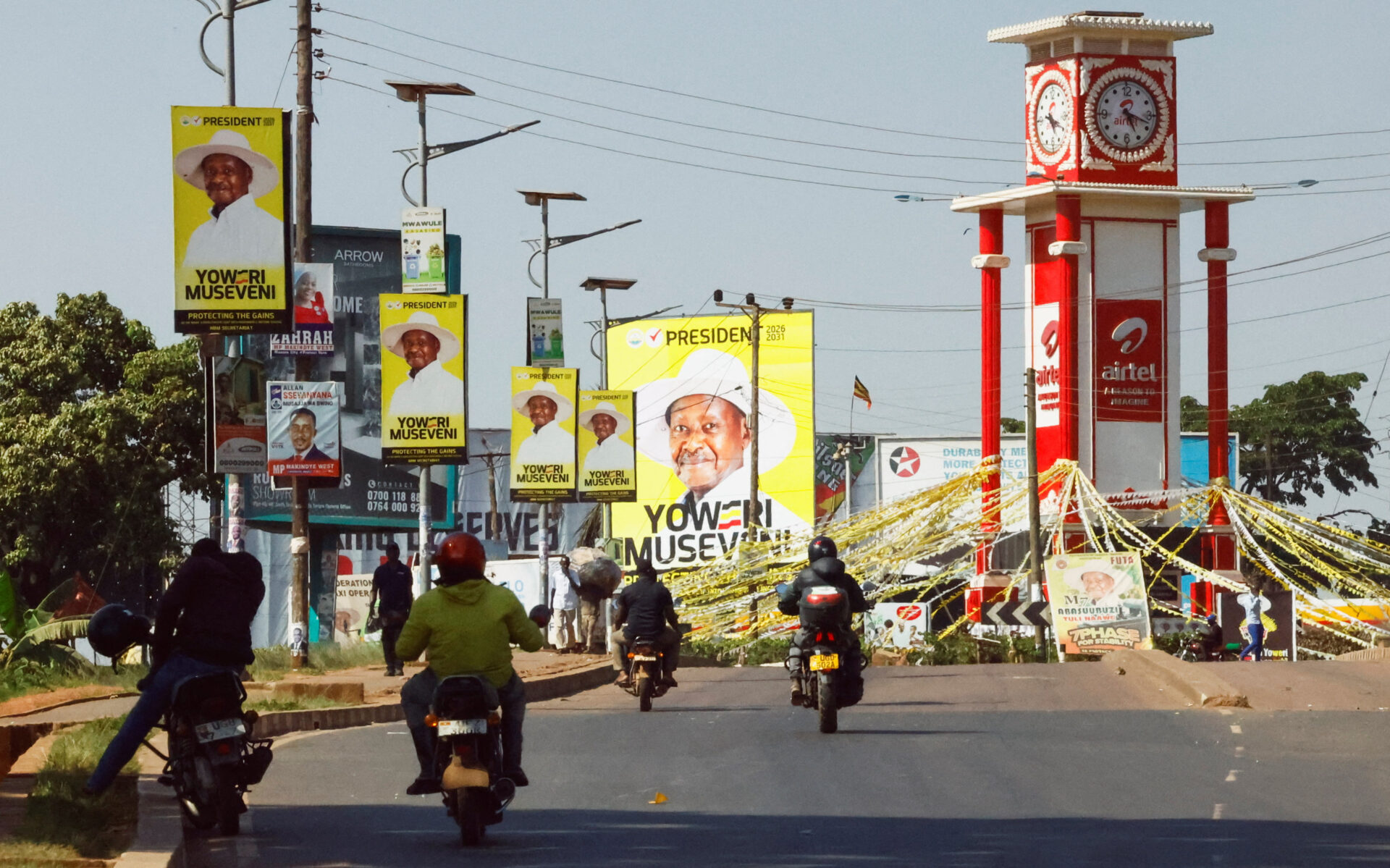
Ugandan authorities on Saturday night partially restored internet services after days of nationwide disruption imposed ahead of the country’s general election, even as President Yoweri Museveni secured a seventh term in office in a landslide victory that has been rejected by the opposition.
Internet users reported regaining access at around 11:00 p.m. local time, with several internet service providers notifying customers that the Uganda Communications Commission (UCC) had ordered the restoration of services. However, access to social media platforms remained restricted.
“We have restored internet so that businesses that rely on the internet can resume work,” said David Birungi, spokesperson for Airtel Uganda, one of the country’s largest telecom operators. He added that the regulator had directed companies to keep social media platforms offline.
The UCC had earlier announced the shutdown, saying it was intended to curb “misinformation, disinformation, electoral fraud and related risks.” Opposition leaders and civil society groups strongly criticised the move, arguing that it was designed to tighten control over the electoral process and favour the incumbent.
On Saturday, Uganda’s electoral commission declared Museveni the winner of Thursday’s poll with 71.6 per cent of the vote. His main challenger, musician-turned-politician Bobi Wine, whose real name is Robert Kyagulanyi, was credited with 24 per cent. Wine has rejected the results, alleging widespread fraud during the election.
A joint election observer mission from the African Union and other regional blocs criticised both the heavy involvement of the military in the electoral process and the decision to cut off internet access. In its report released on Saturday, the mission said the shutdown “limited access to information, freedom of association, curtailed economic activities and created suspicion and mistrust in the electoral process.”
Museveni, who has been in power since 1986, is now set to extend his rule into a fifth decade. By the end of his new term in 2031, he will have governed Uganda for nearly half a century, making him one of Africa’s longest-serving leaders. He is widely believed to be preparing his son, Muhoozi Kainerugaba, the current head of the military, as a potential successor.
Following the announcement of the results, scattered protests broke out in parts of the country on Saturday night. In Magere, a suburb of Kampala where Bobi Wine resides, youths burned tyres and erected road barricades, prompting police to disperse the crowds using tear gas.
Police spokesperson Racheal Kawala said the protests had been contained and that arrests were made, although she did not immediately provide details on the number of people detained.
Wine’s whereabouts were unclear early Sunday after he said on X that he had escaped a military raid on his home. Sources close to him told Reuters that he remained at an undisclosed location within Uganda. He was previously placed under house arrest following the disputed 2021 election.
The opposition leader has accused authorities of detaining hundreds of his supporters in the lead-up to the vote and subjecting some to torture. The government has denied the allegations, maintaining that all arrests were lawful and that detainees would be accorded due process.
As Uganda awaits the full restoration of internet services and the easing of political tensions, the partial lifting of the shutdown has done little to quell concerns about the conduct of the election and the country’s democratic trajectory.