Caracas, Venezuela — When explosions echoed through the night sky and U.S. warplanes roared above Caracas, Jorge Suarez and his companions rushed for their weapons, bracing for what many of them could scarcely believe was unfolding. For members of Venezuela’s armed “colectivos,” the U.S. raid that removed President Nicolas Maduro from power marked the most dramatic and unsettling challenge yet to the country’s socialist leadership.
“We’re not used to it it was like something out of a movie,” said Suarez, wearing black sunglasses and a cap emblazoned with the slogan “Doubt is treason.” “We took to the streets, waiting for instructions from our leaders.”
The colectivos, long-standing grassroots militias aligned with the Bolivarian revolution, have been left angry, disoriented, and convinced that Maduro’s capture could only have been made possible by betrayal from within his inner circle.
“There is frustration, anger, and a will to fight,” said Willians, a 43-year-old member of the Boina Roja (Red Beret) collective, who declined to give his full name. “It’s still not really clear what happened. What is clear is that there were many betrayals.”
He questioned how Venezuela’s air defenses and missile systems failed so completely during the operation. “We don’t understand how the anti-aircraft system failed. We don’t know what happened with the rocket-launch system,” he said.
Maintaining Order in a Fragile Transition
Originally consolidated under former president Hugo Chávez, the colectivos were created to maintain social order at the neighborhood level. While supporters credit them with crime prevention and community organization, critics accuse them of intimidating political opponents and suppressing dissent.
Following Maduro’s removal, the groups have rallied behind interim president Delcy Rodriguez, Maduro’s former deputy, who has pledged cooperation with U.S. President Donald Trump while insisting Venezuela remains sovereign and not subordinate to Washington.
Colectivo members say they are resisting what they view as psychological pressure and misinformation surrounding the transition. “They want us to believe Trump might bomb again, or that Delcy Rodriguez is working with the United States,” Willians said. “We don’t buy that.”
Many cite Rodriguez’s ideological background as a source of reassurance. She is the daughter of a far-left activist who died in intelligence custody in 1976. “I don’t think anyone would betray her father,” said Alfredo Canchica, leader of the Fundación 3 Raíces collective. “You can betray the people, but not your father.”
Defiance and Distrust
Despite threats from Washington, colectivo leaders project defiance. “We don’t believe the Americans are coming to dig us out,” Canchica said. “They’ll have to kill us first.”
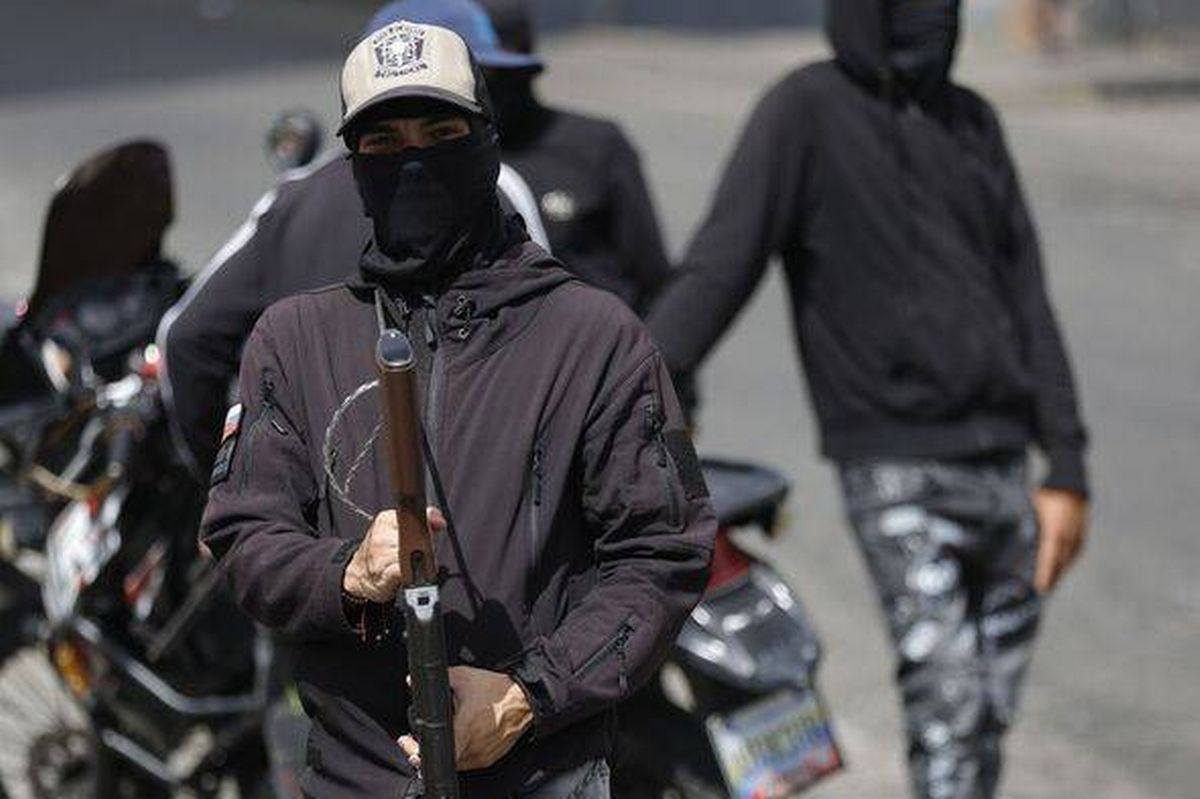
Often portrayed as a motorcycle-riding, rifle-carrying shock force, the colectivos reject the image of themselves as lawless militias. Speaking from the Chato Candela baseball stadium in the working-class 23 de Enero district, Canchica said they helped prevent unrest during previous political crises and provide social services, including sports programs, coordination with hospitals, and efforts to curb price speculation.
Yet the sense of betrayal following Maduro’s capture runs deep. “It had to come from someone very close to our commander,” Canchica said. “It was so perfect we didn’t notice and it happened so fast.”
In his office, surrounded by portraits of Simón Bolívar, Hugo Chávez, and Maduro, Suarez recalled watching animated online reconstructions of the raid that led to the former president’s arrest.
“It makes you angry,” he said. “Despite all the support from Russia, China, and North Korea, how can we react in real time when the United States has more advanced technology than we do?”
As Venezuela enters an uncertain post-Maduro phase, the colectivos remain a volatile and influential force angry, armed, and determined to defend what they see as the legacy of the Bolivarian revolution.