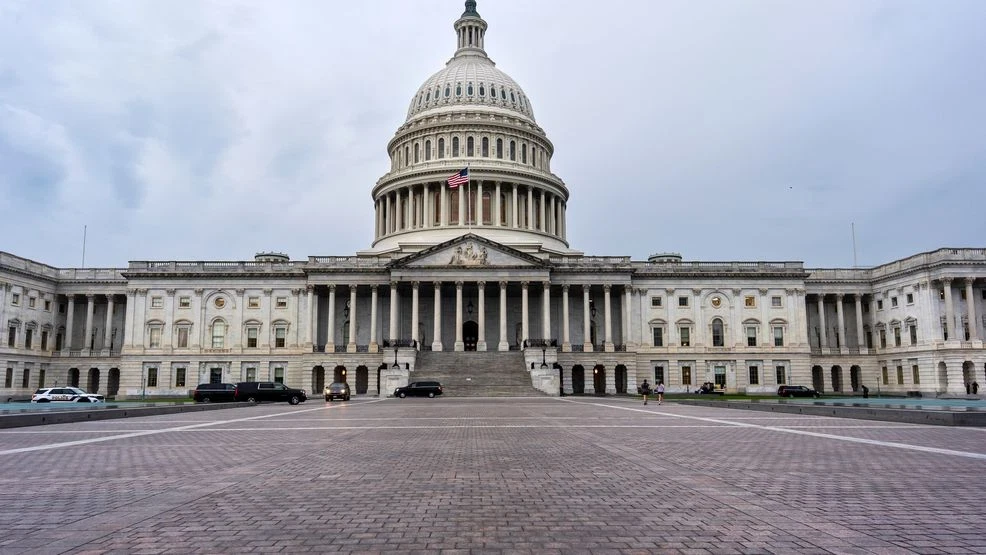
The United States is moving closer to ending its record-breaking government shutdown, now entering its 42nd day, following a critical vote in the Senate on Monday night. Lawmakers approved a spending package by a 60-40 margin, funding the federal government through January 30, 2026, and reinstating pay for hundreds of thousands of federal workers.
The bill now advances to the House of Representatives for approval before being signed by President Donald Trump, which would officially end the shutdown. House Speaker Mike Johnson urged legislators to return to Washington immediately, aiming to pass the measure as soon as Wednesday.
Key Details of the Deal
The spending package includes three-year appropriations for the Department of Agriculture, the Food and Drug Administration, military construction, veterans’ affairs, and Congressional operations.
However, the deal does not resolve the central issue behind the shutdown: extending healthcare subsidies under the Affordable Care Act (ACA), which benefit 24 million Americans. Senate Republicans agreed only to hold a vote on the issue by December, raising the possibility of another shutdown in January if no agreement is reached.
David Smith, associate professor at the University of Sydney’s United States Studies Centre, described the measure as a stopgap arrangement:
“If there hasn’t been a vote on Obamacare subsidies by the end of January or if the vote fails, then the shutdown will happen again.”
Divisions Among Democrats
The agreement sparked criticism among Democrats, many of whom argued the deal undercuts their leverage following recent high-profile victories in New Jersey, Virginia, and New York City. Leading Democrats expressed concerns that the Republican-controlled Congress may not extend the health insurance subsidies.
Senators supporting the deal included Dick Durbin (IL), Angus King (ME), John Fetterman (PA), Catherine Cortez Masto (NV), Jackie Rosen (NV), Maggie Hassan (NH), Jeanne Shaheen (NH), and Tim Kaine (VA). Several of these senators cited the urgent need to prioritize Americans’ well-being over party politics.
Senator Fetterman told NBC’s Meet the Press:
“I think people realised this really needs to end, the mass chaos. How many people are going to play chicken for the food security of two million Americans? How much more unsafe are you going to make flying in our country?”
The shutdown has impacted critical programs, including food assistance, and forced federal employees to work without pay or face furloughs. Airports have also been affected, with the Federal Aviation Administration reducing air traffic by 10% due to controller absences.
Healthcare Concerns
Democratic leaders like Illinois Governor JB Pritzker criticized the deal as an “empty promise.” Without the ACA subsidies, healthcare premiums for over 20 million Americans could double in 2026, and 15 million more could become uninsured by 2034, according to Congressional Budget Office estimates.
Senator Bernie Sanders condemned the legislation on the Senate floor, highlighting the high cost and inequities of the US healthcare system:
“Everybody in America knows our current healthcare system is broken… What this Senate is about to do is make a horrific situation even worse.”
While the Senate vote represents a significant step toward ending the shutdown, analysts warn that the unresolved ACA subsidies issue leaves the door open for further funding crises in the new year.